MP Exports to Latin America Surge to ₹3,835 Crore: CM Yadav

Synopsis
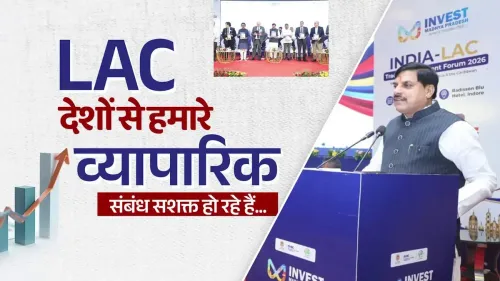
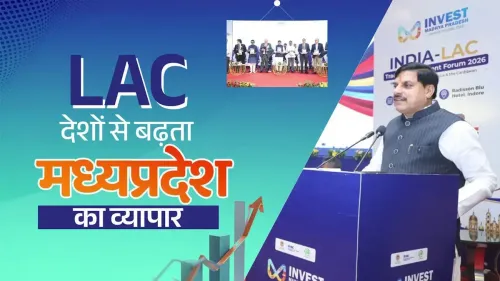
The Chief Minister's Office of Madhya Pradesh announced on June 7, 2026 that the state's exports to Latin America have reached ₹3,835 crore, with CM Dr. Mohan Yadav's government highlighting growing global demand for MP products as part of a broader push to diversify trade geographies.
Key Takeaways
The Chief Minister's Office of Madhya Pradesh announced on June 7, 2026 that exports to Latin America have reached ₹3,835 crore .
Mohan Yadav , in office since December 2023 , has made international market access a stated priority for the state.
Madhya Pradesh is a major producer of soyabean, pulses, and spices — key export commodities in the Latin American corridor.
The growth aligns with India's national Foreign Trade Policy push to diversify exports toward Latin America and Africa .
Agricultural producers and exporters are the primary beneficiaries of the expanded trade footprint.
The specific product mix and Latin American countries involved have not been officially detailed.
The Chief Minister's Office of Madhya Pradesh announced on Sunday, June 7, 2026 that the state's exports to Latin America have grown significantly, with total export value reaching ₹3,835 crore, signalling a strengthening global footprint for products from the central Indian state.
Context
The post, shared under the hashtag #MP_RisingGlobally, states: 'Madhya Pradesh's identity is strengthening in global markets… demand for the state's products has increased in Latin America, with exports rising to ₹3,835 crore.' The announcement was tagged to Chief Minister Dr. Mohan Yadav, who has helmed the state since December 2023 with a stated focus on industrial growth and international market access.
Madhya Pradesh is one of India's largest producers of soyabean, pulses, and spices, and has been building capacity in engineering goods and pharmaceuticals — all product categories that have historically found buyers in Latin American markets.
Policy Backdrop
The reported export growth aligns with a broader national push under India's Foreign Trade Policy to diversify export destinations away from traditional partners in the United States and the European Union toward emerging geographies in Latin America and Africa. Several Indian states have pursued this diversification through trade fairs, buyer-seller meets, and dedicated export promotion councils.
Madhya Pradesh has in recent years participated in international trade delegations and investor summits, with Dr. Yadav's government positioning the state as a supplier of agricultural commodities and processed goods to newer markets. The ₹3,835 crore figure represents the headline outcome of those efforts in the Latin American corridor, though the precise product composition and the specific countries within the region have not been detailed in the official communication.
Stakeholders and Impact
The primary beneficiaries of this export expansion are the state's agricultural producers and exporters — particularly those dealing in oilseeds, pulses, and spices — who gain access to a larger and more diversified buyer base, reducing dependence on any single market. A broader export footprint also provides a degree of insulation against price volatility in domestic and traditional international markets.
For the state economy, higher export earnings translate into improved foreign exchange inflows, stronger demand for logistics and warehousing infrastructure, and the potential for job creation across the agricultural value chain. Small and medium exporters, who often lack the resources to independently explore distant markets, stand to gain disproportionately from state-facilitated market access programmes.
What's Next
Analysts and trade bodies will watch the state's forthcoming budget cycle for dedicated export promotion schemes targeting Latin America, including possible subsidies on freight, participation in regional trade fairs, or bilateral buyer-seller platforms. The Chief Minister's Office is expected to build on this momentum by detailing the sectoral and geographic breakdown of the ₹3,835 crore figure in subsequent policy communications.
If the trend sustains, Madhya Pradesh could emerge as a template for how landlocked Indian states leverage central trade policy frameworks to carve out niche positions in non-traditional export markets — a development with implications for other agriculture-heavy states seeking similar diversification.
Point of View
Positioning Madhya Pradesh as an outward-looking state economy at a time when several Indian states are competing for visibility in non-traditional export markets. Framing the Latin America figure as a branding milestone — 'MP Rising Globally' — suggests the government is building a narrative around export performance ahead of a likely budget cycle. The absence of a baseline figure or time period, however, limits the claim's verifiability and leaves room for scrutiny from opposition and trade bodies. Nonetheless, the broader trend of Indian states pursuing Latin American markets is well-documented and lends the announcement structural credibility even without granular data.
NationPress
19 Sept 2026
Frequently Asked Questions
How much has Madhya Pradesh exported to Latin America?
According to the Chief Minister's Office, Madhya Pradesh's exports to Latin America have reached ₹3,835 crore . The official announcement does not specify the time period or the product breakdown for this figure.
Who is the Chief Minister of Madhya Pradesh in 2026?
Dr. Mohan Yadav is the Chief Minister of Madhya Pradesh. He assumed office in December 2023 and has prioritised industrial growth and international market access for state products.
What products does Madhya Pradesh export?
Madhya Pradesh is a major producer and exporter of soyabean, pulses, and spices , and is also building capacity in engineering goods and pharmaceuticals — all categories with potential buyers in Latin American markets.
Why is Madhya Pradesh focusing on Latin America for exports?
India's national Foreign Trade Policy encourages states to diversify export destinations beyond the US and EU toward Latin America and Africa . Madhya Pradesh has pursued this through trade fairs and buyer-seller meets to reduce dependence on traditional markets.
What does the MP export growth mean for farmers and exporters?
Agricultural producers and exporters in Madhya Pradesh gain access to a larger buyer base, reducing price-volatility risk. Higher export earnings also support demand for logistics infrastructure and job creation across the agricultural value chain.