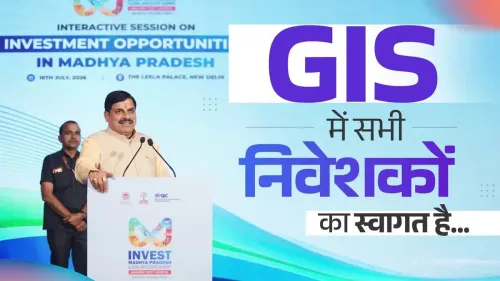
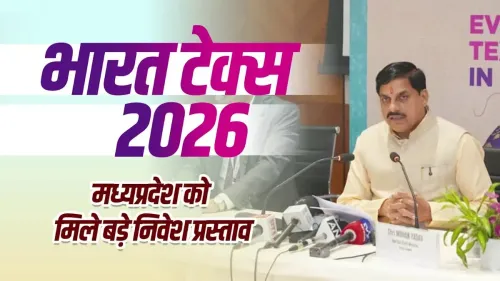
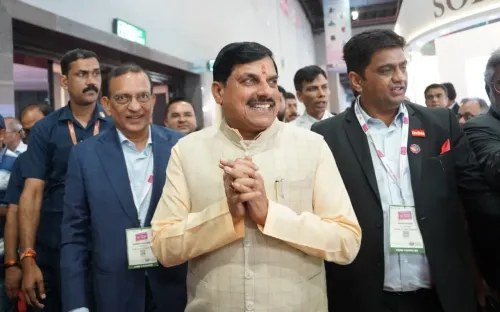
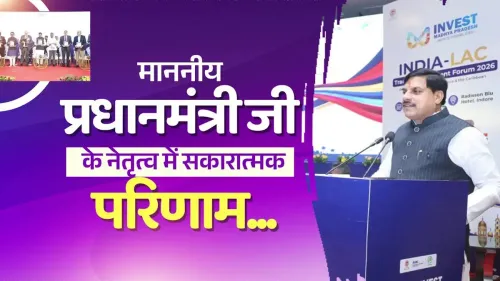
CM Mohan Yadav: MP Rising as Textile & Garment Investment Hub
Synopsis
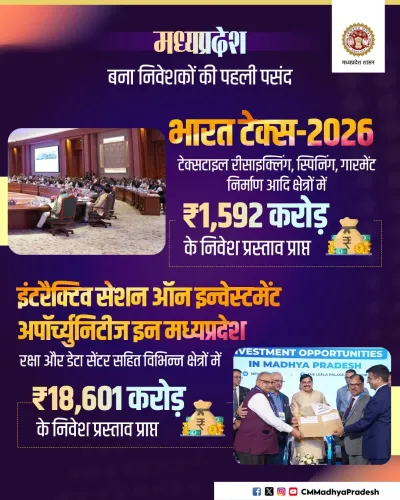
The Chief Minister's Office of Madhya Pradesh says the state is positioning itself as a major centre for textile and garment investment, employment, and value addition, aligning with PM Modi's national textile growth agenda and the upcoming BharatTex 2026 exposition.
Key Takeaways
The Chief Minister's Office of Madhya Pradesh declared on 16 July 2026 that the state is becoming a hub for textile and garment investment, employment, and value addition.
CM Mohan Yadav credited PM Narendra Modi's leadership for propelling India's textile sector to new heights, with MP aligning to the same growth trajectory.
The post tagged the Ministry of Textiles , MPIDC , and the MP MSME Ministry , signalling coordinated institutional outreach ahead of BharatTex 2026 .
Central schemes including the PLI for man-made fibre apparel and the PM MITRA parks programme form the policy backbone for states like MP to attract textile clusters.
Madhya Pradesh is seeking to diversify India's textile geography, which has historically been concentrated in Tamil Nadu , Gujarat , and Maharashtra .
Progress on PM MITRA park proposals in MP and outcomes from BharatTex 2026 will be the key near-term indicators of how the state's ambitions translate into on-ground investment.
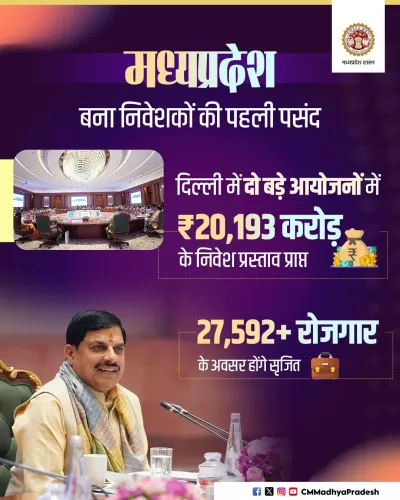
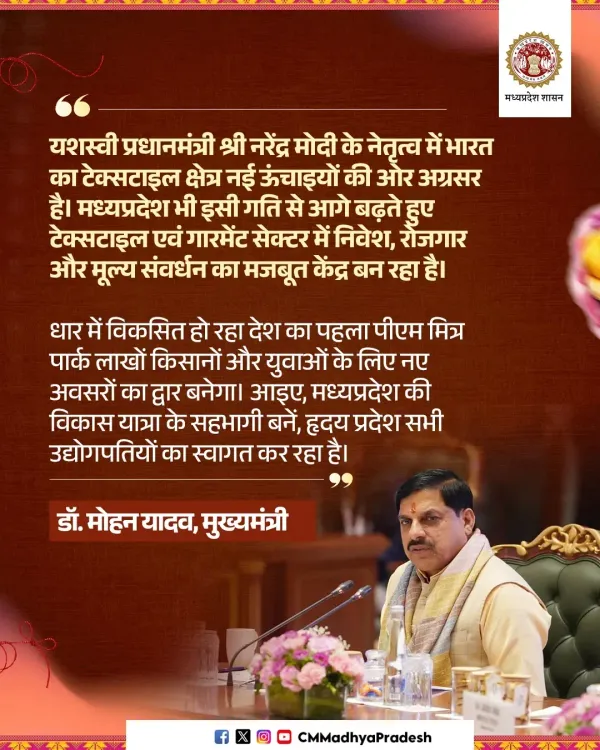
The Chief Minister's Office of Madhya Pradesh declared on Thursday, 16 July 2026 that the state is emerging as a strong centre for investment, employment, and value addition in the textile and garment sector, aligning with the national push under Prime Minister Narendra Modi.
The post, attributed to Chief Minister Mohan Yadav, stated: 'Yashasvi Pradhanmantri Shri Narendra Modi ke netritva mein Bharat ka textile kshetra nayi unchaaiyon ki or agrassar hai' ('Under the leadership of the distinguished Prime Minister Shri Narendra Modi, India's textile sector is moving towards new heights'). It added that Madhya Pradesh is advancing at the same pace to become a robust hub of investment, employment, and value addition in the textile and garment sector.
Context
The statement was posted in the context of BharatTex 2026, a national-level textile exposition that has been referenced in government outreach to showcase India's textile capabilities. The tags directed at the Prime Minister's Office, the Ministry of Textiles, MPIDC, and the MP MSME Ministry signal a coordinated effort to position Madhya Pradesh within the national textile growth narrative ahead of the event.
Madhya Pradesh Industrial Development Corporation (MPIDC) serves as the state's nodal agency for investment promotion. Its involvement underscores that the state is actively courting textile investors through institutional channels rather than ad-hoc outreach.
Policy Backdrop
India's central government has pursued a multi-pronged strategy to upgrade the textile sector since 2014, with the Make in India initiative identifying textiles as a priority sector. The Production Linked Incentive (PLI) scheme for man-made fibre apparel and technical textiles, notified in 2021, was designed to attract large-scale investment and boost exports by rewarding incremental production.
The PM MITRA (Mega Integrated Textile Region and Apparel) parks scheme, also approved in 2021, aims to develop plug-and-play textile infrastructure across multiple states. Madhya Pradesh has been among the states where potential PM MITRA sites have been identified, which would create integrated ecosystems spanning spinning, weaving, processing, and garment manufacturing under one roof.
The broader policy direction seeks to move India up the value chain — from raw fibre and yarn toward finished garments and technical textiles — to compete more effectively in global markets and reduce dependence on established manufacturing hubs.
Stakeholders and Impact
The constituencies most directly affected by this positioning include textile investors seeking new manufacturing locations, garment manufacturers looking to expand capacity, and MSME units in the weaving, dyeing, and processing segments. Textile workers stand to benefit if the investment commitments translate into factory-floor employment.
Established textile states such as Tamil Nadu, Gujarat, and Maharashtra have long dominated India's apparel export map. Madhya Pradesh's push represents a deliberate effort to diversify the geographic spread of India's textile industry, which could reduce regional concentration risk and open employment opportunities in a landlocked state with a large agricultural workforce.
What's Next
Concrete indicators to watch include progress on any PM MITRA park proposals or new textile cluster notifications in Madhya Pradesh, as well as the outcomes of BharatTex 2026, where the state is expected to present its investment case to domestic and international buyers. The tagging of the Ministry of Textiles (@TexMinIndia) suggests the state may be seeking central-level facilitation or announcements in the near term.
How quickly MPIDC converts the political signalling into signed memoranda of understanding and ground-level project starts will determine whether Madhya Pradesh's textile ambitions move beyond aspiration into measurable industrial output.
Point of View
Designed to signal to investors that Madhya Pradesh is open for textile business at a moment when global supply chains are actively diversifying away from concentrated manufacturing geographies. By tagging the PMO and the Ministry of Textiles simultaneously, CM Mohan Yadav is seeking both central-government endorsement and investor visibility in a single move — a pattern increasingly common among state governments competing for PLI and PM MITRA allocations. The statement carries no specific numbers or project announcements, which means its real test lies in what MPIDC can deliver in terms of signed investments and land allocation. If MP can secure a PM MITRA park and translate BharatTex participation into factory starts, it would mark a genuine shift in India's textile geography; without those follow-throughs, the post remains aspirational positioning.
NationPress
15 Oct 2026
Frequently Asked Questions
Is Madhya Pradesh becoming a textile hub in India?
Madhya Pradesh is actively positioning itself as a textile and garment investment hub, with the state government aligning its industrial policy with central schemes such as PM MITRA parks and the PLI for man-made fibre apparel. Concrete outcomes will depend on investment signings and infrastructure development by MPIDC.
What is BharatTex 2026?
BharatTex 2026 is a planned national-level textile exposition that the Indian government is using to showcase the country's textile capabilities to domestic and international buyers and investors. Madhya Pradesh has referenced the event in its outreach to attract textile investment.
What is the PM MITRA scheme and does it apply to Madhya Pradesh?
PM MITRA — Mega Integrated Textile Region and Apparel — is a central government scheme approved in 2021 to develop plug-and-play textile parks with integrated spinning, weaving, processing, and garment facilities. Madhya Pradesh has been identified as a potential host state for one of these parks.
What is CM Mohan Yadav's textile policy for Madhya Pradesh?
CM Mohan Yadav, in office since December 2023, has emphasised industrial investment and employment generation. His government is using MPIDC to promote textile and garment sector investment, aligning state policy with central PLI and PM MITRA incentives.
How does Madhya Pradesh compare to other textile states in India?
Established states such as Tamil Nadu, Gujarat, and Maharashtra dominate India's textile and apparel export map. Madhya Pradesh is a newer entrant seeking to attract investment by offering land, infrastructure through MPIDC, and access to central scheme benefits, aiming to diversify India's textile manufacturing geography.