Madhya Pradesh Forms UCC Panel: Justice Desai to Lead High-Level Committee

Synopsis
Madhya Pradesh has constituted a high-level UCC committee chaired by former Supreme Court judge Justice Ranjana Prasad Desai, with a 60-day deadline to submit a draft bill. The move makes MP a potential frontrunner to become the second state after Uttarakhand to enact a Uniform Civil Code.
Key Takeaways
The Madhya Pradesh government constituted a high-level committee on April 28, 2025 to examine the feasibility of implementing a Uniform Civil Code (UCC) .
Justice (Retd.) Ranjana Prasad Desai , former Supreme Court judge, will chair the five-member panel.
The committee has been given a strict 60-day deadline to submit its report along with a draft UCC bill .
The panel will study UCC models from Uttarakhand and Gujarat , while accounting for MP's social and cultural realities.
Special focus will be placed on women's and children's rights and contemporary issues including regulation of live-in relationships .
Public, religious organisations, and subject experts will be consulted before the final report is prepared.
The Madhya Pradesh government has constituted a high-level committee to examine the feasibility of implementing a Uniform Civil Code (UCC) in the state, marking a potentially landmark shift in its legal and social framework. The decision, announced by the Department of Law and Legislative Affairs on Monday, April 28, aims to harmonise the diverse personal and family laws currently followed by different communities across Madhya Pradesh. A formal order, digitally signed by Secretary Mukesh Kumar, has set the process officially in motion.
At present, separate legal provisions govern matters such as marriage, inheritance, adoption, and maintenance for different communities in the state. The newly constituted panel will study these variations and work towards crafting a framework designed to ensure equality and fairness for all citizens, irrespective of religion or community.
Committee Composition and Leadership
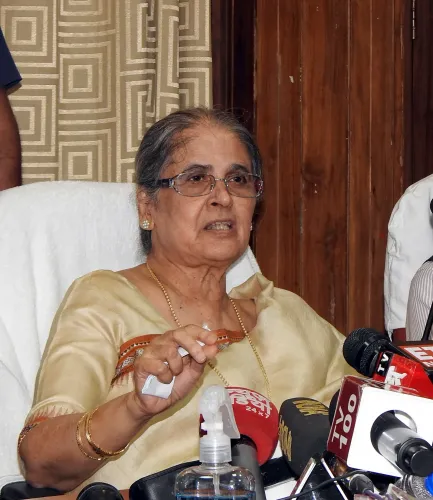
The committee will be chaired by Justice (Retd.) Ranjana Prasad Desai, a former judge of the Supreme Court of India — lending the panel considerable judicial credibility. Other members include retired IAS officer Shatrughna Singh, legal expert Anoop Nair, educationist Gopal Sharma, and social worker Budhpal Singh. Ajay Katesariya, Additional Secretary in the General Administration Department, has been appointed as the committee's Secretary.
Notably, the appointment of a former Supreme Court judge as chairperson signals that the government intends to give this exercise both legal rigour and public legitimacy — a pattern seen in similar UCC exercises undertaken by other BJP-governed states.
Key Responsibilities and Scope
Among its core responsibilities, the panel will examine UCC models adopted by states such as Uttarakhand — the first state to enact a UCC law in 2024 — and Gujarat, while factoring in the specific social, cultural, and economic realities of Madhya Pradesh. The committee will also invite suggestions and objections from the public, religious and social organisations, and subject-matter experts.
Special emphasis will be placed on safeguarding the rights of women and children, and on addressing contemporary legal challenges such as the regulation of live-in relationships — an area that has generated significant judicial and legislative debate across India in recent years.
Timeline and Deliverables
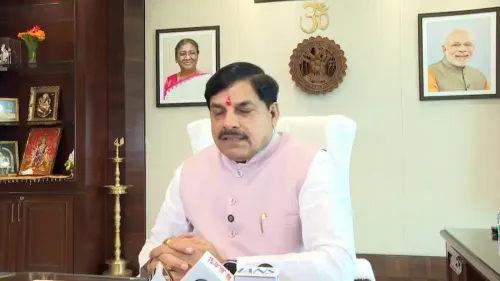
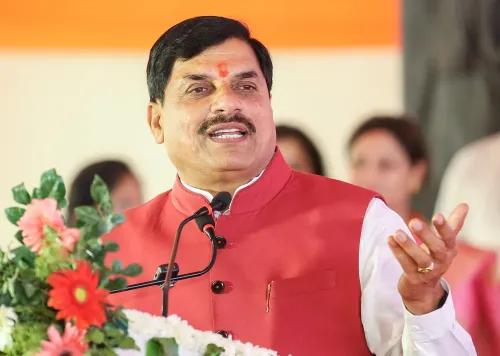
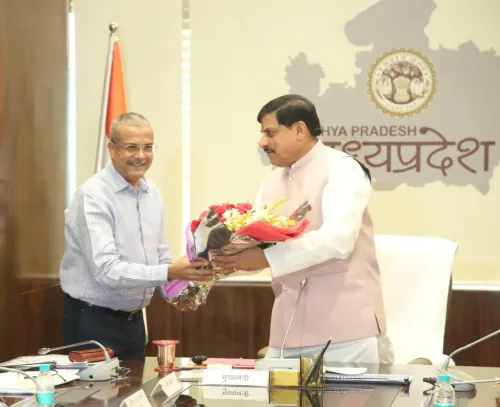
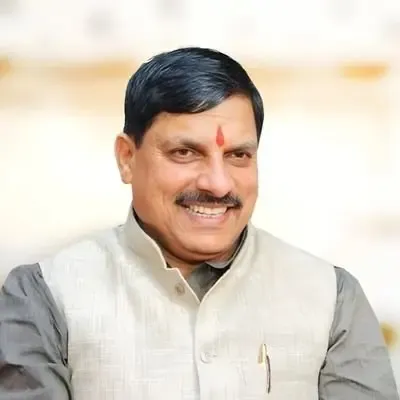
The committee has been directed to submit its report, along with a draft bill, within 60 days. This tight deadline suggests the Madhya Pradesh government, led by Chief Minister Mohan Yadav, is keen to move swiftly on the issue. The government has stated that the initiative is aimed at reducing future legal complexities and moving towards a more coherent civil framework for the state's estimated 8.5 crore residents.
Broader Political and Legal Context
This comes amid a broader national push by BJP-governed states to advance the UCC agenda, which has been a long-standing plank of the party's ideological platform. Uttarakhand's landmark UCC legislation in 2024 served as a template, and several other states have since signalled intent to follow suit. Critics, however, argue that a uniform code must carefully navigate India's constitutionally protected right to religious freedom and the diversity of personal law traditions.
Observers note that Madhya Pradesh's move is particularly significant given the state's large tribal population, whose customary laws and traditions may require special consideration under any proposed uniform framework. This is the kind of nuance that the Desai-led committee will need to address head-on if the exercise is to carry public trust.
What Happens Next
Once the committee submits its report within the stipulated 60-day window, the state government is expected to review the draft bill before tabling it in the Madhya Pradesh Legislative Assembly. The process will likely trigger extensive debate among legal scholars, civil society groups, and political parties. Whether Madhya Pradesh becomes the second state after Uttarakhand to enact a UCC law remains to be seen — but the clock has officially started.
Point of View
With Uttarakhand as the proof of concept. What mainstream coverage misses is the real challenge: MP's large tribal population holds customary laws that sit uneasily with any 'uniform' framework, and glossing over this could invite both constitutional challenges and social unrest. The 60-day deadline is ambitious to the point of being political theatre unless the committee genuinely engages with these fault lines. Justice Desai's credibility will be tested not by the speed of the report, but by its depth.
NationPress
19 Sept 2026
Frequently Asked Questions
What is the Madhya Pradesh UCC committee and who leads it?
The Madhya Pradesh government has formed a high-level committee to examine the feasibility of implementing a Uniform Civil Code in the state. It is chaired by Justice (Retd.) Ranjana Prasad Desai, a former Supreme Court judge, and includes four other members from legal, administrative, and social sectors.
What is the deadline for the MP UCC committee to submit its report?
The committee has been directed to submit its report along with a draft UCC bill within 60 days of its constitution on April 28, 2025. This tight timeline suggests the state government intends to fast-track the legislative process.
Which states' UCC models will Madhya Pradesh study?
The committee will examine UCC models adopted by Uttarakhand, which became the first Indian state to enact a UCC law in 2024, and Gujarat. It will then adapt findings to suit Madhya Pradesh's specific social, cultural, and economic context.
Why does the Madhya Pradesh UCC matter for women and children?
The committee has been given a special mandate to safeguard the rights of women and children under the proposed UCC framework. It will also address modern legal issues such as the regulation of live-in relationships, which currently lack a uniform legal framework across communities.
Will the public get a chance to give input on MP's UCC?
Yes, the committee is required to seek suggestions and objections from the public, religious and social organisations, and subject-matter experts before finalising its report. This consultative process is intended to ensure the proposed framework reflects the diversity of Madhya Pradesh's population.