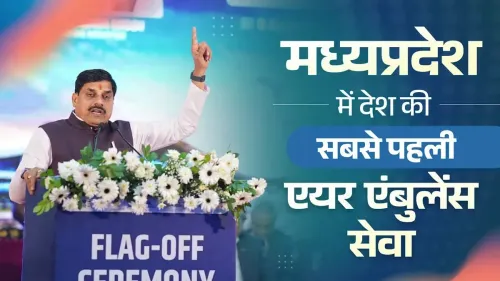
MP CM Mohan Yadav Highlights PM Shri Air Ambulance Service
Synopsis
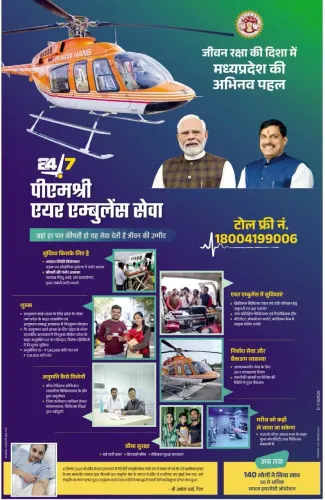
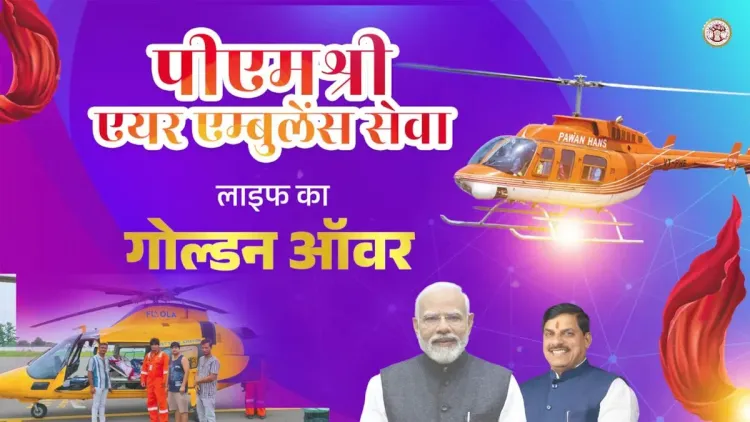
The Chief Minister's Office of Madhya Pradesh has spotlighted the PM Shri Air Ambulance Service, framing it as a guarantee of swift emergency relief and life protection for residents across the state's vast and often remote geography.
Key Takeaways
The Chief Minister's Office of Madhya Pradesh officially highlighted the PM Shri Air Ambulance Service on 23 May 2026 .
The service is positioned to provide rapid medical evacuation in emergencies, particularly for patients in rural and tribal areas.
Madhya Pradesh spans over 3.08 lakh square kilometres , making ground-based emergency transport inadequate in many regions.
The initiative aligns with the broader national health policy environment established by Ayushman Bharat (2018) .
The Madhya Pradesh Health Department is the nodal body overseeing emergency health transport in the state.
Budget allocations, fleet details, and operator agreements will be key indicators of the service's operational scale.
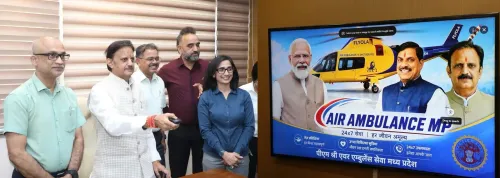
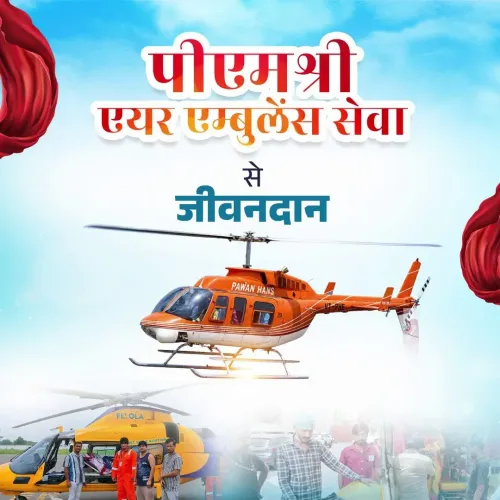
The Chief Minister's Office of Madhya Pradesh, on Saturday, 23 May 2026, spotlighted the PM Shri Air Ambulance Service — a state-promoted air medical evacuation initiative — underscoring its role in delivering rapid emergency relief and protecting lives across the state. The post, shared from the official handle of Chief Minister Dr. Mohan Yadav, was addressed to the Madhya Pradesh Health Department and tagged under #MadhyaPradesh.
Context
The post's headline in Hindi reads: 'Aapat sthiti mein tez rahat, jeevan ki suraksha ka bharosa' — translated as 'Swift relief in emergencies, the assurance of life's protection.' This framing positions the PM Shri Air Ambulance Service as a critical safety net for residents of Madhya Pradesh, particularly in situations where ground transport to tertiary care would be too slow.
Madhya Pradesh is one of India's larger states by area, covering over 3.08 lakh square kilometres, with significant stretches of rural, forested, and tribal terrain where road connectivity to advanced hospitals remains limited. Delays in reaching trauma or critical care centres have historically contributed to preventable deaths in such regions.
Policy Backdrop
Air ambulance capability has emerged as a priority intervention across several Indian states seeking to close the gap between the site of a medical emergency and the nearest tertiary care facility. These services typically operate through a combination of state health budgets, central health mission funding, and arrangements with private aviation or medical operators.
At the national level, Ayushman Bharat Pradhan Mantri Jan Arogya Yojana (2018) expanded coverage for secondary and tertiary care, creating a policy environment in which states have sought complementary transport and evacuation solutions. The PM Shri branding used for this service aligns with a broader pattern of state schemes that echo centrally-sponsored nomenclature to signal convergence with national health priorities.
The Madhya Pradesh Health Department, which oversees public health delivery and emergency transport operations in the state, is the nodal body for operationalising such initiatives.
Stakeholders and Impact
The primary beneficiaries of the PM Shri Air Ambulance Service are emergency patients — particularly those in rural and tribal districts — who face the longest distances to district or state-level hospitals equipped for critical care. For these populations, air evacuation can be the difference between timely intervention and fatal delay in cases of trauma, cardiac events, or obstetric emergencies.
Healthcare workers and district administration officials are secondary stakeholders, as the availability of air evacuation changes triage protocols and referral decisions at the primary and community health centre level. Families of patients in remote areas stand to gain significantly from reduced transit times.
What's Next
Observers will watch for state budget disclosures detailing fleet strength, operational coverage zones, and any formal agreements with aviation operators or the Ministry of Health and Family Welfare at the centre. The scale and reach of the service — including which districts are covered and under what conditions an air ambulance is dispatched — will determine how substantively it addresses the emergency transport gap in Madhya Pradesh.
As Dr. Mohan Yadav's administration continues to position health infrastructure as a governance priority, the PM Shri Air Ambulance Service represents a visible, high-impact signal of that intent — one whose real-world outcomes will ultimately be measured in response times and lives saved.
Point of View
Reinforcing alignment between Bhopal and New Delhi. For a state with a large tribal and rural population, air ambulance coverage is a high-visibility, high-empathy policy lever that speaks directly to communities most vulnerable to emergency transport failures. Whether the service delivers at scale will depend on operational specifics that remain to be publicly disclosed.
NationPress
7 Oct 2026
Frequently Asked Questions
What is the PM Shri Air Ambulance Service in Madhya Pradesh?
The PM Shri Air Ambulance Service is a state-promoted air medical evacuation initiative in Madhya Pradesh aimed at providing rapid emergency transport for critically ill or injured patients, especially in rural and remote areas far from tertiary care hospitals.
Who announced the PM Shri Air Ambulance Service?
The service was highlighted by the Chief Minister's Office of Madhya Pradesh, associated with Chief Minister Dr. Mohan Yadav , through an official post on 23 May 2026.
Who benefits from the PM Shri Air Ambulance Service in MP?
The primary beneficiaries are emergency patients in rural, tribal, and remote districts of Madhya Pradesh where road access to advanced hospitals is limited and ground transport delays can be life-threatening.
How does the PM Shri Air Ambulance Service relate to Ayushman Bharat?
While a distinct state initiative, the PM Shri Air Ambulance Service operates within the broader policy environment created by Ayushman Bharat (2018), which expanded secondary and tertiary care coverage and encouraged states to develop complementary emergency transport solutions.
What details are still awaited about the PM Shri Air Ambulance Service?
Fleet strength, operational districts, dispatch protocols, and any formal agreements with aviation operators or the central Ministry of Health and Family Welfare have not yet been publicly disclosed and remain key indicators to watch.