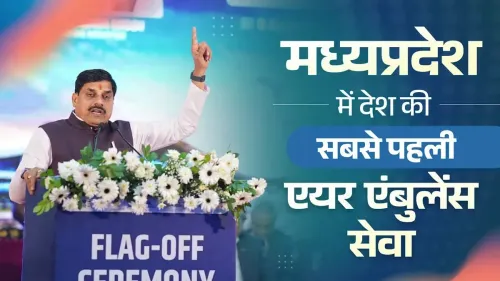
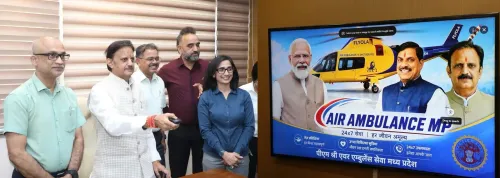
CM Mohan Yadav Launches PM Shri Air Ambulance Service in MP
Synopsis
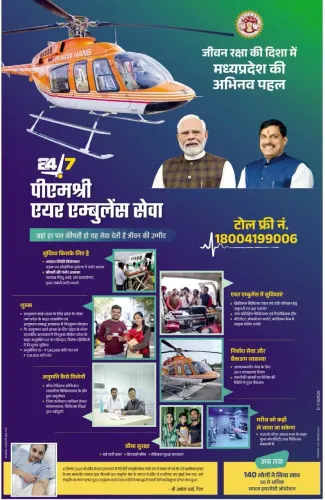
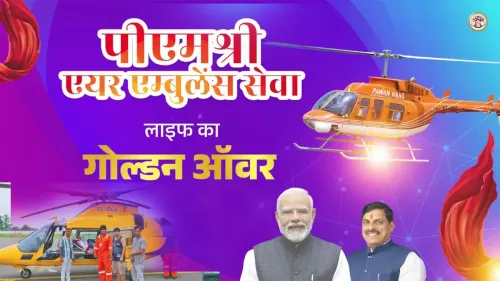
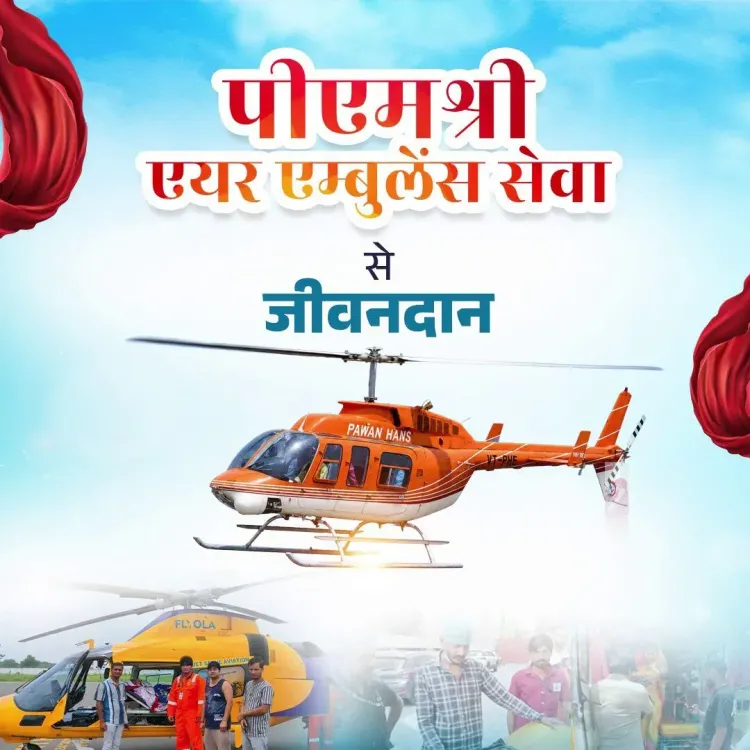
The Chief Minister's Office of Madhya Pradesh announced the PM Shri Air Ambulance Service on 27 May 2026, promising better emergency treatment and safer lives. CM Dr. Mohan Yadav's initiative aims to add aerial emergency transport to the state's existing ground ambulance network, targeting critical patients in remote regions.
Key Takeaways
The Chief Minister's Office of Madhya Pradesh announced the PM Shri Air Ambulance Service on 27 May 2026 .
Mohan Yadav framed the service as a promise of better treatment and a safe life during emergencies.
Madhya Pradesh already operates the national 108 ground ambulance service , which the air service is expected to complement.
The initiative aligns with the National Health Mission goal of reducing preventable deaths through faster referral linkages.
Key operational details — including aircraft numbers, district coverage, and funding model — are yet to be officially notified.
Rural residents and critical patients in remote districts of Madhya Pradesh are the primary intended beneficiaries.
The Chief Minister's Office of Madhya Pradesh announced the PM Shri Air Ambulance Service on Wednesday, 27 May 2026, positioning it as a critical intervention to ensure faster emergency medical transport and safer outcomes for patients across the state. Chief Minister Dr. Mohan Yadav shared details of the initiative, framing it as a promise of better treatment and protected lives during emergencies.
Context
The post from the official Chief Minister's Office account states: 'PM Shri Air Ambulance Seva — aapat sthiti mein behtar upchar aur surakshit jeevan ka bharosa' ('PM Shri Air Ambulance Service — a promise of better treatment and a safe life in emergencies'). The announcement signals the state government's intent to add an aerial layer to Madhya Pradesh's existing emergency medical transport infrastructure, which has historically relied on ground-based services.
Policy Backdrop
Madhya Pradesh has operated the national 108 emergency ambulance service since the mid-2000s, providing ground-level emergency response across the state. The broader national framework — including Ayushman Bharat Pradhan Mantri Jan Arogya Yojana, launched in 2018 — has progressively sought to close gaps in access to secondary and tertiary critical care, particularly for patients in remote districts.
Across India, several states have moved to supplement ground ambulance networks with helicopter or fixed-wing air ambulance capabilities to drastically reduce transport time for trauma, cardiac, and stroke cases. The National Health Mission framework has encouraged faster referral linkages as a key lever for reducing preventable deaths. The 'PM Shri' branding used here aligns with a broader family of centrally-flavoured state schemes that draw on the prestige of flagship national programmes.
Stakeholders and Impact
The primary beneficiaries of an air ambulance service are critical patients in geographically remote or underserved regions of Madhya Pradesh — a large, landlocked state where road connectivity to tertiary hospitals can mean hours of delay. Rural residents, accident victims on national highways, and patients requiring urgent inter-hospital transfer stand to gain the most from reduced transit times.
Health workers and district hospitals are also key stakeholders, as the service would need to integrate with existing triage and referral protocols. Smooth coordination between air and ground teams — including the 108 and 102 ambulance networks — will determine how effectively the service reaches those who need it most.
What's Next
The state health department is expected to notify operational guidelines covering district coverage, aircraft deployment, and eligibility criteria for the service. Integration with the existing 108 emergency response system and Ayushman Bharat coverage norms will be closely watched by health administrators and civil society groups. How the service is funded — whether through state budgets, central grants, or a public-private model — remains a key question as implementation details emerge.
If operationalised effectively, the PM Shri Air Ambulance Service could set a benchmark for emergency medical response in central India and add meaningful momentum to the national goal of universal, timely access to critical care.
Point of View
Often timed to reinforce the governance narrative ahead of electoral cycles. For Madhya Pradesh, a geographically vast state where road-based referral delays are a documented cause of preventable deaths, aerial emergency transport is a credible policy need — not merely optics. The 'PM Shri' branding is a deliberate signal of alignment with the Centre, helping the state government leverage both political capital and potential central funding. The real test will be in the operational details: coverage of tribal and remote districts, integration with 108 services, and whether the scheme reaches patients who cannot currently afford private air evacuation.
NationPress
21 Oct 2026
Frequently Asked Questions
What is the PM Shri Air Ambulance Service in Madhya Pradesh?
The PM Shri Air Ambulance Service is an emergency aerial medical transport initiative announced by the Madhya Pradesh government on 27 May 2026, aimed at providing faster and safer emergency care to critically ill patients, particularly in remote areas.
Who announced the PM Shri Air Ambulance Service?
The service was announced by the Chief Minister's Office of Madhya Pradesh, associated with Chief Minister Dr. Mohan Yadav, on 27 May 2026.
How is the PM Shri Air Ambulance Service different from the 108 ambulance service?
The existing 108 service provides ground-based emergency transport, while the PM Shri Air Ambulance Service is intended to add an aerial component, significantly reducing transit time for critical patients who are far from tertiary hospitals.
Who will benefit from the PM Shri Air Ambulance Service in Madhya Pradesh?
The primary beneficiaries are critical patients — including trauma, cardiac, and stroke cases — in rural and remote districts of Madhya Pradesh where road transport to hospitals can take several hours.
Is the PM Shri Air Ambulance Service free for patients in Madhya Pradesh?
The funding model and patient eligibility criteria for the PM Shri Air Ambulance Service have not yet been officially notified by the state health department, so it is not yet confirmed whether the service will be free or subsidised.