CM Mohan Yadav launches 1,500-bus rural transport drive in MP
Synopsis
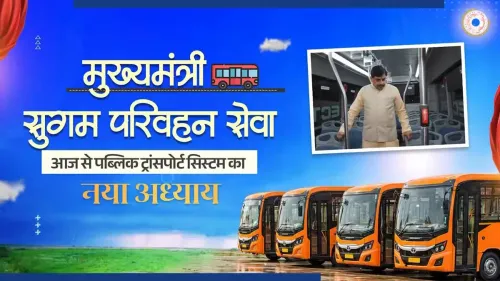
Madhya Pradesh CM Dr. Mohan Yadav launched the Mukhyamantri Sugam Parivahan Seva and PM E-Bus Seva with 1,500 buses to restore rural public transport absent for two decades, targeting 15,000 buses by 2029.
Key Takeaways
1,500 buses were deployed across Madhya Pradesh on the launch day under the dual scheme framework.
The service targets residents of remote and rural areas who lost government bus connectivity over the past two decades .
The BJP Madhya Pradesh manifesto of 2023 had explicitly committed to restoring rural public transport.
Union Minister Nitin Gadkari co-presided over the launch, linking the state scheme to the central PM E-Bus Seva .
The fleet is targeted to scale tenfold — from 1,500 to 15,000 buses by 2029 .
Key beneficiaries identified are rural poor, farmers, and students across Madhya Pradesh .
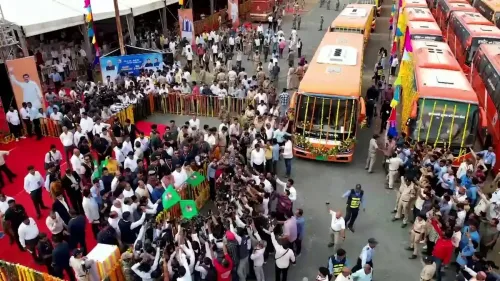
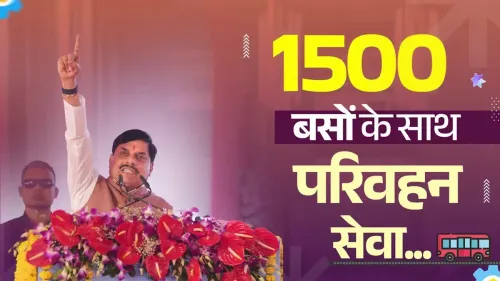
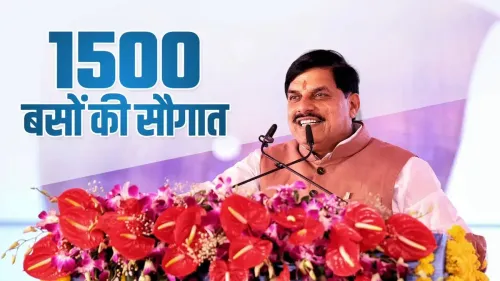
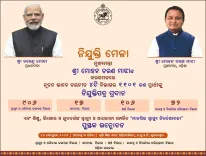
Two decades of silence on rural roads — and now, 1,500 buses rolling out across Madhya Pradesh in a single day. Madhya Pradesh Chief Minister Dr. Mohan Yadav on Saturday, September 26, 2026, announced the historic launch of the 'Mukhyamantri Sugam Parivahan Seva' and the centrally-backed 'PM E-Bus Seva', calling it a watershed moment for villages that had been cut off from mainstream public transport for over twenty years.
Two decades of disconnection — and one day's answer
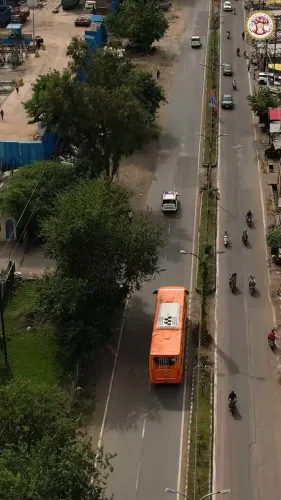
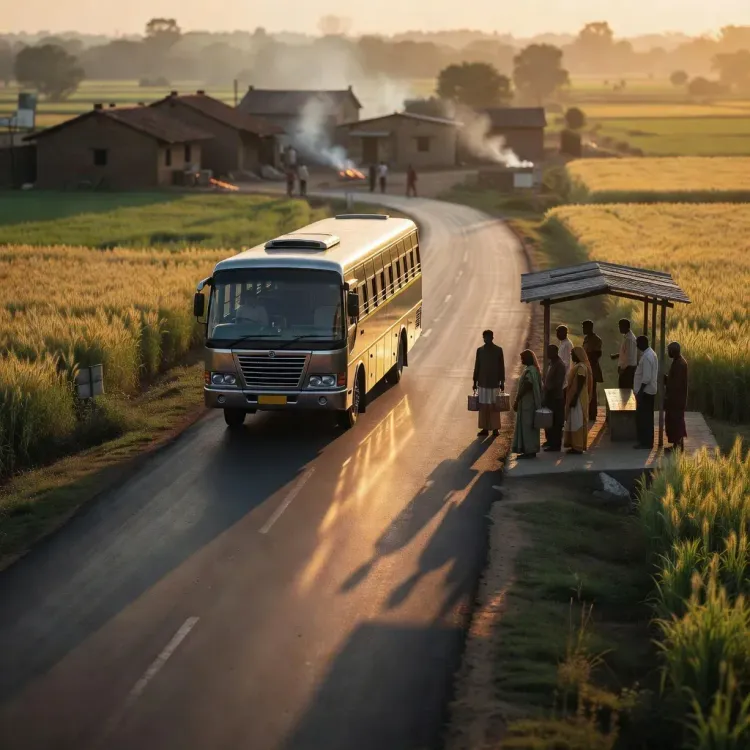
In his post, Dr. Mohan Yadav was direct: 'Hum jo kehte hain, karke dikhate hain' — 'We say it, and we deliver it.' The line carries weight when you understand what it is responding to. State-run bus services across Madhya Pradesh's rural belts had effectively collapsed over the past two decades. Dozens of far-flung villages lost their connection to main roads. Farmers hauling produce, students chasing an education, and families seeking healthcare were left to piece together journeys on whatever limited transport they could find. The gap was not a secret — it was a daily reality for millions.
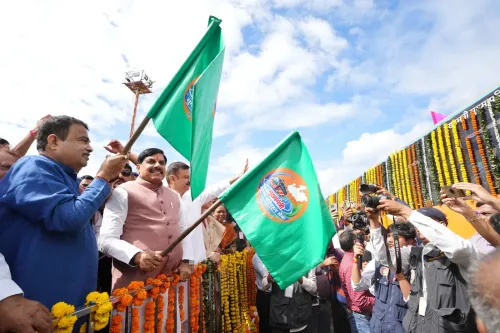
The BJP Madhya Pradesh election manifesto of 2023 had carried an explicit promise to restore this rural public transport. Yesterday's launch, conducted alongside Union Minister for Road Transport and Highways Nitin Gadkari, was framed by the Chief Minister as the manifesto promise meeting the ground. A pledge converted into a bus timetable. That is the political symbolism Dr. Yadav is leaning into — and it is a pointed one.
1,500 buses today, 15,000 by 2029 — the scale of the ambition
The numbers define the ambition. The service launched with 1,500 buses operating state-wide. The target: scale that fleet to 15,000 buses by 2029 — a tenfold expansion in under four years. The dual branding of the initiative — one state scheme, one central scheme — is deliberate. The PM E-Bus Seva, approved by the Union Cabinet in 2023, provides the electric-bus backbone that states like Madhya Pradesh can tap into for fleet expansion and green-mobility goals. Pairing a state-named service with a central scheme is a well-worn political architecture; here it also has a practical logic, pooling state and central resources toward a connectivity gap that is real and large.
The primary beneficiaries named by the Chief Minister are unambiguous: the rural poor, farmers, and students — the constituencies most hurt when the old bus network collapsed, and the ones most likely to feel the change first when a bus finally pulls into a village stop that has seen none for years.
Gadkari's presence and what it signals
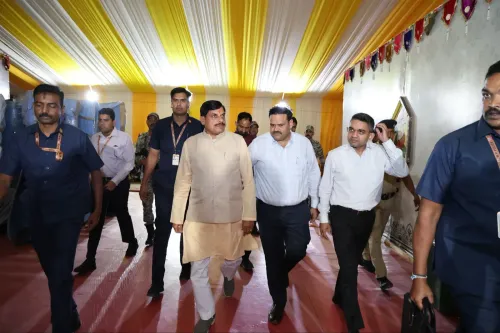
Union Minister Nitin Gadkari, whose ministry oversees both national road infrastructure and the PM E-Bus Seva rollout, co-presided over the launch. His presence is not incidental. It signals that Madhya Pradesh is being positioned as an early and visible implementation showcase for the central bus electrification drive — the kind of state-level execution that feeds both the Centre's scheme optics and the state government's delivery narrative ahead of the next electoral cycle.
Similar transport revival drives have been pursued across other BJP-governed states since the 2023 round of elections, making this part of a broader intra-party governance pattern: use central schemes as an amplifier for state-level promises made in manifestos. Madhya Pradesh is now the newest, and largest, test case.
What the 2029 target actually demands
Scaling from 1,500 to 15,000 buses is not a communications exercise — it is a procurement, financing, operations, and infrastructure challenge. The critical milestones to watch will be the phased tender announcements for additional electric buses, state budget allocations earmarked for fleet expansion, and whether charging infrastructure keeps pace with vehicle deployment across districts that have never hosted it before. The promise is historic. The delivery schedule is four years. The arithmetic is unsparing.
For a state where a generation of rural residents grew up without a government bus on their road, Madhya Pradesh's 1,500-bus launch is not just a transport story — it is a test of whether a manifesto can actually move people.
Point of View
Compounding the political dividend. For Dr. Mohan Yadav, who has spent his first tenure as Chief Minister consolidating a welfare-delivery identity, a visible rural transport launch checks multiple boxes: manifesto redemption, pro-poor optics, and a tangible contrast with the governance gap his post explicitly names. The 2029 fleet target of 15,000 buses is ambitious enough to sustain a four-year narrative arc — but the credibility of that arc will hinge on procurement timelines and budgetary follow-through, not just launch-day spectacle.
NationPress
26 Sept 2026
Frequently Asked Questions
What is the Mukhyamantri Sugam Parivahan Seva in Madhya Pradesh?
The Mukhyamantri Sugam Parivahan Seva is a Madhya Pradesh state government bus scheme launched to restore public transport connectivity in rural and remote areas that had been without government bus services for roughly two decades. It launched with 1,500 buses and aims to expand to 15,000 buses by 2029.
How many buses were launched under the MP rural transport scheme?
The scheme launched with 1,500 buses operating across Madhya Pradesh, with a stated target of scaling to 15,000 buses by 2029.
What is PM E-Bus Seva and how does it relate to Madhya Pradesh?
PM E-Bus Seva is a Union Cabinet-approved central government scheme to deploy electric buses across Indian states. Madhya Pradesh is pairing it with the state's own Mukhyamantri Sugam Parivahan Seva to expand its rural bus fleet using centrally supported electric vehicles.
Who launched the Mukhyamantri Sugam Parivahan Seva?
Madhya Pradesh Chief Minister Dr. Mohan Yadav launched the service alongside Union Minister for Road Transport and Highways Nitin Gadkari.
Why did rural Madhya Pradesh lack bus services?
According to CM Dr. Mohan Yadav, state-run bus operations had effectively ceased over the past two decades, leaving many remote villages disconnected from main roads and forcing rural residents, farmers, and students to depend on limited private transport options.