Akhilesh flips Yogi's '80-20' into a seat-count taunt
Synopsis
Samajwadi Party chief Akhilesh Yadav reframed CM Yogi Adityanath's '80-20' phrase on 10 November 2026, predicting the BJP-led NDA will contest only 80 UP assembly seats while his PDA coalition will prove dominant ahead of the 2027 elections.
Key Takeaways
Akhilesh Yadav posted on 10 November 2026 reinterpreting CM Yogi Adityanath's '80-20' phrase as a seat-count prediction, not a demographic reference.
He claims the BJP-led NDA will be viable in a maximum of 80 of Uttar Pradesh's 403 assembly seats .
His PDA (Pichhda-Dalit-Alpsankhyak) alliance, he argues, will prove decisively superior to the NDA.
PDA social engineering has been Samajwadi Party's key electoral strategy since the 2022–2024 cycle to broaden its base beyond Yadav-Muslim voters.
The post is an early salvo in the political positioning battle ahead of the 2027 Uttar Pradesh assembly elections .
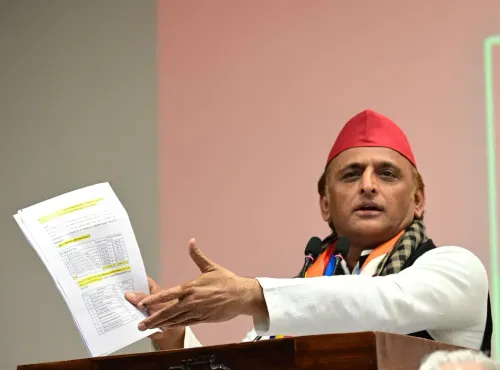
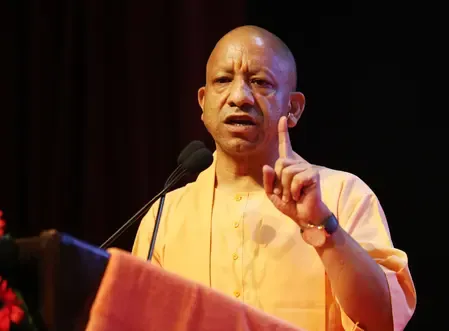
A two-digit phrase from Uttar Pradesh Chief Minister Yogi Adityanath has handed Samajwadi Party president Akhilesh Yadav a fresh attack line — and on Tuesday, 10 November 2026, Yadav wasted no time turning it into an electoral arithmetic jibe aimed squarely at the ruling coalition ahead of the 2027 Uttar Pradesh assembly elections.
Posting on X in Hindi, Yadav wrote: 'UP ke Mukhyamantri ji ka 80-20 se matlab ye hai…' — 'What the Chief Minister of UP means by 80-20 is this: his BJP alliance will be fit to contest a maximum of 80 seats, and the PDA alliance will prove to be 20 (twenty) against the NDA.' The reinterpretation flips a remark that the BJP has historically deployed — often as a coded reference to communal polarisation — into a numerical prediction of opposition dominance. UP's assembly has 403 seats, making the implied math pointed: Yadav is suggesting the NDA is competitive in barely a fifth of the house.
The '80-20' phrase and its contested history in UP politics
The '80-20' formulation has circulated in Uttar Pradesh political discourse for years, widely understood by observers as an allusion to the state's approximate 80 per cent Hindu and 20 per cent Muslim population split — a framing critics say is designed to consolidate majority votes along communal lines. Yadav's post refuses that framing entirely, recasting the numbers as a measure of raw seat-winning capacity rather than demography. It is a classic counter-move: deny the original meaning, substitute a damaging one.
PDA vs NDA — the coalition arithmetic Akhilesh is betting on
The PDA — Pichhda, Dalit, Alpsankhyak (Backward, Dalit, Minority) — is Samajwadi Party's signature social-coalition brand, assembled aggressively since the 2022–2024 electoral cycle to stitch together votes beyond the party's traditional Yadav-Muslim base. Yadav's post positions PDA as the challenger that will reduce the NDA (the BJP-led National Democratic Alliance) to a rump presence across the state. In the 2022 UP assembly elections, BJP secured a clear majority while Samajwadi Party emerged as the principal opposition — meaning Yadav is projecting a dramatic reversal of that verdict.
Seat-sharing talks and the road to 2027
With alliance negotiations for the 2027 Uttar Pradesh assembly elections expected to intensify in the coming months, every public exchange between the ruling coalition and the opposition carries a signalling function — not just for voters, but for potential alliance partners watching who projects strength. Yadav's crisp, numerical rebuke is designed precisely for that audience: it frames his PDA bloc as the overwhelming force, daring smaller parties to bet on the winning side. The BJP has not yet formally responded to this specific reinterpretation.
In Uttar Pradesh, numbers have always been political weapons. Akhilesh Yadav has just picked up the other side's and pointed it back.
Point of View
He denies the BJP a polarising talking point while simultaneously projecting electoral confidence. It signals that Samajwadi Party intends to fight the 2027 UP election on a social-coalition narrative rather than a communal one — the PDA brand is meant to make caste and community addition, not division, the dominant story. The move also serves an alliance-recruitment function: smaller parties and community groups weighing their options in UP will read this as a 'back the winner' message from the opposition's most prominent voice. Whether PDA arithmetic can actually translate to seat victories, as it notably did not in 2022, remains the central unresolved question of UP opposition politics.
NationPress
10 Nov 2026
Frequently Asked Questions
What did Akhilesh Yadav say about the '80-20' remark?
On 10 November 2026, Akhilesh Yadav posted on X saying that CM Yogi Adityanath's '80-20' phrase actually means the BJP-led NDA will be capable of contesting only 80 seats in Uttar Pradesh, while his PDA alliance will prove dominant against the NDA.
What is the '80-20' phrase in Uttar Pradesh politics?
The '80-20' phrase is widely understood in UP political discourse as a reference to the state's approximate 80 per cent Hindu and 20 per cent Muslim population split, often seen as a tool to consolidate majority community votes. Akhilesh Yadav has reinterpreted it as referring to seat counts.
What is the PDA alliance in Uttar Pradesh?
PDA stands for Pichhda, Dalit, Alpsankhyak — meaning Backward, Dalit and Minority communities. It is a social-coalition strategy championed by the Samajwadi Party since 2022–2024 to broaden its electoral base beyond its traditional Yadav-Muslim support.
How many seats does the Uttar Pradesh assembly have?
The Uttar Pradesh legislative assembly has 403 seats, making it the largest state assembly in India.
When are the next Uttar Pradesh assembly elections?
The next Uttar Pradesh assembly elections are scheduled for 2027. Seat-sharing negotiations between parties and alliances are expected to intensify in the months leading up to the polls.