MP Assembly Passes Women's Reservation Resolution Amid Congress Walkout
Synopsis
The Madhya Pradesh Assembly passed the 'Nari Shakti Vandan Sankalp' on April 27, endorsing 33% women's reservation — but only after delimitation, potentially delaying it past 2029. Congress walked out, calling it a symbolic gesture that pushes real empowerment into the distant future.
Key Takeaways
The Madhya Pradesh Legislative Assembly passed the 'Nari Shakti Vandan Sankalp' on April 27, 2025 during a special one-day session in Bhopal .
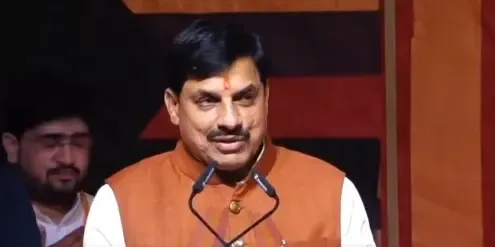
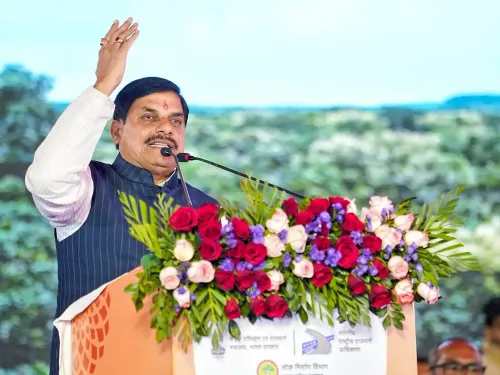
Chief Minister Dr Mohan Yadav moved the resolution proposing 33% reservation for women in Parliament and all state assemblies, contingent on completion of the delimitation process .
Leader of Opposition Umang Singhar argued the clause delays benefits beyond 2028–2029 and demanded immediate implementation across all 230 MP constituencies .
The Congress legislature party staged a walkout in protest, leaving the BJP to pass the resolution unopposed.
BJP state president Hemant Khandelwal noted parliamentary boundaries have not been updated since 1971 , defending the delimitation-linked approach.
The assembly was adjourned sine die after the resolution passed, closing a politically charged session.
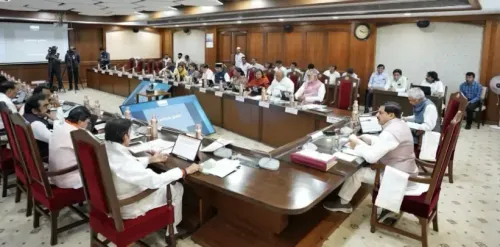
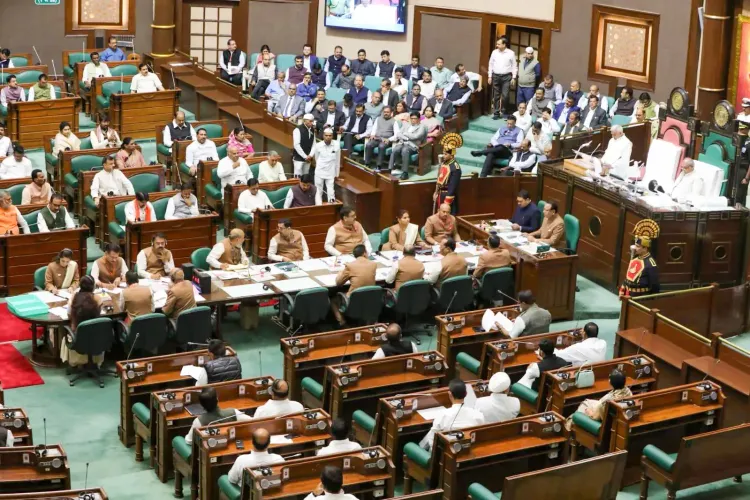
The Madhya Pradesh Legislative Assembly was adjourned sine die on Monday, April 27, after the ruling Bharatiya Janata Party (BJP) government passed the 'Nari Shakti Vandan Sankalp' — a resolution endorsing one-third reservation for women in Parliament and all state assemblies — during a special one-day session in Bhopal. The proceedings turned contentious as Congress legislators staged a dramatic walkout, accusing the BJP of deferring real benefits to women behind procedural conditions.
What the Resolution Says
Chief Minister Dr Mohan Yadav moved the formal resolution in the House, proposing a 33% reservation for women in Parliament and every state legislative assembly across India. However, the resolution explicitly states that the quota will come into force only after the completion of the delimitation process — a census-linked exercise that critics say could push implementation well beyond 2028 or 2029. This single clause became the flashpoint of the entire session.
Notably, this mirrors the central Women's Reservation Act (Nari Shakti Vandan Adhiniyam) passed by Parliament in September 2023, which similarly ties implementation to delimitation. The MP resolution, in effect, reaffirms alignment with the national framework rather than charting an independent, faster path.
Congress Demands Immediate Implementation
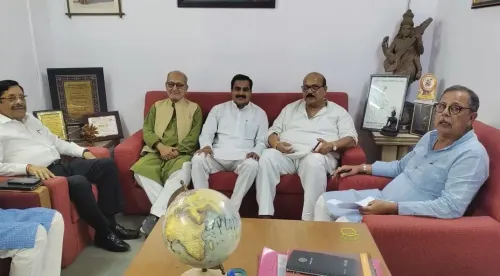
Before the session commenced, both parties held separate legislative strategy meetings. At the residence of Leader of the Opposition Umang Singhar, the Congress legislature party unanimously resolved to demand immediate implementation of 33% reservation across all 230 Assembly constituencies in Madhya Pradesh — without waiting for delimitation. Singhar argued on the floor of the House that the BJP's approach effectively relegates women's empowerment to a future date, calling the resolution symbolic rather than substantive.
He asserted that if the government were genuinely committed to women's empowerment, it would grant the quota based on the current seat allocation rather than tethering it to a census exercise. Following heated exchanges, Congress members walked out in protest, leaving the treasury benches to pass the resolution unopposed.
Key Arguments from the Treasury Benches
BJP state president Hemant Khandelwal defended the resolution, pointing out that parliamentary constituency boundaries have not been updated since 1971, placing enormous pressure on elected representatives. He framed the delimitation-linked approach as a necessary structural correction before expanding representation, invoking the legacies of Rani Lakshmibai and Ahilyabai Holkar to underscore the party's commitment to women's dignity.
Minister Krishna Gaur, herself a woman from the Other Backward Classes (OBC) community, launched a sharp counter-attack on the Congress, claiming their opposition exposed a
Point of View
While the delimitation conditionality ensures no immediate disruption to existing power structures. What mainstream coverage misses is the deeper contradiction: a party that controls the state government could theoretically push for faster implementation in local bodies, yet chooses to wait for a national process it does not fully control. Congress's walkout, meanwhile, is tactically convenient but lacks credibility given the party's own decades-long failure to pass women's reservation when in power. The real story is not BJP versus Congress — it is women voters watching both parties perform empowerment without delivering it.
NationPress
16 Sept 2026
Frequently Asked Questions
What is the 'Nari Shakti Vandan Sankalp' passed in the MP Assembly?
The 'Nari Shakti Vandan Sankalp' is a resolution passed by the Madhya Pradesh Legislative Assembly on April 27, 2025, endorsing 33% reservation for women in Parliament and all state assemblies. It aligns with the central Women's Reservation Act of 2023 and stipulates that the quota will take effect only after the delimitation process is completed.
Why did Congress walk out of the MP Assembly session on April 27?
Congress walked out because the resolution links women's reservation to the delimitation process, which the opposition argues could delay implementation until 2028 or 2029. Leader of Opposition Umang Singhar demanded immediate 33% reservation across all 230 MP constituencies without waiting for delimitation.
When will women's reservation actually be implemented in Madhya Pradesh?
According to the resolution passed on April 27, 2025, women's reservation in MP will come into effect only after the national delimitation exercise is completed, which is tied to a census. Critics say this could push implementation to 2028–2029 at the earliest.
What did BJP leaders say in defence of the women's reservation resolution?
BJP state president Hemant Khandelwal argued that parliamentary constituency boundaries have not been updated since 1971, making delimitation a necessary precondition. Minister Krishna Gaur accused Congress of historically disrespecting women's progress and credited PM Modi with mainstreaming women in governance.
What happens next after the MP Assembly was adjourned sine die?
The Madhya Pradesh Assembly was adjourned sine die after the resolution passed on April 27, 2025. The Congress is expected to escalate its demand for immediate implementation, potentially through legal challenges or as a campaign issue in upcoming local body and state elections.