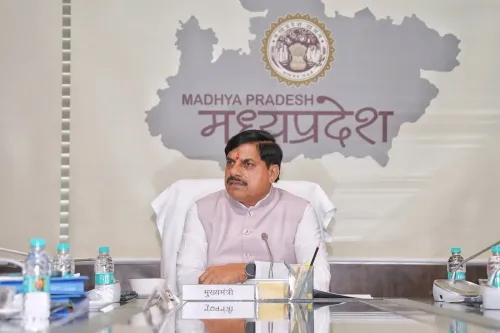
MP CM Mohan Yadav Cites Drop in Maternal, Infant Mortality
Synopsis
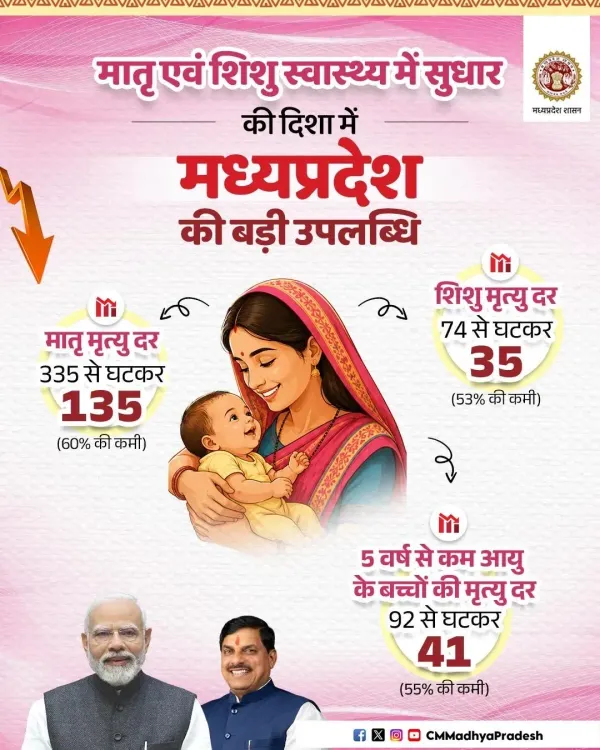
The Chief Minister's Office of Madhya Pradesh announced on 9 July 2026 that the state has recorded a significant decline in maternal and infant mortality rates, attributing the progress to CM Dr. Mohan Yadav's sustained focus on mother and child health as a governance priority.
Key Takeaways
The Chief Minister's Office of Madhya Pradesh announced a notable reduction in MMR and IMR across the state on 9 July 2026 .
Mohan Yadav , in office since December 2023 , has prioritised maternal and child health as a top policy agenda.
The announcement was addressed to the Ministry of Women and Child Development at both state and central levels, indicating inter-departmental coordination.
Progress builds on national schemes including Janani Suraksha Yojana (2005), the National Rural Health Mission (2005), and POSHAN Abhiyaan (2018).
Independent verification of specific figures is awaited from the Registrar General of India's Sample Registration System bulletin.
Madhya Pradesh's improvement contributes to India's SDG 3 target of reducing national MMR below 70 per lakh live births.
The Chief Minister's Office of Madhya Pradesh announced on Thursday, 9 July 2026 that the state has recorded a significant decline in both maternal mortality rate (MMR) and infant mortality rate (IMR), crediting the leadership of Chief Minister Dr. Mohan Yadav for prioritising mother and child health as a top governance agenda.
Context
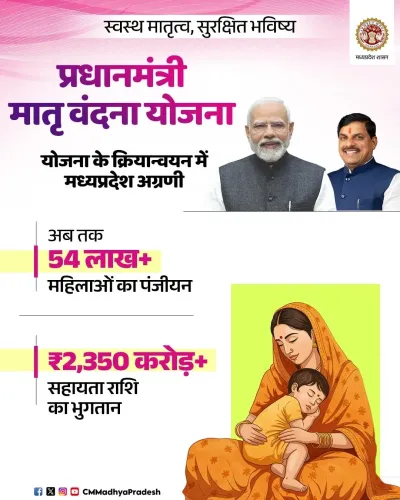
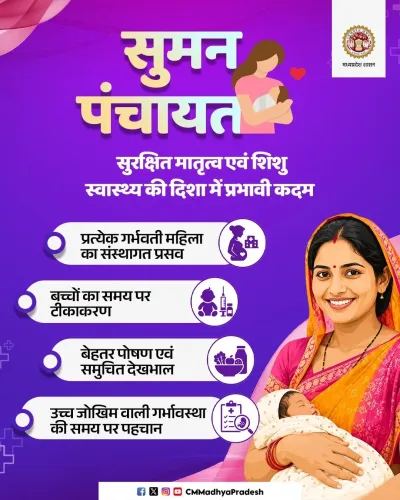
The official post, shared from the CMO's verified account, stated: 'स्वस्थ माँ, सुरक्षित शिशु' ('Healthy mother, safe infant') — framing the announcement as a measurable outcome of sustained policy focus. The post noted that effective efforts made under Dr. Mohan Yadav's leadership toward maternal and child health have yielded positive results, with a notable reduction in both MMR and IMR recorded across the state.
The announcement was directed at the Ministry of Women and Child Development at both the state and central level, signalling inter-departmental coordination in driving these outcomes.
Policy Backdrop
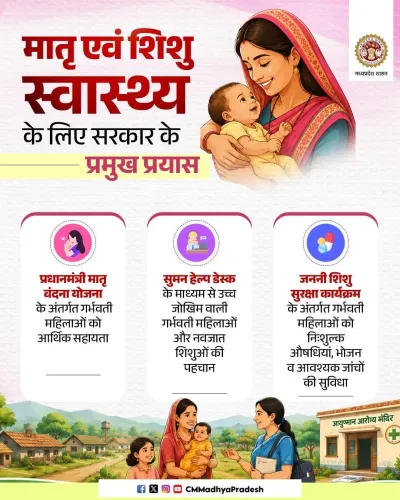
Madhya Pradesh has historically struggled with among the higher maternal and infant mortality figures in India, making any sustained decline a significant public health milestone. The state's progress sits within a broader national framework: the Janani Suraksha Yojana, launched in 2005, incentivised institutional deliveries to reduce maternal deaths, while the National Rural Health Mission, also from 2005, sought to strengthen primary healthcare infrastructure in states like Madhya Pradesh.
More recently, the POSHAN Abhiyaan — the national nutrition mission launched in 2018 — has targeted stunting, anaemia, and low birth weight, all of which directly influence neonatal and maternal survival rates. Madhya Pradesh has been an active implementing state under these centrally sponsored schemes.
Stakeholders and Impact
The primary beneficiaries of this reported improvement are pregnant women and newborns across Madhya Pradesh, particularly in rural and tribal districts where access to antenatal care has historically been limited. Improvements in MMR and IMR are widely regarded as proxy indicators of a state's overall healthcare delivery capacity.
The announcement also carries political and administrative significance for Dr. Mohan Yadav, who assumed office as Chief Minister in December 2023 and has positioned maternal and child welfare as a defining pillar of his administration. Progress on these indicators strengthens the state government's case for continued central funding and scheme expansion.
India's commitments under Sustainable Development Goal 3 require reducing the national MMR to below 70 per lakh live births. State-level progress in large, populous states like Madhya Pradesh is critical to meeting that national target.
What's Next
The next bulletin from the Registrar General of India's Sample Registration System is expected to provide updated, independently verified national and state-level MMR and IMR figures that will either corroborate or contextualise the state government's claims. Analysts and health policy observers will watch that data release closely.
For now, the Chief Minister's Office has signalled that maternal and child health will remain a central priority, with continued coordination between state departments and the Union Ministry of Women and Child Development likely to shape the next phase of interventions across Madhya Pradesh.
Point of View
Arriving midway through CM Dr. Mohan Yadav's first full year in office and reinforcing his administration's narrative of welfare-led development. Historically, Madhya Pradesh's MMR and IMR figures have been a political liability for successive state governments, making any credible improvement a significant reputational asset. The deliberate tagging of the Union Ministry of Women and Child Development suggests the state is positioning itself as a model implementer of centrally sponsored schemes, which could influence future resource allocation. Until independent SRS data is published, however, the claims remain self-reported, and the political weight of the announcement will hinge on how the numbers hold up under official scrutiny.
NationPress
7 Oct 2026
Frequently Asked Questions
What did the Madhya Pradesh government announce about maternal and infant mortality?
The Chief Minister's Office of Madhya Pradesh announced on 9 July 2026 that the state has recorded a notable decline in both maternal mortality rate (MMR) and infant mortality rate (IMR), crediting the policy focus of CM Dr. Mohan Yadav.
What schemes have helped reduce maternal mortality in Madhya Pradesh?
Key national schemes include the Janani Suraksha Yojana (2005), which promotes institutional deliveries, the National Rural Health Mission (2005), which strengthens rural healthcare, and POSHAN Abhiyaan (2018), which targets maternal and child nutrition.
Who is the Chief Minister of Madhya Pradesh in 2026?
Dr. Mohan Yadav has been the Chief Minister of Madhya Pradesh since December 2023 and has made maternal and child health a central priority of his administration.
What is India's SDG target for maternal mortality?
Under Sustainable Development Goal 3, India aims to reduce its national maternal mortality ratio to below 70 per lakh live births. Progress in large states like Madhya Pradesh is critical to achieving this national target.
Where can verified MMR and IMR data for Madhya Pradesh be found?
The Registrar General of India's Sample Registration System (SRS) publishes official, independently verified MMR and IMR data for all states. The next SRS bulletin is expected to carry updated figures.