CM Mohan Yadav Reviews Women & Child Development Dept
Synopsis
Madhya Pradesh CM Dr. Mohan Yadav on June 1 reviewed the Women and Child Development Department, directing officials to ensure accountability in welfare schemes, coordinate with the Health Department on nutrition, involve private institutions, and prepare a PPP-mode hostel plan for working women.
Key Takeaways
Mohan Yadav chaired a review of the Women and Child Development Department at the Mantralaya on June 1, 2026 .
Officials were directed to ensure public participation and accountability in welfare scheme implementation.
The Health Department is to work jointly with the Women and Child Development Department on nutrition improvement activities.
Private hospitals and institutions are to be brought in as partners in nutrition delivery at the ground level.
A work-plan for PPP-mode hostels for working women is to be prepared.
Swift action was ordered against negligent officials; high performers at the field level are to be incentivised.
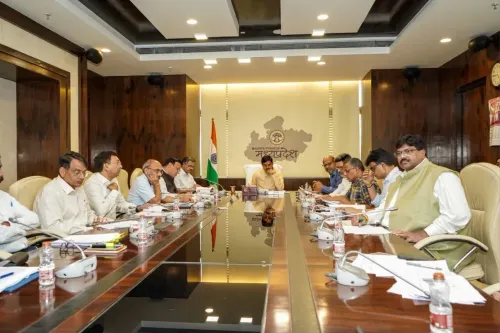
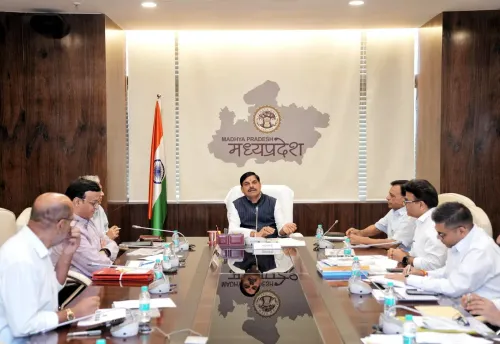
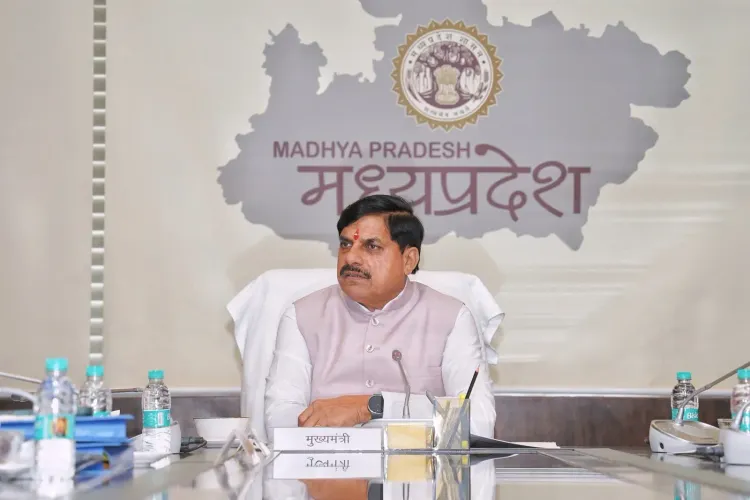
Madhya Pradesh Chief Minister Dr. Mohan Yadav on Monday, June 1, 2026, chaired a review meeting of the state's Women and Child Development Department at the Mantralaya, directing officials to ensure public participation and accountability in the implementation of welfare schemes for women and children.
What the CM Directed
In the meeting, Dr. Yadav issued a series of directives covering nutrition improvement, inter-departmental coordination, performance accountability, and infrastructure. He instructed officials to work in tandem with the Health Department on nutrition-improvement activities and to actively seek the participation of private hospitals and institutions in this effort.
The Chief Minister stressed a clear performance framework: 'मैदानी स्तर पर बेहतर कार्य करने वालों को प्रोत्साहित और लापरवाही बरतने वालों पर त्वरित कार्रवाई करें' — 'Encourage those doing better work at the ground level and take swift action against those showing negligence.'
He also directed officials to study and adopt successful innovations being implemented in other states and in districts within Madhya Pradesh itself, signalling an intent to scale best practices across the department.
Context
The review comes as state governments across India intensify monitoring of centrally and state-sponsored welfare schemes ahead of annual budget cycles. Madhya Pradesh, governed by the BJP, has positioned women's welfare as a political and administrative priority, most visibly through the Ladli Behna Yojana launched in 2023, which provides monthly financial assistance to eligible women.
The national POSHAN Abhiyaan, launched by the central government in 2018, set targets to reduce stunting, wasting, and anaemia among women and children. State departments are required to align their nutrition activities with this framework, making Health Department coordination a standard operational expectation.
Policy Backdrop
The directive to involve private hospitals and institutions in nutrition work reflects a broader trend in BJP-governed states of leveraging public-private partnerships for social infrastructure. Several states have already piloted PPP-mode models for hostels and nutrition centres with varying degrees of success.
Notably, Dr. Yadav specifically called for a work-plan to construct hostels for working women on a PPP (Public-Private Partnership) mode — a policy push that, if implemented, would expand safe accommodation options for women employed in urban and semi-urban centres across the state.
Stakeholders and Impact
The directives directly affect frontline workers such as Anganwadi workers and supervisors under the Women and Child Development Department, as well as health officials responsible for nutrition delivery. The performance-accountability clause — swift action against negligence — places additional pressure on field-level administration.
Women beneficiaries, particularly working women in cities and towns, stand to gain if the PPP hostel plan moves from directive to implementation. Child nutrition outcomes, a long-standing challenge in parts of Madhya Pradesh, could also see improvement if private-sector health institutions are formally integrated into the delivery chain.
What's Next
Officials are expected to prepare a concrete work-plan for the PPP-mode hostel construction and submit proposals for adopting inter-state innovations in nutrition delivery. The emphasis on accountability suggests that progress on these directives will be tracked in subsequent departmental reviews. Whether private hospitals and institutions respond to the government's call for collaboration will be a key indicator of the initiative's momentum.
Point of View
Including punitive action against negligent officials, is a stronger administrative posture than routine review meetings typically carry. The PPP-hostel directive fits a pattern seen in several BJP-governed states of using private capital to fill gaps in social infrastructure without expanding the state's fiscal burden. Integrating private hospitals into nutrition delivery could meaningfully extend the reach of POSHAN Abhiyaan at the last mile, though the success of such models has historically depended on how binding the partnership agreements are. The instruction to adopt innovations from other states and districts also suggests a data-driven benchmarking approach that, if institutionalised, could improve outcomes beyond the current review cycle.
NationPress
16 Oct 2026
Frequently Asked Questions
What did CM Mohan Yadav announce for working women in Madhya Pradesh?
CM Dr. Mohan Yadav directed officials to prepare a work-plan for constructing hostels for working women on a Public-Private Partnership (PPP) mode, aiming to expand safe accommodation options across the state.
What is the Women and Child Development Department review about?
The June 1, 2026 review focused on ensuring accountability and public participation in welfare schemes for women and children, improving nutrition outcomes in coordination with the Health Department, and adopting successful innovations from other states.
How does Madhya Pradesh plan to improve child nutrition?
The state has directed the Women and Child Development Department to work jointly with the Health Department and to involve private hospitals and institutions in nutrition-improvement activities at the ground level.
What action will be taken against negligent officials in welfare schemes?
CM Mohan Yadav ordered swift action against officials found to be negligent at the field level, while directing that high performers be actively encouraged and incentivised.
What is the Ladli Behna Yojana and how does it relate to this review?
Ladli Behna Yojana is a Madhya Pradesh scheme launched in 2023 that provides monthly financial assistance to eligible women; it is part of the broader women's welfare framework whose implementation accountability was discussed in the June 1 review.