CM Mohan Yadav: MP Tech Conclave 3.0 Eyes ₹40,000 Cr Investment
Synopsis
The Chief Minister's Office of Madhya Pradesh announced MP Tech Growth Conclave 3.0, featuring 51 activities aimed at attracting ₹40,000 crore in investment and creating 35,000 jobs, with a focus on establishing the state as a GCC, semiconductor and data centre hub.
Key Takeaways
MP Tech Growth Conclave 3.0 is being organised with 51 diverse activities under its umbrella.
Investment proposals worth approximately ₹40,000 crore are projected through the conclave.
Around 35,000 new employment opportunities are expected to be created if proposals are realised.
The conclave aims to develop Madhya Pradesh as a hub for Global Capability Centres (GCCs) , semiconductors , and data centres .
MAPIT is the nodal agency coordinating tech policy and investor outreach for the state.
The initiative builds on the India Semiconductor Mission (2021) and MP Industrial Promotion Policy 2022 .
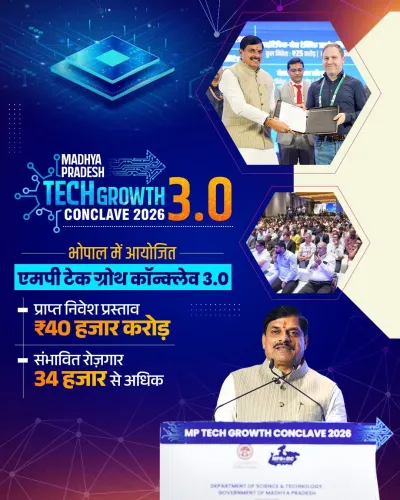
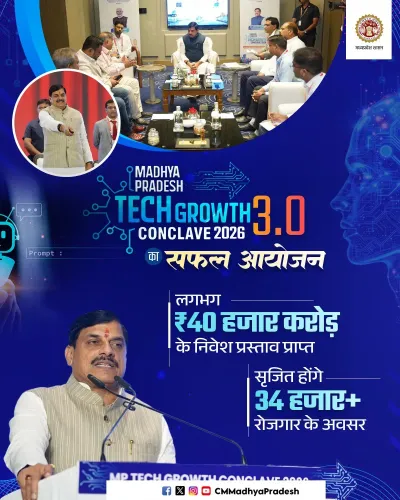
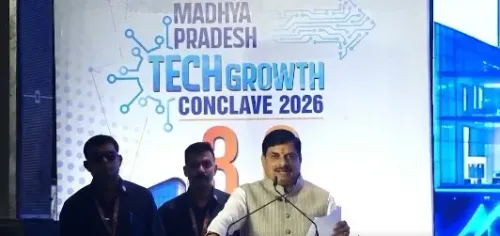
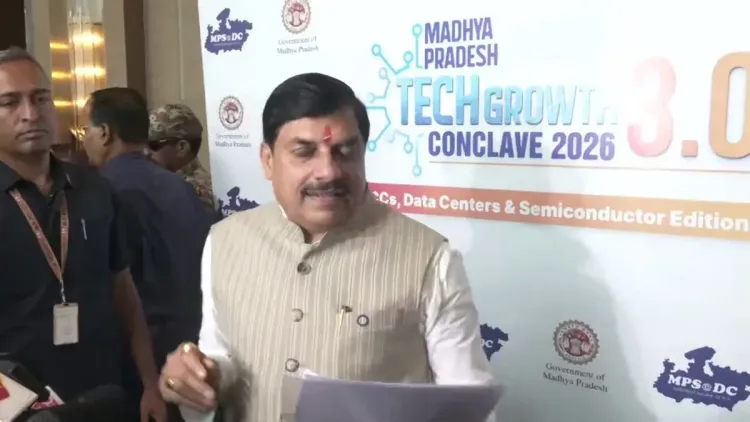
The Chief Minister's Office of Madhya Pradesh announced on Monday, 13 July 2026 that the MP Tech Growth Conclave 3.0 is being organised with 51 diverse activities, aiming to attract investment proposals worth approximately ₹40,000 crore and generate around 35,000 new employment opportunities across the state.
Context
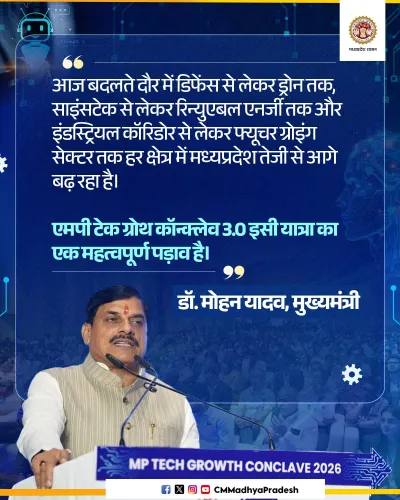
Chief Minister Dr. Mohan Yadav stated that the conclave will give 'new momentum' (nai gati) to efforts positioning Madhya Pradesh as a major hub for Global Capability Centres (GCCs), semiconductors, and data centres. The announcement was made via the official CMO handle, tagging MAPIT — the Madhya Pradesh Agency for Promotion of Information Technology — which serves as the nodal body coordinating tech policy and investor outreach for the state.
The conclave is the third edition of a recurring state-level platform designed to showcase investment opportunities in emerging technologies. The scale of activities — 51 in number — signals a broader and more structured outreach compared to earlier editions.
Policy Backdrop
The conclave draws on a layered policy foundation. The India Semiconductor Mission, launched in 2021, provides central government incentives for chip manufacturing and design units, giving states like Madhya Pradesh a framework to pitch to semiconductor investors. The Madhya Pradesh Industrial Promotion Policy 2022 further included dedicated provisions for IT parks and electronics manufacturing clusters.
Madhya Pradesh has been actively working to diversify its economy beyond traditional sectors such as agriculture and conventional manufacturing. The state is competing with Karnataka, Telangana, and Tamil Nadu — which have historically dominated GCC and data centre investments — by offering tailored state-level incentives alongside central production-linked schemes.
Stakeholders and Impact
The primary beneficiaries, if investment proposals materialise, would be technology professionals, youth seeking employment, and domestic and global tech investors looking for new destinations in central India. The projected 35,000 jobs would represent a meaningful addition to the state's formal technology workforce, a segment that has remained smaller than in southern tech corridors.
For the broader Indian technology ecosystem, Madhya Pradesh's push reflects a national trend of sub-national governments competing aggressively for high-value digital economy investments. GCCs in particular have emerged as a priority target, as they bring stable, high-skill employment and anchor longer-term technology ecosystems in host cities.
What's Next
The immediate focus will be on signed Memoranda of Understanding and concrete capital deployment commitments that emerge from the conclave's 51 activities. Observers will watch whether specific semiconductor fabrication or GCC projects are formally announced and whether they are subsequently incorporated into the state's next industrial policy update.
The involvement of MAPIT as the coordinating agency suggests that post-conclave follow-up on investor commitments will be channelled through an established institutional mechanism, lending the process a degree of administrative continuity beyond the event itself.
Point of View
Sectors that carry both economic and strategic weight in India's digital ambitions. CM Mohan Yadav's public framing of the conclave's targets keeps investor attention on the state while also creating a measurable benchmark against which outcomes will be judged. The involvement of MAPIT as the institutional anchor suggests the state is attempting to build durable investor relationships rather than one-off event optics. Whether the ₹40,000 crore figure translates into signed and deployed capital will be the true test of Madhya Pradesh's emerging technology strategy.
NationPress
12 Oct 2026
Frequently Asked Questions
What is MP Tech Growth Conclave 3.0?
MP Tech Growth Conclave 3.0 is the third edition of a state-level investment and technology platform organised by the Madhya Pradesh government, featuring 51 diverse activities aimed at attracting investment in GCCs, semiconductors, and data centres.
How much investment is expected from MP Tech Growth Conclave 3.0?
Investment proposals worth approximately ₹40,000 crore are projected through the conclave, along with the potential creation of around 35,000 new jobs. These are forward-looking targets announced by the state government.
What is MAPIT and what role does it play?
MAPIT stands for the Madhya Pradesh Agency for Promotion of Information Technology. It is the state's nodal body responsible for coordinating technology policy and investor outreach, and is directly involved in organising the conclave.
What sectors is Madhya Pradesh targeting through this conclave?
Madhya Pradesh is targeting Global Capability Centres (GCCs), semiconductor manufacturing and design, and data centres — high-value digital economy sectors that have so far been concentrated in southern states like Karnataka, Telangana and Tamil Nadu.
Who is the Chief Minister of Madhya Pradesh overseeing this initiative?
Dr. Mohan Yadav has been the Chief Minister of Madhya Pradesh since December 2023 and is the key political face behind the state's technology investment push, including the MP Tech Growth Conclave series.