CM Shivakumar meets Dr. Akai Padmashali's transgender rights delegation
Synopsis
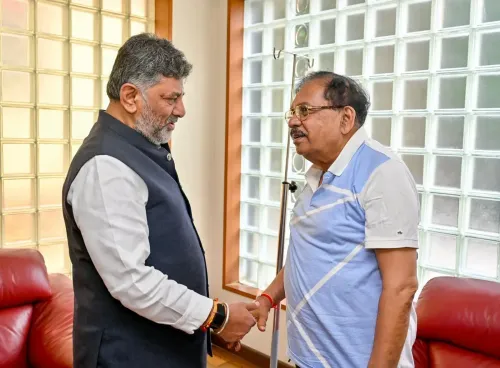
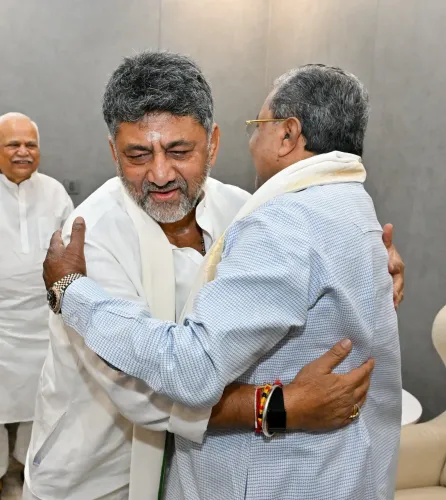
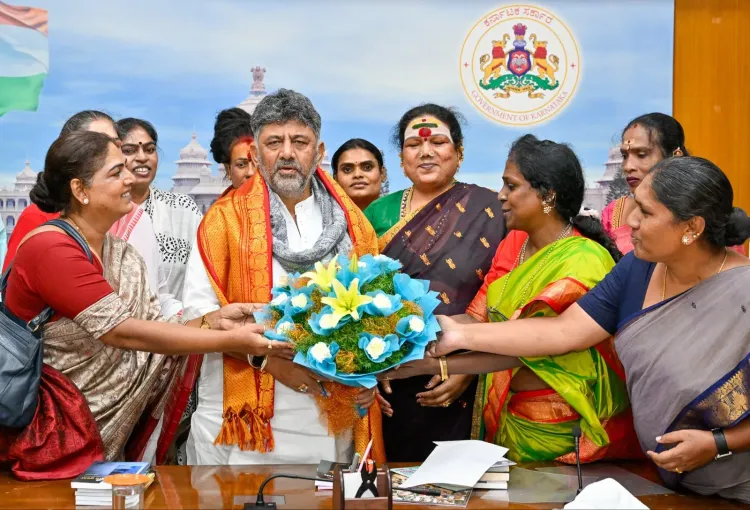
Gender-minority rights activist Dr. Akai Padmashali led a delegation to meet Karnataka Chief Minister D.K. Shivakumar at his Bengaluru residence on 13 July 2026. Community members including Guruji Geetamma and Soumya A. were present as the group discussed several significant welfare and rights issues with the Chief Minister.
Key Takeaways
A delegation led by Dr.
Akai Padmashali , a gender-minority rights activist, met Karnataka CM D.K.
Shivakumar on 13 July 2026 .
The meeting was held at Krishnaa , the Chief Minister's official home office in Bengaluru .
Community representatives Guruji Geetamma and Soumya A. were among those present at the meeting.
The discussion covered 'several significant matters' related to gender-minority rights, though specific outcomes were not disclosed.
The meeting follows the Supreme Court's NALSA judgment (2014) and the Transgender Persons (Protection of Rights) Act, 2019 , which mandate state-level welfare action.
Possible follow-up actions include government orders, budget allocations, or welfare board meetings on transgender issues in Karnataka.
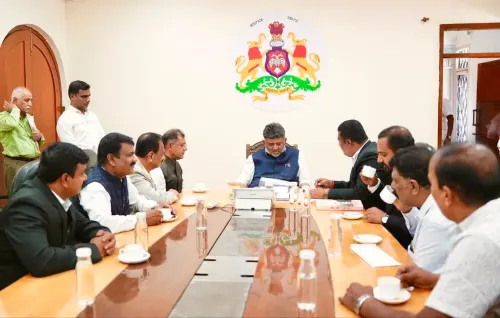
The Chief Minister's Office of Karnataka announced on Monday, 13 July 2026 that a delegation led by gender-minority rights activist Dr. Akai Padmashali met Chief Minister D.K. Shivakumar at his official residence, Krishnaa, to discuss several significant issues concerning the transgender community in the state.
The post, shared by the Chief Minister's Office, noted that gender-minority community members including Guruji Geetamma and Soumya A., among others, were present at the meeting. The Kannada-language post described the gathering as a discussion on 'hala mahattvaada vishayagalu' — several important matters — though specific agenda points were not disclosed in the announcement.
Context
Dr. Akai Padmashali is a prominent activist and advocate for the rights of gender minorities in Karnataka. Such direct delegations to the Chief Minister's residence signal that the concerns raised carry significant community weight. The presence of figures such as Guruji Geetamma and Soumya A. indicates broad representation from within the transgender community.
The meeting took place at Krishnaa, the official home office of the Karnataka Chief Minister in Bengaluru, underscoring the formal nature of the engagement.
Policy Backdrop
The consultation builds on a long arc of judicial and legislative recognition of transgender rights in India. The Supreme Court's NALSA judgment of 2014 recognised transgender persons as a third gender and directed both central and state governments to frame welfare policies covering education, health, and employment.
The Transgender Persons (Protection of Rights) Act, 2019 subsequently established a national legal framework for rights certification and anti-discrimination measures. Indian states, including Karnataka, have since been expected to design targeted welfare schemes aligned with these mandates. Karnataka has maintained state-level mechanisms for marginalised communities, including social security and skill development programmes.
Stakeholders and Impact
The transgender community in Karnataka stands as the primary stakeholder in outcomes from this meeting. Direct access to the Chief Minister allows community representatives to place specific grievances — ranging from welfare scheme implementation to social inclusion — at the highest level of the state executive.
Minority rights activists and civil society organisations working on gender inclusion also have a stake in the policy signals that emerge from such consultations. A formal meeting at the Chief Minister's residence, as opposed to a departmental-level interaction, typically carries greater weight in terms of follow-up action.
What's Next
Observers will watch for possible follow-up government orders, budget allocations, or convening of Karnataka's state board or committee on transgender welfare in forthcoming assembly sessions. The pattern of such consultations in other states has often preceded announcements on targeted schemes or the strengthening of existing welfare infrastructure.
Whether the Karnataka government translates this engagement into concrete policy measures — such as enhanced social security provisions, reservation implementation, or health programme expansions for the gender-minority community — will be the key indicator of the meeting's impact.
Point of View
Where the ruling Congress government has sought to reinforce its social-justice credentials through direct community engagement. With the NALSA judgment and the 2019 Act having set clear mandates, the pressure on state governments to move from consultation to concrete policy delivery is mounting. The meeting's real significance will only be apparent if it produces measurable welfare outcomes in the weeks ahead.
NationPress
12 Oct 2026
Frequently Asked Questions
Who is Dr. Akai Padmashali?
Dr. Akai Padmashali is a prominent Karnataka-based activist who advocates for the rights and welfare of gender minorities, particularly the transgender community.
Why did the transgender delegation meet CM Shivakumar?
The delegation met Chief Minister D.K. Shivakumar at his Bengaluru residence on 13 July 2026 to discuss several significant matters related to gender-minority rights and welfare in Karnataka.
What laws protect transgender rights in India?
The Supreme Court's NALSA judgment of 2014 recognised transgender persons as a third gender, and the Transgender Persons (Protection of Rights) Act of 2019 established a national framework for rights certification and anti-discrimination protections.
What is Krishnaa, where the meeting was held?
Krishnaa is the official home office and residence of the Chief Minister of Karnataka, located in Bengaluru.
What could come out of the Karnataka CM's meeting with the transgender delegation?
Possible outcomes include follow-up government orders, new budget allocations for transgender welfare, or meetings of Karnataka's state-level boards on gender-minority inclusion, though no specific announcements were made at the time of the meeting.