MP's 'Sankalp Vriksh' to Rise at Bhopal's Shaurya Smarak on Nov 1

Synopsis
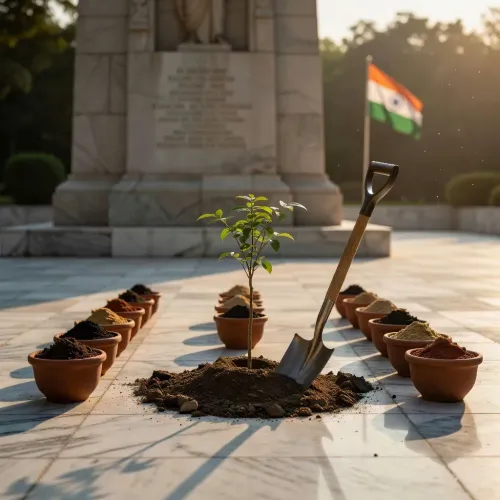
The Chief Minister's Office of Madhya Pradesh has announced the 'Sankalp Vriksh' — a commemorative tree to be planted at Bhopal's Shaurya Smarak on 1 November 2026, using sacred soil gathered from all districts of the state as a tribute to India's soldiers.
Key Takeaways
The Sankalp Vriksh will be planted at Shaurya Smarak, Bhopal on 1 November 2026 .
Sacred soil ( maati ) from all districts of Madhya Pradesh will be used in the installation, making it a statewide collective tribute.
The tree symbolises both patriotism (rashtrabhakti) and environmental conservation (paryavaran sanrakshan) .
Mohan Yadav is tagged in the announcement, indicating his direct association with the event.
The initiative is linked to the #ArmyDay2027 hashtag, suggesting it forms part of a broader commemorative arc leading into Army Day next year.
Shaurya Smarak is Madhya Pradesh's primary war memorial and the established venue for the state's patriotic observances.
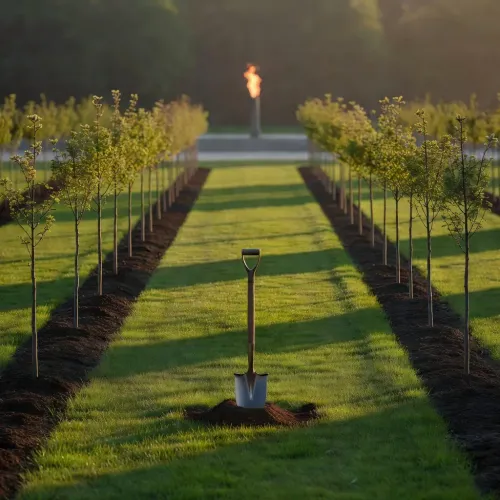
Soil from every district of Madhya Pradesh — each grain carrying the memory of a soldier who never came home — will converge at Bhopal's Shaurya Smarak on 1 November 2026 to give life to the 'Sankalp Vriksh', a commemorative tree that the Chief Minister's Office of Madhya Pradesh announced on Friday as a tribute to the nation's fallen and serving warriors.
What the Sankalp Vriksh stands for
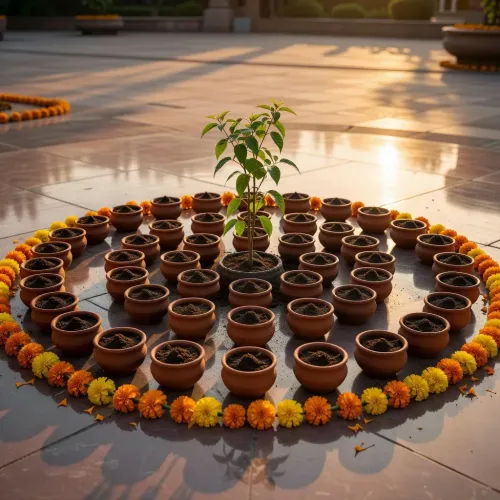
The announcement describes the initiative as a salute to 'maati ke kan-kan mein samaahit veeron ki gauravgatha' — 'the glorious saga of heroes embedded in every grain of this soil.' By drawing earth from all of the state's districts, the project frames the tribute as a collective act: not one city, not one region, but all of Madhya Pradesh bowing together before its martyrs.
The tree is explicitly designed to carry a dual symbolism — rashtrabhakti (patriotism) and paryavaran sanrakshan (environmental conservation) — a pairing that reflects a broader national instinct to weave ecological commitment into civic ceremonies. The post tags Chief Minister Dr. Mohan Yadav and carries the hashtag #ArmyDay2027, signalling that the 1 November planting may serve as a precursor event building toward Army Day observances next year.
Shaurya Smarak — Bhopal's sentinel of sacrifice
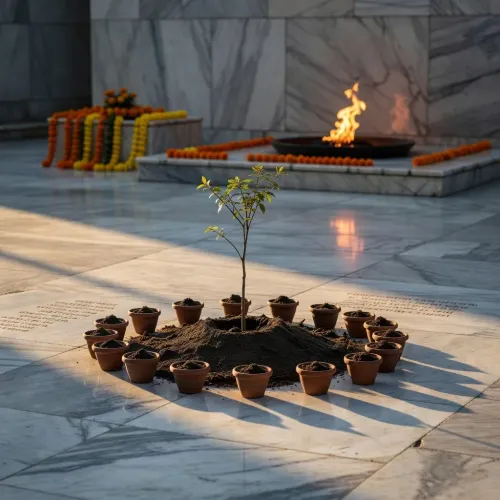
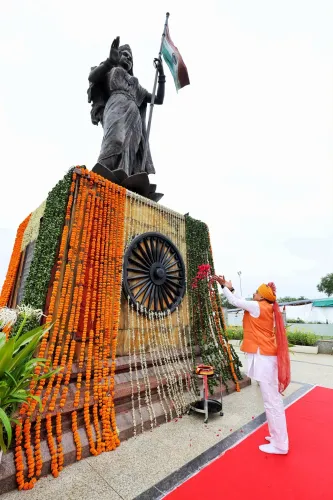
Shaurya Smarak, located in the heart of Bhopal, is Madhya Pradesh's principal war memorial, dedicated to Indian soldiers who gave their lives in service of the country. It has served as the focal site for the state's patriotic observances, making it the natural home for a statewide symbolic installation of this kind. Bringing soil from every district transforms the memorial from a monument one visits into a living symbol every corner of the state has helped build.
A tradition of soil, sacrifice, and solidarity
Indian state governments have a well-established tradition of soil-gathering ceremonies — mitti sangrah — at war memorials, particularly around Republic Day, Independence Day, and Army Day. The ritual carries deep resonance in a country where reverence for the earth is both cultural and constitutional. Madhya Pradesh's Sankalp Vriksh extends that tradition by planting something that will grow, season after season, rooted literally in the soil of the state's sacrifice.
Under Dr. Mohan Yadav, the state government has consistently used commemorative events to combine civic pride with environmental messaging — tree plantations that double as patriotic statements have become a signature of that approach.
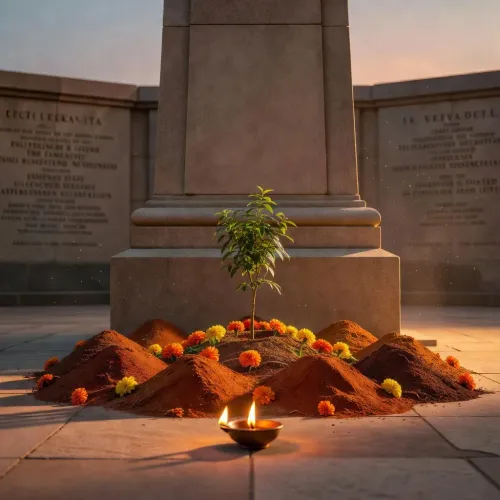
When the Sankalp Vriksh takes root on 1 November, it will carry more than soil — it will carry an unspoken promise that the state has not forgotten, and that remembrance, here, is something you plant and tend.
Point of View
The Yadav government ensures geographic inclusivity, preventing the tribute from feeling like a Bhopal-centric affair and binding all of Madhya Pradesh to the ceremony. The dual framing of patriotism and environmentalism is also strategically astute: it speaks simultaneously to voters who respond to military honour and to younger audiences increasingly mobilised by ecological concerns. The #ArmyDay2027 linkage hints at a longer commemorative calendar being constructed, one where this November planting becomes the opening chapter.
NationPress
30 Oct 2026
Frequently Asked Questions
What is the Sankalp Vriksh in Madhya Pradesh?
The Sankalp Vriksh is a commemorative tree to be planted at Shaurya Smarak in Bhopal on 1 November 2026, using soil collected from all districts of Madhya Pradesh as a tribute to India's soldiers and martyrs.
Where is Shaurya Smarak located?
Shaurya Smarak is located in Bhopal, the capital of Madhya Pradesh, and serves as the state's principal war memorial dedicated to Indian soldiers who sacrificed their lives in service of the nation.
Who announced the Sankalp Vriksh initiative?
The Chief Minister's Office of Madhya Pradesh made the announcement on 30 October 2026, tagging Chief Minister Dr. Mohan Yadav in the post.
What does the Sankalp Vriksh symbolise?
According to the official announcement, the Sankalp Vriksh symbolises both rashtrabhakti (patriotism) and paryavaran sanrakshan (environmental conservation), honouring the courage and sacrifice of India's soldiers.
Is the Sankalp Vriksh connected to Army Day 2027?
The announcement carries the hashtag #ArmyDay2027, suggesting the 1 November 2026 planting ceremony may be part of commemorative programming building toward Army Day observances in 2027, though specific details have not been confirmed.