Mumbai power outages spark Assembly uproar, Speaker summons BEST for fix
Synopsis
Mumbai's 8-12 hour blackouts have crossed from a utility failure into a full-blown political crisis. With MLAs from rival parties jointly moving a Call Attention Motion and Speaker Narwekar publicly rebuking BEST management, the Maharashtra Assembly has sent an unambiguous signal: the grid collapse in India's financial capital is no longer an administrative inconvenience — it is a governance emergency.
Key Takeaways
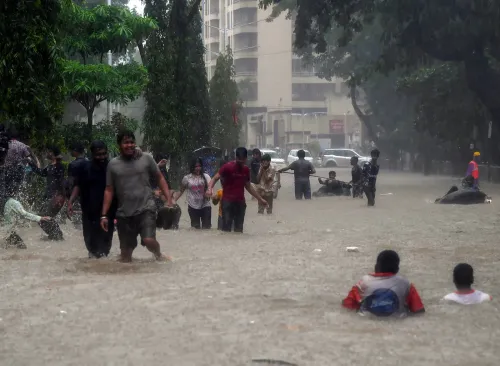
Power outages of 8 to 12 hours in South and Central Mumbai triggered a political storm in the Maharashtra State Assembly on 30 June .
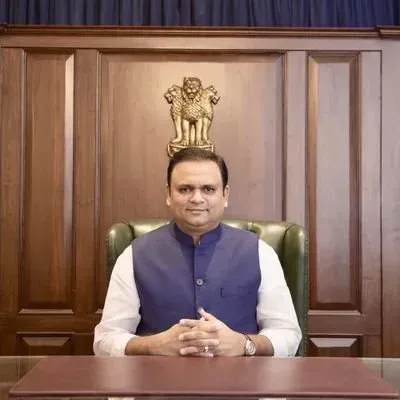
Assembly Speaker Rahul Narwekar convened an emergency meeting and summoned BEST , BMC , and state officials to Vidhan Bhawan for a time-bound action plan.
A Call Attention Motion was jointly moved by Congress MLA Amin Patel and BJP MLA Captain R Tamil Selvan , reflecting rare cross-party unity.
Samajwadi Party MLA Rais Shaikh was reportedly trapped in a lift for over two and a half hours due to sudden power tripping.
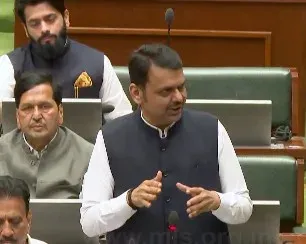
Minister of State Madhuri Misal admitted a historic surge in power load caused widespread outages but assured the house BEST is executing upgrade measures.
BEST is under acute financial stress, according to legislators, limiting its capacity to invest in network modernisation.
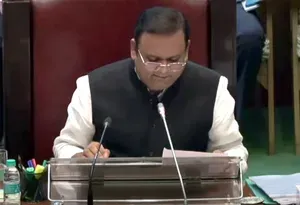
Recurring power outages lasting eight to twelve hours in South and Central Mumbai triggered a major political confrontation in the Maharashtra State Assembly on Tuesday, 30 June, with legislators from both ruling and opposition benches unitedly demanding accountability from the Brihanmumbai Electric Supply and Transport (BEST) undertaking. The crisis prompted Assembly Speaker Rahul Narwekar to convene an emergency joint meeting, pressing BEST for immediate corrective action and a permanent resolution to the grid failures.
Speaker's Intervention
Speaker Narwekar expressed sharp displeasure over the prolonged blackouts, publicly rebuking BEST management and stating that persistent network failures severely damage Mumbai's standing as India's commercial and financial capital. He criticised the utility for failing to proactively upgrade its infrastructure to handle the heightened thermal stress driven by climate change.
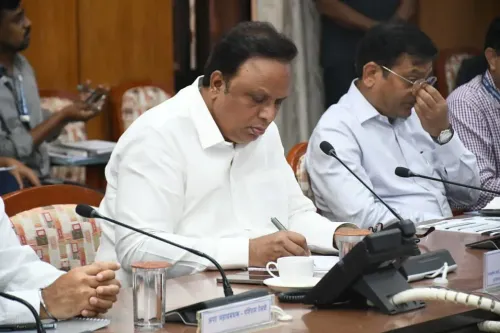
Narwekar directed BEST officials to present a time-bound roadmap for improving power supply and to submit a detailed report on technical fault resolution measures and call-centre response times. He has summoned an urgent meeting at Vidhan Bhawan involving city legislators, the BEST general manager, the Brihanmumbai Municipal Corporation (BMC) commissioner, senior utility officers, and state government officials.
What Sparked the Floor Debate
The legislative showdown erupted during a heated discussion on a Call Attention Motion jointly moved by Congress MLA Amin Patel (Mumbadevi) and Bharatiya Janata Party (BJP) MLA Captain R Tamil Selvan (Sion Koliwada). Selvan demanded immediate steps from the administration, stressing that ordinary citizens and small businesses are bearing severe financial and physical losses from unannounced outages.
Congress MLA Patel launched a pointed attack on BEST's top management, alleging that neither the general manager nor senior engineers respond to calls from public representatives during blackouts. He also highlighted that BEST is under acute financial stress, leaving it starved of funds needed to strengthen its distribution network.
Human Cost and Operational Failures
Patel drew attention to systemic delays in detecting and repairing ageing underground cable faults under intense summer heat. He demanded that BEST immediately deploy mobile generator units for temporary power restoration and acquire advanced fault-detection technology to shorten repair windows.
In a particularly striking disclosure, Patel revealed that Samajwadi Party legislator Rais Shaikh was trapped inside a lift for over two and a half hours following a sudden power tripping incident — a detail that visibly stunned the house.
Government's Response
Replying on behalf of the state government, Minister of State for Urban Development Madhuri Misal acknowledged that a historic surge in power load had caused widespread tripping and supply interruptions. Misal assured the Assembly that the government has taken serious note of the legislative anger and that BEST is currently executing high-priority measures to upgrade and modernise its distribution network.
What Happens Next
The emergency meeting called by Speaker Narwekar is expected to compel BEST and BMC to present a concrete, time-bound action plan. With summer heat continuing to strain the grid and financial constraints limiting BEST's capacity to invest, the crisis is unlikely to ease without significant state intervention. The political pressure from both sides of the aisle signals that the Mumbai power situation has moved well beyond a utility problem into a governance flashpoint.
Point of View
Not just an embarrassment for BEST. Yet the underlying problem is structural: BEST's financial distress is chronic, its underground cable network is ageing, and climate-driven peak loads are rising faster than any upgrade cycle the utility has managed. Speaker Narwekar's emergency meeting will generate a roadmap, but roadmaps have preceded this crisis before. Without a dedicated state capital infusion and a credible independent audit of BEST's upgrade timelines, Mumbai's grid will remain one heatwave away from the next 12-hour blackout.
NationPress
29 Sept 2026
Frequently Asked Questions
Why is Mumbai experiencing prolonged power outages?
South and Central Mumbai have been hit by recurring power outages lasting 8 to 12 hours, caused by a historic surge in power load that has led to widespread tripping and failures in BEST's ageing underground cable network. Legislators and the Assembly Speaker have attributed the crisis to BEST's failure to proactively upgrade infrastructure to handle rising thermal stress from summer heat and climate change.
What action has Maharashtra Assembly Speaker Rahul Narwekar taken?
Speaker Rahul Narwekar convened an emergency joint meeting after the Assembly uproar on 30 June and has summoned the BEST general manager, BMC commissioner, city legislators, and senior state officials to Vidhan Bhawan. He directed BEST to submit a detailed report on fault resolution measures and call-centre response times, and to present a time-bound roadmap for improving power supply.
Which legislators raised the Mumbai power crisis in the Assembly?
The debate was triggered by a Call Attention Motion jointly moved by Congress MLA Amin Patel from Mumbadevi and BJP MLA Captain R Tamil Selvan from Sion Koliwada. Their cross-party collaboration on the motion underscored the political gravity of the crisis.
What did the state government say in response to the power outage crisis?
Minister of State for Urban Development Madhuri Misal acknowledged that a historic surge in power load caused widespread tripping and supply interruptions. She assured the Assembly that the government has taken serious note and that BEST is currently executing high-priority measures to upgrade and modernise its distribution network.
What is the financial condition of BEST and how does it affect the power supply?
According to legislators, BEST is under acute financial stress that has left it starved of funds needed to strengthen its distribution network. This financial constraint is seen as a key reason the utility has been unable to keep pace with rising power demand and upgrade its ageing infrastructure.