CM Himanta Puts Army, IAF on Standby as Assam Floods Worsen
Synopsis
Assam CM Himanta Biswa Sarma has placed the Indian Army and Indian Air Force on standby for flood evacuation in Sivasagar, Charaideo and Jorhat as monsoon inundation worsens. Four cabinet ministers have been dispatched to supervise ground-level relief operations across the three upper Assam districts.
Key Takeaways
The Government of Assam has formally requested the Indian Army and Indian Air Force to be on standby for evacuation and rescue in flood-hit districts.
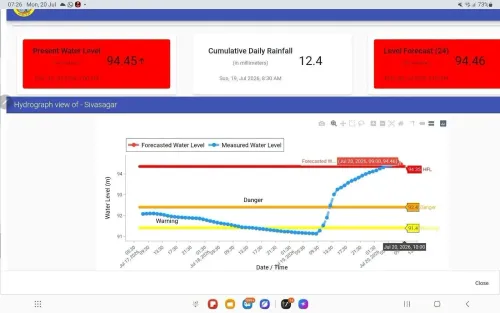
Worsening floods have been reported across Sivasagar , Charaideo , and Jorhat in upper Assam as of 19 July 2026 .
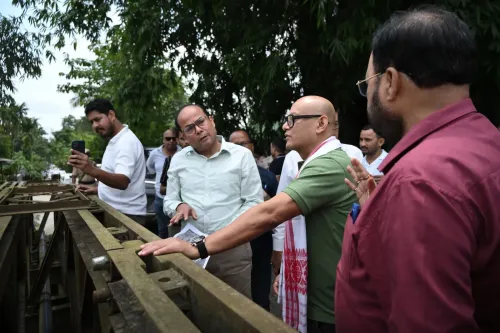
CM Himanta Biswa Sarma has directed four cabinet ministers — Ajanta Neog , Bimal Bora , Keshab Mahanta , and Sushanta Borgohain — to immediately reach the affected areas.
The Chief Minister stated he is monitoring the situation 'round the clock' and the post has been pinned to his official profile.
Formal deployment of Army and IAF units from standby to active operations will depend on how flood conditions evolve in the coming days.
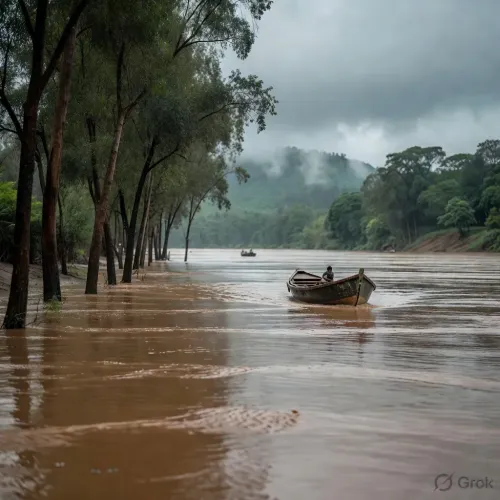
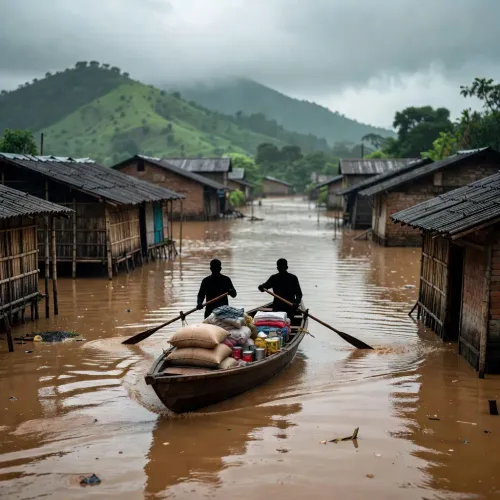
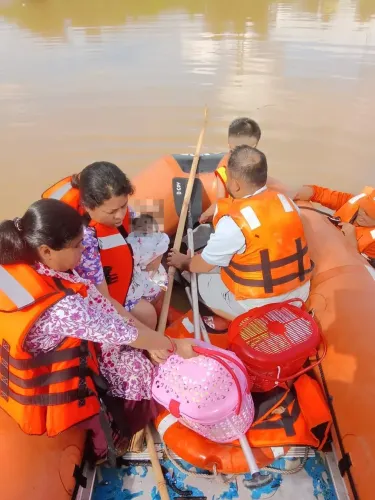
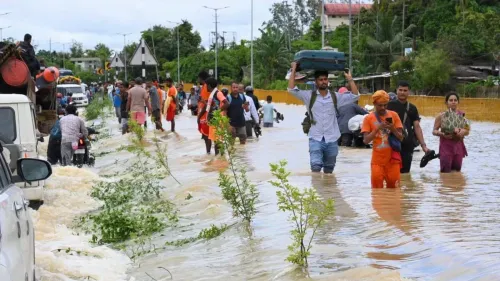
Assam Chief Minister Himanta Biswa Sarma on Sunday, 19 July 2026, announced that the Government of Assam has formally requested the Indian Army and the Indian Air Force to remain on standby for evacuation and rescue operations as flood conditions deteriorated across Sivasagar, Charaideo, and Jorhat districts in upper Assam.
Context
In a post pinned to his official social media profile, CM Sarma stated that the flood situation in the three upper Assam districts was 'continuing to worsen,' prompting the state government to seek military standby support. He also directed four cabinet colleagues — Smt. Ajanta Neog, Shri Bimal Bora, Shri Keshab Mahanta, and Shri Sushanta Borgohain — to immediately travel to the affected areas to supervise relief efforts and ensure timely assistance to every affected family.
The Chief Minister emphasised that he is 'monitoring the situation round the clock' and that 'the safety and well-being of our people is our highest priority.' The pinning of the post signals the administration's intent to keep citizens continuously updated as the crisis unfolds.
Policy Backdrop
Assam's recourse to central armed forces during severe flooding is a well-established administrative practice. The Brahmaputra river and its numerous tributaries inundate large swathes of the state every monsoon season, routinely overwhelming the capacity of district administrations and the State Disaster Response Force. The Indian Army has been called upon for similar flood rescue operations in Assam in previous years, including during major inundations in 2022.
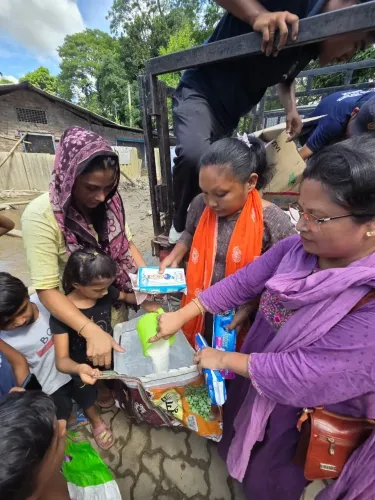
Directing cabinet ministers to physically supervise ground-level relief is also a long-standing protocol in Assam. The move is intended to ensure accountability at the district level and speed up the distribution of relief material to displaced families.
Stakeholders and Impact
The districts of Sivasagar, Charaideo, and Jorhat are part of upper Assam's Brahmaputra valley belt, which faces recurrent inundation each monsoon. Farming communities, riverside settlements, and daily-wage workers in these districts are among the most vulnerable, with floodwaters damaging crops, livestock, and homes. Having the Indian Air Force on standby is particularly significant for areas where road connectivity may be severed, enabling aerial evacuation and airdrop of essential supplies if ground routes become inaccessible.
Flood-affected families in the three districts stand to benefit directly from the ministerial oversight and accelerated relief logistics that the government has now set in motion.
What's Next
The critical question in coming days is whether the Indian Army and IAF will be formally deployed from standby to active operations — a decision that will depend on how rapidly water levels rise and whether civilian evacuation capacity is overwhelmed. The scale and speed of relief material distribution across Sivasagar, Charaideo, and Jorhat will be closely watched as a measure of the administration's ground response. CM Sarma has indicated that 'every necessary step' to protect lives will be taken, leaving the door open for further escalation of the state's emergency response if conditions demand it.
Point of View
CM Sarma is projecting a two-track response — military readiness for the worst-case scenario and political accountability at the district level. The pinning of the post is a deliberate public-communication choice, signalling that the administration wants citizens and officials alike to treat this as an ongoing, high-visibility crisis. This approach mirrors the template Assam's government has used in previous severe flood years, where visible ministerial presence on the ground has served both an administrative and a political function. The real test will come if Army and IAF units are formally activated — that escalation would mark one of the more significant civil-military flood responses the state has mounted in recent memory.
NationPress
18 Oct 2026
Frequently Asked Questions
Why has Assam requested the Indian Army and IAF for flood relief in July 2026?
The flood situation in Sivasagar, Charaideo and Jorhat was reported to be worsening, prompting the Assam government to request the Indian Army and Indian Air Force to remain on standby for evacuation and rescue operations in case civilian capacity is exceeded.
Which Assam districts are affected by floods in July 2026?
Sivasagar, Charaideo, and Jorhat — all located in upper Assam — are the districts where the flood situation was described as worsening as of 19 July 2026.
Which ministers has CM Himanta Biswa Sarma sent to the flood-affected areas?
CM Sarma directed four cabinet colleagues — Ajanta Neog, Bimal Bora, Keshab Mahanta, and Sushanta Borgohain — to immediately reach Sivasagar, Charaideo and Jorhat to supervise relief efforts.
Has the Indian Army been deployed in Assam floods before?
Yes. Assam has a long-standing practice of seeking Indian Army assistance during major Brahmaputra inundations, including during significant flood operations in 2022, whenever civilian disaster response capacity is overwhelmed.
What is the current status of Army and IAF deployment in Assam floods?
As of 19 July 2026, both forces are on standby at the state government's request. Formal active deployment will depend on how the flood situation develops in Sivasagar, Charaideo and Jorhat in the coming days.