CM Himanta Directs Flood Relief in Sivasagar, Charaideo
Synopsis
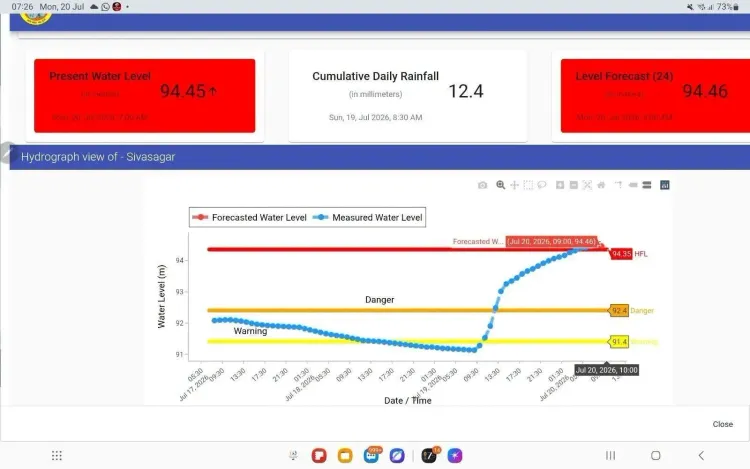
The Chief Minister's Office of Assam announced on 20 July 2026 that Minister Bimal Borah reached Sivasagar on CM Himanta Biswa Sarma's directions to review flooding. SDRF and Fire Services have rescued 510 people in Sivasagar; NDRF, SDRF, and Indian Army teams are deployed in Charaideo with Army helicopters reaching inaccessible areas.
Key Takeaways
Minister Bimal Borah arrived in Sivasagar early on 20 July 2026 on the directions of CM Himanta Biswa Sarma to review the flood situation.
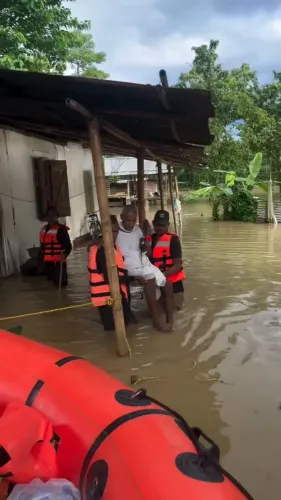
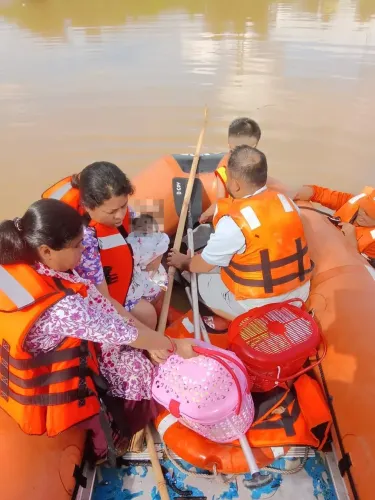
510 people have been safely rescued in Sivasagar by SDRF and Fire and Emergency Services .
Additional boats and Indian Army helicopters are deployed to reach inaccessible areas in Sivasagar .
NDRF , SDRF , and Indian Army teams are operational across the worst-affected locations in Charaideo .
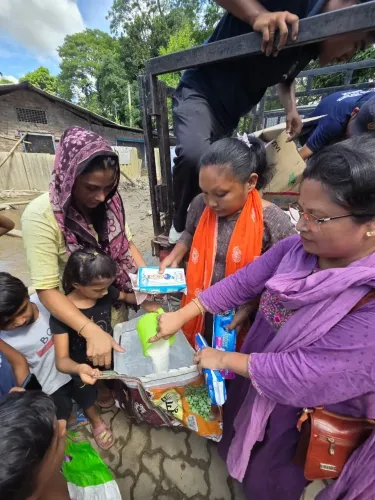
Relief measures are underway in both districts to ensure the safety and well-being of affected residents.
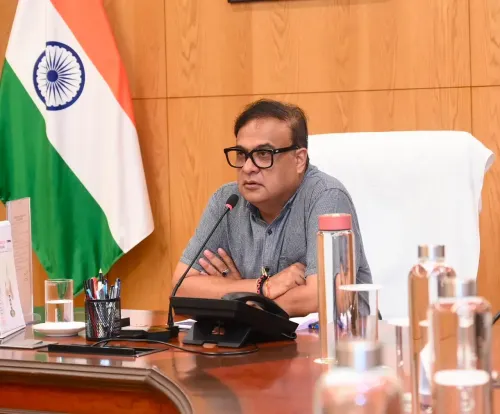
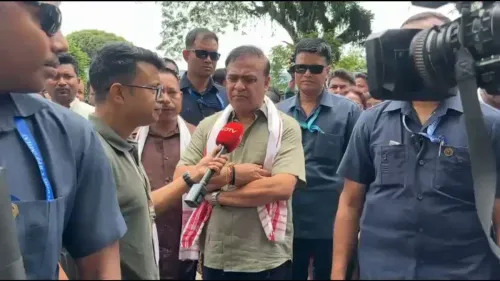
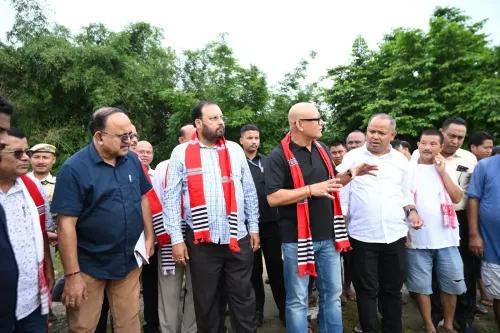
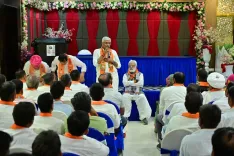
The Chief Minister's Office of Assam announced on Monday, 20 July 2026, that Cabinet Minister Bimal Borah reached Sivasagar early morning to conduct an on-ground review of the flood situation, acting on direct instructions from Chief Minister Dr. Himanta Biswa Sarma. Rescue and relief operations are actively underway across flood-affected areas in Upper Assam, with multiple agencies deployed in the field.
Context
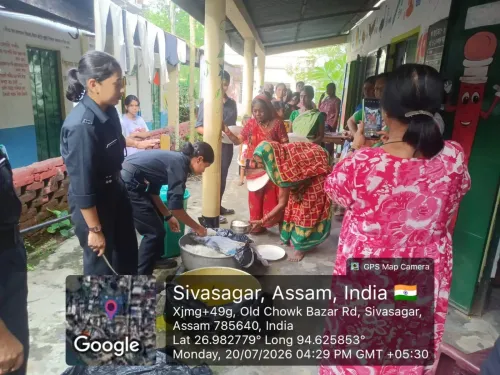
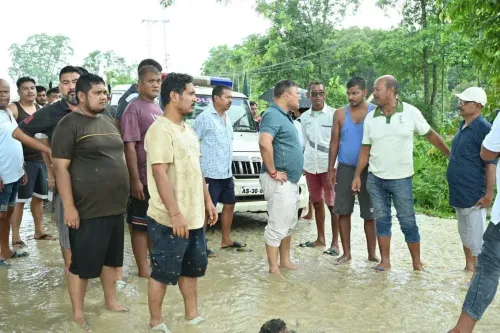
According to the official post, 510 people have been safely rescued in Sivasagar so far by the State Disaster Response Force (SDRF) and Fire and Emergency Services. Rescue efforts are continuing, with additional boats and Indian Army helicopters deployed to reach communities in inaccessible areas cut off by rising waters.
In the neighbouring district of Charaideo, teams from the National Disaster Response Force (NDRF), SDRF, and the Indian Army have been deployed across the worst-affected locations. Relief measures are simultaneously underway to ensure the safety and well-being of displaced and affected residents.
Policy Backdrop
Assam's annual monsoon flooding is one of the most predictable and damaging natural disaster cycles in the country. The Brahmaputra river and its tributaries inundate large swathes of the state every June-September, displacing lakhs of people and damaging agricultural land and infrastructure across districts.
The coordinated deployment of NDRF, SDRF, and the Indian Army is an established response protocol under national disaster management guidelines. Successive Assam governments have combined immediate rescue-relief operations with longer-term embankment strengthening and river management projects. The current mobilisation in Sivasagar and Charaideo follows this well-worn framework.
Chief Minister Himanta Biswa Sarma, who has led the state since May 2021, has consistently directed ministerial-level reviews during major flood events, positioning senior cabinet members at district headquarters to ensure accountability in relief delivery.
Stakeholders and Impact
The flood-affected residents of Sivasagar and Charaideo — two districts in Upper Assam historically vulnerable to monsoon inundation — are the primary stakeholders in the current operations. Rural and riverine communities face the greatest risk, with rising waters threatening homes, livestock, and standing crops.
The deployment of Army helicopters signals that some areas are already cut off from road access, a common scenario when embankments breach or low-lying villages are surrounded by floodwaters. The presence of Minister Bimal Borah on the ground is intended to accelerate administrative decision-making at the district level and ensure relief materials reach affected families without delay.
What's Next
Authorities are expected to continue expanding rescue operations as water levels are assessed across additional Upper Assam districts. The coming days will be critical in determining whether the flood spreads further and whether embankment breaches require emergency repair work.
Follow-up announcements on compensation disbursal, relief camp capacity, and any escalation of central assistance — including additional NDRF battalions — will indicate the scale of the administration's medium-term response. The government's ability to move from rescue to rehabilitation swiftly will be closely watched by affected communities and civil society groups in the region.
Point of View
SDRF, and the Indian Army in two adjoining Upper Assam districts simultaneously suggests the flooding has reached a scale that state forces alone cannot manage, reinforcing longstanding concerns about the adequacy of embankment infrastructure in the Brahmaputra basin. The mention of Army helicopters for inaccessible areas is a telling detail: it points to a breakdown of road connectivity that recurs every monsoon season despite years of state investment in flood mitigation. How quickly the administration transitions from rescue to structured rehabilitation — including compensation disbursal and embankment repair — will be the real test of its disaster governance capacity.
NationPress
20 Oct 2026
Frequently Asked Questions
How many people have been rescued in Sivasagar floods 2026?
According to the Chief Minister's Office of Assam, 510 people have been safely rescued in Sivasagar so far by the SDRF and Fire and Emergency Services as of 20 July 2026 .
Which agencies are deployed for Assam flood relief in July 2026?
The NDRF , SDRF , Fire and Emergency Services , and the Indian Army — including Army helicopters — have been deployed across Sivasagar and Charaideo districts for rescue and relief operations.
Why did Minister Bimal Borah go to Sivasagar?
Minister Bimal Borah was directed by Chief Minister Himanta Biswa Sarma to reach Sivasagar early on 20 July 2026 to conduct an on-ground review of the flood situation and oversee rescue and relief operations.
Which districts in Assam are worst affected by floods in July 2026?
The official update from the Chief Minister's Office of Assam specifically mentions Sivasagar and Charaideo as the districts facing the worst flood impact, with multiple central and state agencies deployed there.
Why does Assam flood every year?
Assam experiences predictable annual flooding during the June-September monsoon season due to the Brahmaputra river and its tributaries overflowing, inundating low-lying and riverine communities across the state, including Upper Assam districts like Sivasagar and Charaideo .