Mumbai-Pune Missing Link landslide: MSRDC cites 'Act of God' after boulders crash from 150m
Synopsis
Just two months after its inauguration, the Mumbai-Pune Missing Link was hit by a landslide at 3:30 AM on 6 July, with boulders crashing from 150 metres — far above the IIT-Bombay-certified 15-metre netting. MSRDC's 'Act of God' defence arrives days after opposition parties flagged potholes on the same stretch, raising urgent questions about whether the project's safety design was adequate for the Sahyadri terrain.
Key Takeaways
A landslide struck the Mumbai-Pune Missing Link at approximately 3:30 AM on 6 July , two months after its inauguration.
Boulders fell from nearly 150 metres , far exceeding the 15-metre iron netting certified by IIT-Bombay .
MSRDC attributed the disaster to an 'Act of God' , stating the contractor was not at fault.
The Pune-to-Mumbai corridor of the 13.3-km route remains shut; Mumbai-to-Pune traffic has been restored.
Vehicles heading to Mumbai are being diverted via the old Mumbai-Pune Highway (NH-48) .
A post-monsoon geological survey has been announced; extending netting higher will require forest department permissions and significant cost.
A major landslide struck the newly inaugurated Mumbai-Pune Missing Link in the early hours of Monday, 6 July, after incessant torrential rains lashed the region for two consecutive days, severing direct road connectivity between the two cities. The Maharashtra State Road Development Corporation (MSRDC) has attributed the disaster to an 'Act of God', defending the construction team and stating the contractor bore no fault.
What Happened
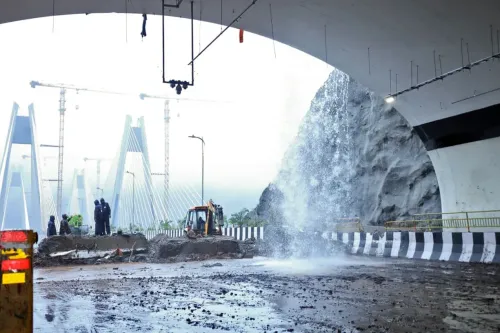
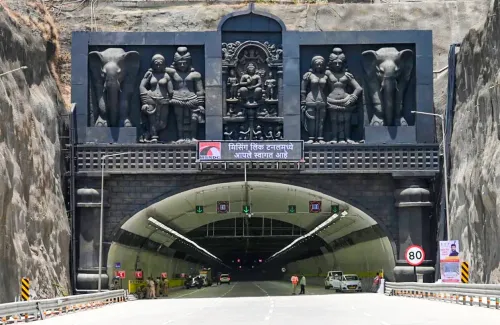
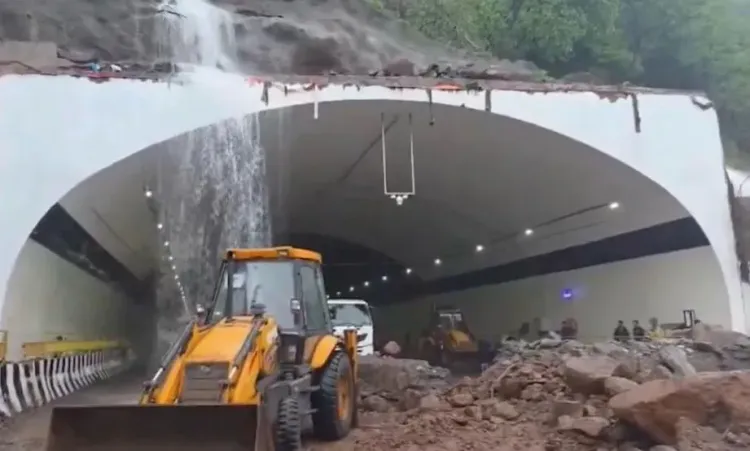
The landslide struck at approximately 3:30 AM on 6 July, with debris crashing down at the exit of the first tunnel on the Pune-to-Mumbai corridor of the 13.3-km Missing Link project. Massive boulders descended from a height of nearly 150 metres, damaging the protective retaining wall and rendering the stretch unsafe for transit. The route had been opened to the public just two months ago.
MSRDC clarified that rockfall prevention measures — including rock bolting with iron netting up to 15 metres in height, certified by IIT-Bombay — had been deployed directly above the tunnel. However, the boulders that triggered the crisis originated far beyond the protected zone, at nearly 150 metres above the slope.
MSRDC's Defence and Safety Assessment
An MSRDC official stated that while landslide mitigation designs had been implemented, they carried inherent operational limitations. The official noted that mitigating such an event during extreme torrential downpours becomes 'nearly impossible.' The corporation emphasised that existing safety barriers played a critical role in absorbing the velocity and force of the falling rocks, and that without these measures, the consequences for vehicles below could have been catastrophic.
MSRDC added that a fresh geological survey will be conducted once the monsoon season concludes, to assess whether the rockfall protection system needs to be extended further up the mountain. The feasibility of installing additional iron netting at higher altitudes is under consideration, though officials acknowledged it will incur substantial financial costs and require permissions from the forest department, as the work would fall on forest land.
Traffic Disruption and Current Status
Following the incident, the Pune-to-Mumbai corridor of the Missing Link has been completely shut down. The Mumbai-to-Pune corridor has since been restored for traffic, while vehicles headed towards Mumbai are being diverted via the old Mumbai-Pune Highway (NH-48). Debris clearance operations are actively underway.
Political Context
The landslide comes at a politically sensitive moment. The Missing Link had already drawn sharp criticism from opposition parties just days earlier, after potholes surfaced on the stretch on Sunday, 5 July. Chief Minister Devendra Fadnavis had downplayed the pothole issue, calling it a minor incident — remarks that opposition leaders had contested. The landslide, occurring within hours of that controversy, is likely to intensify scrutiny of both the project's construction quality and the government's infrastructure oversight.
Authorities are expected to present findings from the post-monsoon geological survey to determine long-term remediation measures for the corridor.
Point of View
But it sidesteps a harder engineering question: if the IIT-Bombay-certified netting only covered 15 metres and boulders came from 150 metres, was the risk assessment ever adequate for a Sahyadri tunnel exit? The fact that potholes appeared on the same stretch just 24 hours earlier compounds the credibility problem. Inaugurating a major infrastructure project during peak monsoon season, then attributing its first major failure to divine intervention, sets a troubling precedent for accountability on Maharashtra's flagship road projects.
NationPress
5 Oct 2026
Frequently Asked Questions
What caused the landslide on the Mumbai-Pune Missing Link?
Incessant torrential rains over two days triggered a landslide at the exit of the first tunnel on the Pune-to-Mumbai corridor on 6 July. MSRDC has attributed the event to an 'Act of God', stating that boulders fell from approximately 150 metres, beyond the reach of installed protective measures.
Is the Mumbai-Pune Missing Link open after the landslide?
The Pune-to-Mumbai corridor remains shut following the landslide. The Mumbai-to-Pune direction has been restored, while vehicles travelling towards Mumbai are being diverted via the old Mumbai-Pune Highway (NH-48). Debris clearance is ongoing.
What safety measures were in place on the Missing Link?
Rockfall prevention measures including rock bolting with iron netting up to 15 metres in height, certified by IIT-Bombay, had been installed above the tunnel. MSRDC stated these barriers absorbed the force of falling rocks and prevented a more catastrophic outcome, but they were not designed to intercept boulders from 150 metres.
When was the Mumbai-Pune Missing Link inaugurated?
The Mumbai-Pune Missing Link was opened to the public approximately two months before the 6 July landslide, making this one of the first major incidents on the newly commissioned 13.3-km stretch.
What happens next for the Missing Link project?
MSRDC has announced a fresh geological survey after the monsoon season to assess whether the rockfall protection system needs to be extended higher up the slope. Any extension will require forest department permissions and is expected to involve substantial cost.