MNS mocks Mahayuti over Missing Link landslide, invokes Nehru blame game
Synopsis
Days after the Mumbai-Pune Missing Link was inaugurated as an 'engineering marvel,' 100 tonnes of debris buried its entry point — and the Mahayuti government's response triggered a sharper political crisis than the landslide itself. MNS's Sandeep Deshpande captured the moment perfectly: blame Nehru, tell critics to go to Pakistan. It was satire, but it landed because it felt like a straight news report.
Key Takeaways
MNS leader Sandeep Deshpande on 7 July posted a satirical jibe blaming Pandit Nehru for the Mumbai-Pune Missing Link landslide, mocking BJP 's deflection habit.
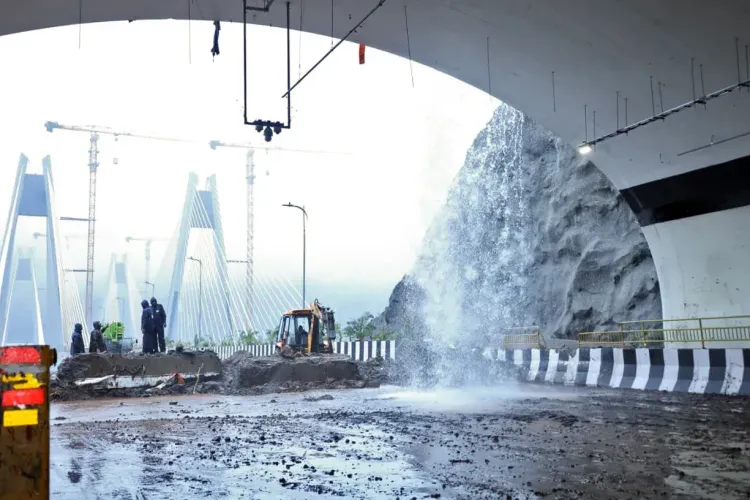
Nearly 100 tonnes of debris crashed onto the Missing Link's entry point on Monday, 7 July , days after the project's inauguration.
Traffic on the stretch was suspended for the entire day; the route reopened late at night after debris clearance.
Chief Minister Devendra Fadnavis attributed the incident to unprecedented rainfall and changing climate cycles, denying administrative failure.
Shiv Sena (UBT) 's 'Saamna' editorial accused the government of routinely shifting blame to nature to cover up lapses.
Opposition parties questioned both construction quality and the government's branding of Fadnavis as 'infra man.'
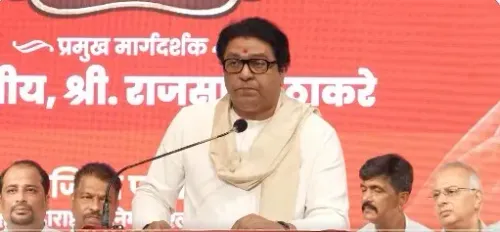
Maharashtra Navnirman Sena (MNS) leader Sandeep Deshpande on Tuesday, 7 July fired a pointed satirical salvo at the Mahayuti ruling coalition, lampooning the Bharatiya Janata Party (BJP)'s well-worn habit of pinning contemporary governance failures on the country's first Prime Minister, Pandit Jawaharlal Nehru. The jibe came in the wake of a major landslide on the newly inaugurated Mumbai-Pune Missing Link project that shut down traffic for an entire day.
The Satirical Post That Started It
Deshpande's sarcasm was pointed and deliberate. 'Pandit Nehru is responsible for the landslide on the Mumbai-Pune Missing Link, and those who still want to criticise the government should move to Pakistan,' he wrote, mimicking the rhetorical deflections that critics say have become standard fare from the ruling alliance whenever accountability is sought.
The post was widely circulated and drew immediate attention, with political observers noting it encapsulated a broader frustration with the Mahayuti government's crisis communication strategy.
Saamna Editorial Joins the Attack
Shiv Sena (UBT) also weighed in through its party mouthpiece 'Saamna', whose editorial on Tuesday argued that the political response to the landslide had followed a predictable script. According to the editorial, whenever structural failures of this nature occur, ruling politicians pivot accountability to natural forces to obscure administrative lapses.
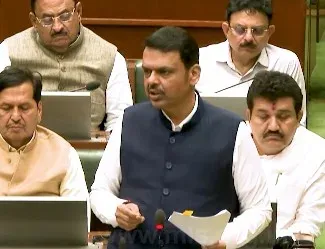
The editorial specifically called out Chief Minister Devendra Fadnavis for his response in the Legislative Assembly, where he attributed the incident entirely to unprecedented weather conditions. 'He maintained that while the administration had completed all necessary pre-monsoon preparations, the intensity of the downpour exceeded all engineering expectations — a defensive explanation that has become standard practice,' the editorial stated.
What Happened on the Missing Link
The controversy erupted after nearly 100 tonnes of debris and soil crashed onto the entry point of the Missing Link on Monday, 7 July, just days after the project's inauguration. The stretch, heavily promoted by the Mahayuti alliance as an 'engineering marvel,' had barely opened to the public when the landslide struck — compounded by reports of potholes already emerging on the newly laid road.
Traffic from both Mumbai and Pune directions was completely suspended for the entire day. The blockade was cleared late at night, and around 11:00 pm, Fadnavis shared a video on social media confirming the debris had been removed and the stretch reopened.
CM Fadnavis Defends the Government
Addressing the incident, Fadnavis maintained that the state machinery responded swiftly. 'A landslide occurred on the Mumbai-Pune route. These incidents are happening due to changing nature cycles. While the administration was fully prepared, events contrary to expectations took place,' he stated.
He further noted that the landslide had occurred in an area with no prior recorded history of such incidents. 'As soon as the landslide occurred on the connecting link, traffic was immediately stopped. Vehicles coming from both Mumbai and Pune sides were either halted or diverted. The state government and all relevant agencies are on high alert. Nearly 100 tonnes of debris came down on the road,' Fadnavis added.
Opposition leaders, however, rejected this framing, questioning not just the construction quality but also the government's projection of Fadnavis as 'infra man' — a branding exercise that critics argue now sits awkwardly alongside the landslide images.
Political Fallout and What Comes Next
The incident has intensified scrutiny over the quality of construction on the Missing Link and raised broader questions about infrastructure oversight in Maharashtra. Opposition parties are expected to press the issue in the legislature, demanding an independent structural audit of the project.
Notably, this is not the first time a flagship infrastructure project in Maharashtra has faced post-inauguration controversy — a pattern that critics argue reflects systemic gaps in quality control and post-completion monitoring. The coming days will test whether the Mahayuti government can shift the narrative from blame deflection to credible accountability.
Point of View
Within days, become a symbol of rushed delivery and opaque quality control — and the government's instinct to blame weather rather than commission an independent audit only deepens that perception. Deshpande's Nehru joke worked precisely because the deflection it mocked is so recognisable. The deeper question mainstream coverage is skipping: who certified the slope stabilisation on a stretch that, by Fadnavis's own admission, had no prior landslide history — and what liability framework applies when a newly built 'engineering marvel' fails this quickly?
NationPress
6 Oct 2026
Frequently Asked Questions
What happened on the Mumbai-Pune Missing Link on 7 July?
Nearly 100 tonnes of debris and soil crashed onto the entry point of the Mumbai-Pune Missing Link on 7 July, days after the project's inauguration. Traffic from both Mumbai and Pune directions was suspended for the entire day before the stretch was cleared and reopened late at night.
Why did MNS leader Sandeep Deshpande mock the Mahayuti government?
Deshpande posted a satirical comment blaming Pandit Nehru for the landslide, mocking the BJP's recurring tendency to attribute contemporary governance failures to India's first Prime Minister. The post was a pointed critique of the ruling coalition's deflection strategy in the face of accountability questions.
How did CM Devendra Fadnavis respond to the landslide controversy?
Fadnavis attributed the landslide to unprecedented rainfall and changing climate cycles, stating that the administration had completed all pre-monsoon preparations but the downpour exceeded engineering expectations. He confirmed that traffic was halted immediately and that nearly 100 tonnes of debris had come down in an area with no prior landslide history.
What did the Saamna editorial say about the government's response?
The Shiv Sena (UBT) mouthpiece 'Saamna' argued that the government's response followed a predictable pattern of shifting blame to natural forces whenever structural failures occur. It specifically criticised Fadnavis for deflecting accountability in the Legislative Assembly rather than addressing administrative lapses.
What is the Missing Link project on the Mumbai-Pune Expressway?
The Missing Link is a recently inaugurated stretch on the Mumbai-Pune Expressway, promoted by the Mahayuti government as an 'engineering marvel' designed to ease connectivity between the two cities. The project faced immediate controversy after a landslide and reports of potholes emerged within days of its opening.