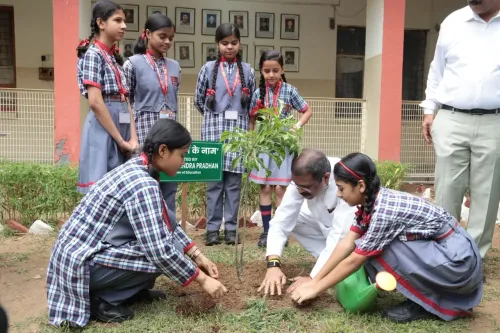
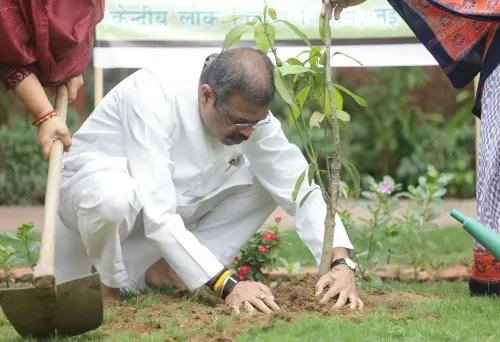
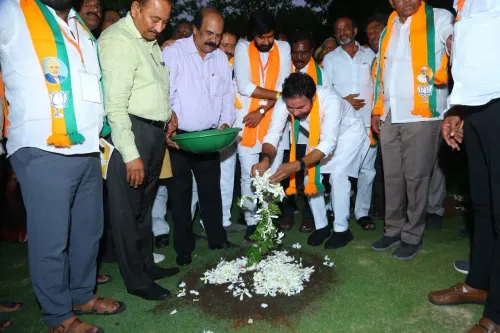
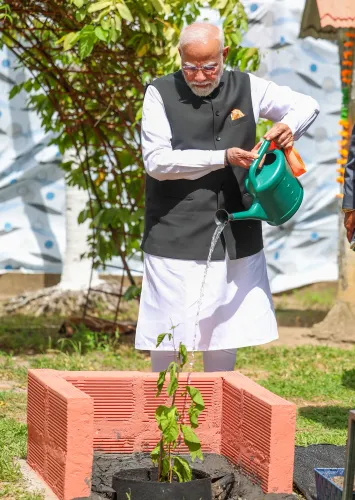
BJP chief Nitin Nabin plants sapling on World Environment Day, backs 'Ek Ped Maa Ke Naam'
Synopsis
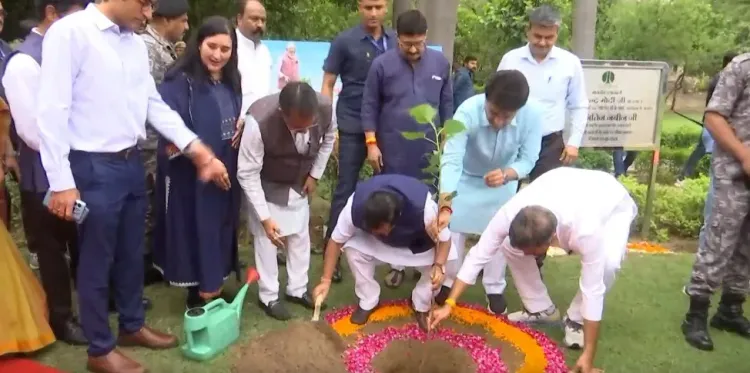
BJP National President Nitin Nabin used World Environment Day to publicly back Modi's 'Ek Ped Maa Ke Naam' campaign, planting a sapling in New Delhi alongside senior party leaders. The gesture underscores the BJP's effort to frame environmental action as a mass citizen movement anchored in cultural sentiment — with the party's top brass leading by example.
Key Takeaways
BJP National President Nitin Nabin planted a sapling in New Delhi on 5 June , World Environment Day.
He was joined by Delhi BJP President Harsh Malhotra , MP Bansuri Swaraj , and NDMC Vice Chairman Kuljeet Chahal .
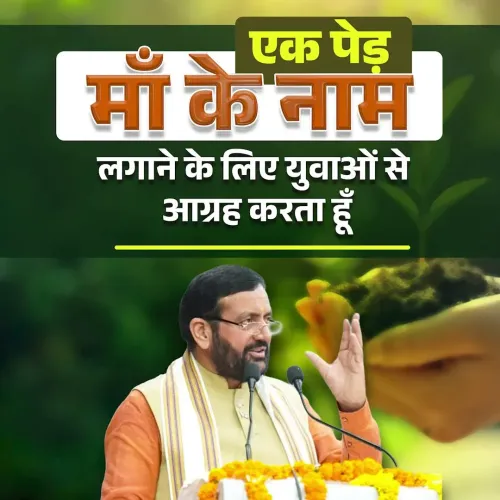
Nabin appealed to all citizens to participate in PM Narendra Modi's 'Ek Ped Maa Ke Naam' campaign.
World Environment Day has been observed annually on 5 June since 1973 , involving more than 150 countries .
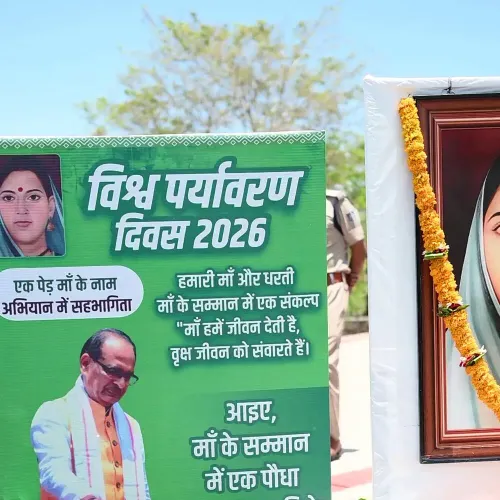
The campaign links tree-planting to maternal respect, aiming to broaden public participation in environmental conservation.
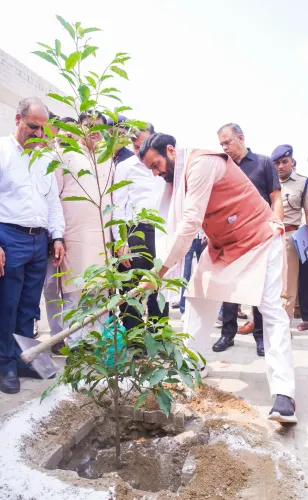
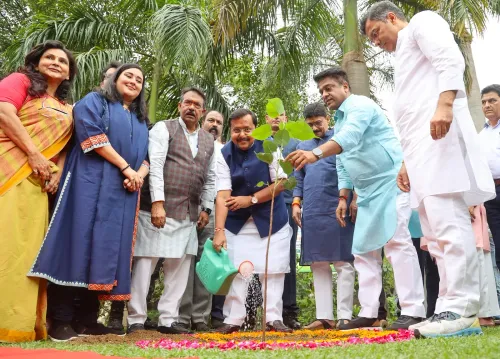
Bharatiya Janata Party (BJP) National President Nitin Nabin on 5 June planted a sapling in New Delhi on the occasion of World Environment Day, reaffirming the party's support for Prime Minister Narendra Modi's 'Ek Ped Maa Ke Naam' (One Tree in Mother's Name) campaign. Nabin urged every Indian to participate in the initiative, calling it a generational responsibility.
Who Joined the Drive
Delhi BJP President Harsh Malhotra, BJP Member of Parliament Bansuri Swaraj, and New Delhi Municipal Council (NDMC) Vice Chairman Kuljeet Chahal accompanied Nabin at the tree-plantation event. The leaders collectively highlighted afforestation as a cornerstone of environmental conservation.
What Nabin Said
Addressing reporters, Nabin said, 'On the occasion of World Environment Day, we have continued the tradition of planting trees every year. The Prime Minister has transformed it into a people's movement. When he called upon citizens to plant 'Ek Ped Maa Ke Naam,' he connected people across the country with this initiative. I believe that all citizens will join this campaign and plant trees in memory of their mothers.'
He added, 'Through the 'Ek Ped Maa Ke Naam' campaign, Prime Minister Narendra Modi has connected every citizen with the cause of environmental protection. I appeal to all people that if each one of us plants a tree, we will not only protect our own lives but also secure the future of the coming generations.'
Expressing concern over the pace of global environmental degradation, Nabin said the campaign represents 'a significant step towards making the country greener, healthier, and more sustainable.'
The Campaign in Context
The 'Ek Ped Maa Ke Naam' initiative was launched by Prime Minister Modi with the stated aim of drawing every citizen into environmental action by attaching the symbolic act of tree-planting to maternal respect — a deeply resonant cultural value in India. The campaign has since seen participation from government officials, civil society groups, and ordinary citizens across states.
This comes amid growing global anxiety over climate change, biodiversity loss, and deforestation. India has set ambitious targets for increasing forest and tree cover as part of its climate commitments under the Paris Agreement.
World Environment Day: Background
World Environment Day is observed every year on 5 June under the aegis of the United Nations Environment Programme (UNEP). Its origins trace back to the United Nations Conference on the Human Environment held in Stockholm, Sweden, in 1972 — a landmark moment in international ecological governance. The first formal observance took place in 1973.
Today, the occasion mobilises more than 150 countries through activities ranging from tree-plantation drives and beach clean-ups to policy forums and educational programmes. Each year, a host country is designated and a specific theme draws attention to a pressing environmental concern.
As political leaders and institutions mark the day with symbolic gestures, environmentalists and civil society groups continue to stress that sustained policy action — not one-day campaigns — will determine whether India meets its long-term green targets.
Point of View
Symbolic drives and one-day events have a mixed record in translating into durable forest cover gains; India's own data shows that plantation survival rates can be low without sustained follow-through. The real measure of this campaign's impact will be in verifiable canopy data, not sapling counts.
NationPress
20 Oct 2026
Frequently Asked Questions
What is the 'Ek Ped Maa Ke Naam' campaign?
'Ek Ped Maa Ke Naam' — meaning 'One Tree in Mother's Name' — is an initiative launched by Prime Minister Narendra Modi that encourages every citizen to plant a tree as a tribute to their mother. The campaign aims to link environmental action with a culturally resonant personal gesture, driving mass participation in afforestation across India.
What did BJP chief Nitin Nabin do on World Environment Day 2025?
BJP National President Nitin Nabin planted a sapling in New Delhi on 5 June 2025 to mark World Environment Day. He was joined by Delhi BJP President Harsh Malhotra, MP Bansuri Swaraj, and NDMC Vice Chairman Kuljeet Chahal, and appealed to all Indians to join the 'Ek Ped Maa Ke Naam' campaign.
When is World Environment Day observed and why?
World Environment Day is observed every year on 5 June under the United Nations Environment Programme (UNEP). It was established following the 1972 UN Conference on the Human Environment in Stockholm and has been observed since 1973 to raise awareness about climate change, pollution, and biodiversity loss.
How many countries participate in World Environment Day?
More than 150 countries participate in World Environment Day annually. Activities include tree-plantation drives, beach clean-ups, educational programmes, and policy initiatives, with a host country and specific theme designated each year.
Why does the BJP support the 'Ek Ped Maa Ke Naam' campaign?
BJP leaders have framed the campaign as a citizen-driven environmental movement inspired by Prime Minister Modi, arguing that connecting tree-planting to maternal respect makes conservation personally meaningful for every Indian. Nabin stated the initiative helps 'protect our own lives and secure the future of coming generations.'