Nadda backs SIR voter verification, challenges opposition
Synopsis
Union Health Minister and BJP president J. P. Nadda challenged opposition parties on October 30, 2026, to justify resistance to the Special Intensive Revision (SIR) process, which requires new voters to verify parental electoral records from 2002-04, framing objections as support for non-citizen voting.
Key Takeaways
Nadda , Union Health Minister and BJP national president, publicly defended the Special Intensive Revision (SIR) electoral-roll drive on October 30, 2026 .
Under SIR, new voters must furnish details linking them to parents whose votes were on record between 2002 and 2004 .
Nadda asked why the opposition objects, suggesting it favours infiltrators over legitimate Indian voters — a politically charged framing.
The Election Commission of India is the constitutional authority overseeing the electoral roll revision exercise.
India's history of border-state migration disputes — including the Assam NRC finalised in 2019 — forms the backdrop to this renewed debate.
The confrontation signals a broader political contest over voter-eligibility verification standards heading into future state and national electoral cycles.
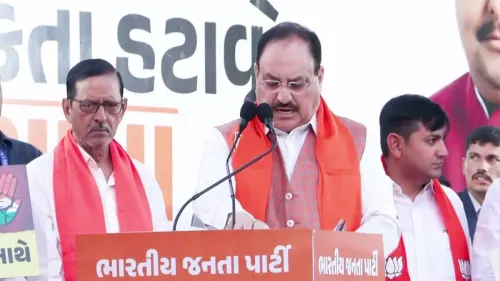
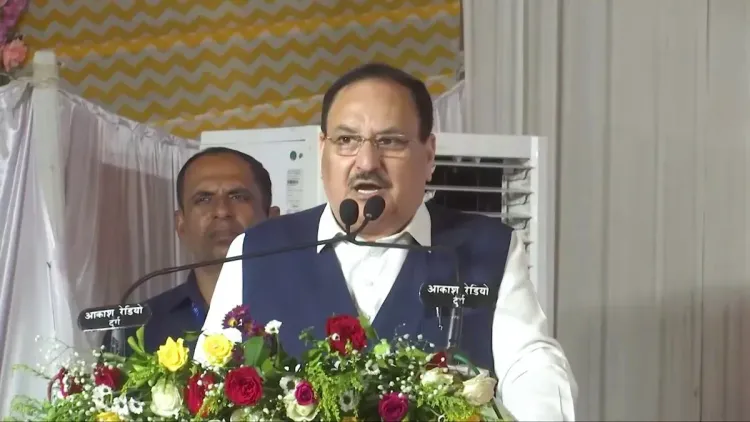
A sharp political fault line opened on Friday, October 30, 2026, when Union Health Minister J. P. Nadda fired a pointed question at the opposition: why resist a process designed to confirm that only genuine Indian citizens are on the electoral rolls? The BJP national president invoked the Special Intensive Revision (SIR) drive — under which new voters are being asked to furnish details tracing back to parents whose votes were registered between 2002 and 2004 — and framed any objection to it as tantamount to protecting infiltrators over legitimate voters.
What the SIR process demands — and why it matters
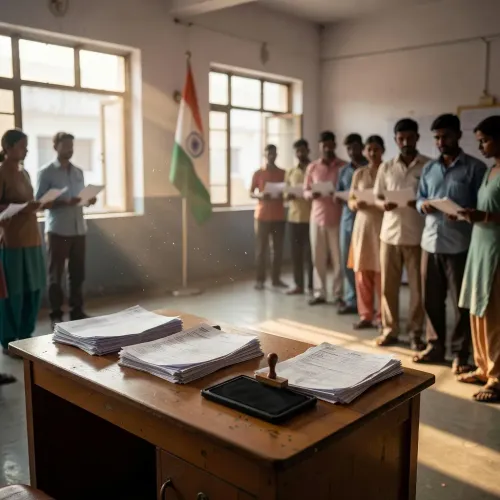
The Special Intensive Revision (SIR) is an electoral-roll exercise conducted under the superintendence of the Election Commission of India, the constitutional authority that controls voter-list maintenance across the country. Under the current drive, first-time voters are being required to produce documentation showing that at least one parent's name appeared in electoral rolls during the 2002–04 reference period. The intent, as Nadda articulated it, is straightforward: establish a citizenship-linked evidentiary chain before a new name is added to the register.
India's border states have long been flashpoints in this debate. The National Register of Citizens finalised in Assam in 2019 was itself a product of decades of dispute over illegal cross-border migration and its impact on electoral outcomes. The SIR exercise sits in that same contested tradition — a bureaucratic instrument with outsized political resonance.
Nadda's challenge to the opposition
Posting under the hashtag #SaveDemocracyRemoveAnarchy, Nadda cast the opposition's resistance in stark terms: 'क्या वे भारतीय मतदाताओं के बजाय घुसपैठियों के सहारे सरकार चलाना चाहते हैं?' ('Do they want to run the government on the support of infiltrators rather than Indian voters?'). It is a formulation designed to shift the burden of explanation onto opposition parties — making the act of questioning the SIR process look like the suspicious move, not the process itself.
The BJP has consistently argued that rigorous verification protects the democratic franchise from dilution by non-citizens. Critics have countered in previous such exercises that documentation requirements can inadvertently exclude marginalised communities who lack formal paperwork — a tension the Election Commission has historically had to navigate carefully.
The bigger electoral-integrity argument
This is not the first time India has seen this debate, and it will not be the last. Voter-list verification drives have been a recurring flashpoint between ruling parties emphasising integrity and opposition blocs raising fears of disenfranchisement. The Election Commission's role as a neutral arbiter becomes especially loaded when the verification criteria themselves become politically contested. What makes the current moment notable is the national-level amplification: a cabinet minister and ruling-party president publicly questioning the opposition's motives — not just defending a policy, but prosecuting an argument about democratic legitimacy.
With future phases of electoral roll revision still ahead in multiple states, and parliamentary debate on voter-eligibility verification norms likely to intensify, the SIR dispute is shaping up as a defining front in the broader contest over who gets to define — and safeguard — India's electorate.
Point of View
Forcing opponents onto defensive ground. By linking opposition resistance to the SIR process with sympathy for 'infiltrators', he conflates a legitimate policy debate about documentation burdens with a loyalty test on national integrity. This follows the pattern established during the Assam NRC — where citizenship-verification drives served simultaneously as administrative exercises and as electoral mobilisation tools. The opposition's silence or objection now risks being weaponised as evidence of their alleged dependence on non-citizen vote banks, a narrative the BJP has effectively deployed in border-state elections for over a decade.
NationPress
30 Oct 2026
Frequently Asked Questions
What is the SIR electoral roll process in India?
SIR stands for Special Intensive Revision, an exercise conducted under the Election Commission of India to update and verify voter rolls. The current drive requires new voters to produce documentation showing a parent's name was on the electoral roll during the 2002-04 reference period.
Why is JP Nadda opposing opposition objections to SIR?
Nadda argues that the SIR verification process is essential to ensure only genuine Indian citizens are registered to vote, and he questioned whether opposition parties resist it because they benefit politically from non-citizen or infiltrator votes — a charge opposition parties have not accepted.
What is the 2002-04 reference period in the SIR voter drive?
Under the SIR process Nadda referenced, new voters are asked to verify that at least one parent's vote was recorded in electoral rolls between 2002 and 2004, creating a documented citizenship-linked chain for eligibility.
What is the Election Commission of India's role in electoral roll revision?
The Election Commission of India is the constitutional authority responsible for supervising, directing and controlling the preparation and maintenance of electoral rolls. It oversees all intensive and summary revision exercises, including SIR drives.
What is the connection between the Assam NRC and voter roll verification?
The National Register of Citizens finalised in Assam in 2019 was part of a long-running effort to identify and exclude illegal immigrants from civic records, including voter lists. The current SIR debate echoes that exercise, reflecting India's persistent concern about illegal immigration affecting electoral outcomes in border states.