Nadda Frames Voter-Roll Integrity as Patriotic Duty
Synopsis
Union Health Minister and BJP president J. P. Nadda cited PM Modi to argue that foreigners and ineligible persons have no right to vote, framing electoral roll cleansing as a patriotic duty and calling the contest a fight between nationalists and anti-national forces.
Key Takeaways
Nadda posted on 30 October 2026 amplifying PM Modi 's position that no foreigner or ineligible person holds a right to vote in India.
Nadda described India as a sovereign republic, not a dharamshala , rejecting the idea that anyone can arrive and influence its elections.
He called support for 'SIR' — an electoral integrity measure — essential for both national security and democratic purity.
The post frames the debate as a binary: patriots versus forces opposed to the nation .
BJP 's citizenship-and-voter-roll messaging builds on the Citizenship Amendment Act (2019) and the Assam NRC (2019) as precedents.
Such messaging historically intensifies ahead of state or national elections when illegal-voting allegations surface in border states.
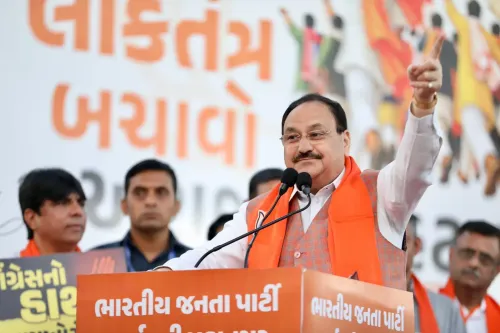
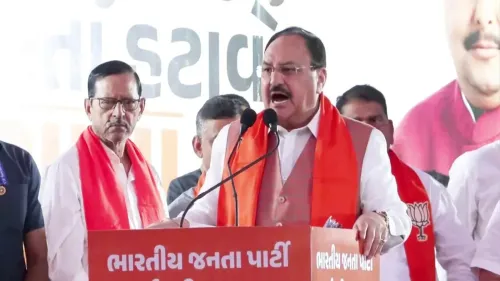
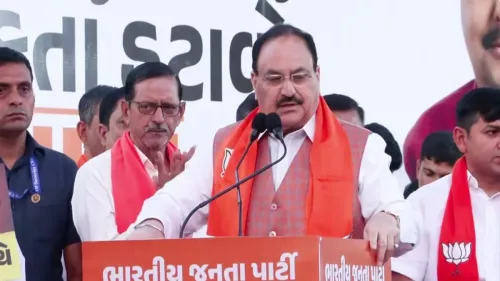
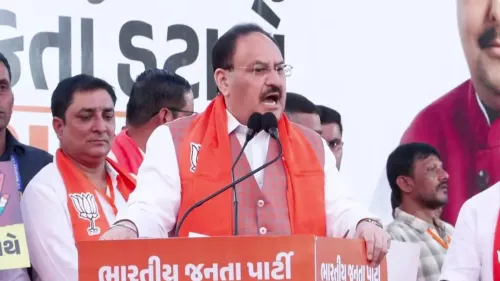
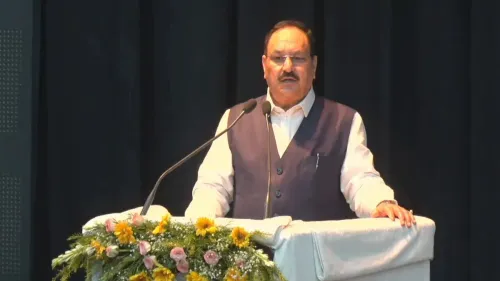
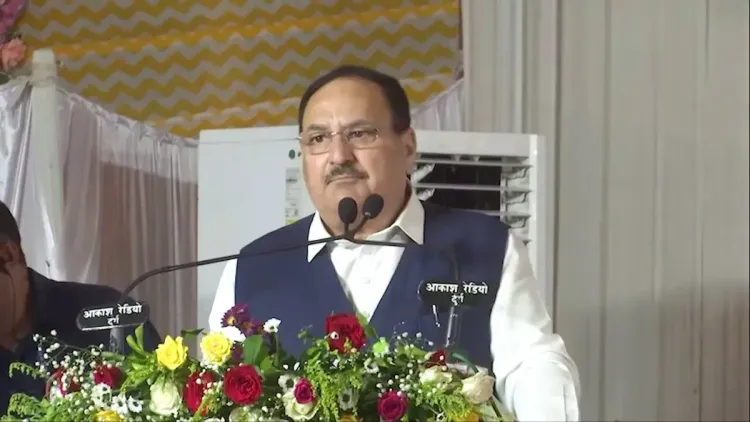
India's democracy, Union Health Minister and BJP national president J. P. Nadda declared on Friday, 30 October 2026, is not an open house — and no foreigner or ineligible person has any right to cast a ballot in it. In a pointed post on X, Nadda amplified Prime Minister Narendra Modi's position that India is a sovereign republic, not a dharamshala (a wayfarers' rest-house open to all), and called for broad support for electoral integrity measures under the hashtag #SaveDemocracyRemoveAnarchy.
Modi's Words, Nadda's Amplification
Quoting the Prime Minister directly, Nadda wrote: 'Modi ji kehte hain ki koi bhi videshi, koi bhi galat vyakti usko vote dene ka adhikar nahin hai' — 'Modi says that no foreigner, no wrong person, has the right to vote.' The framing is deliberate: by invoking the PM's authority at the top of the post, Nadda signals that this is not a fringe view within the party but settled BJP doctrine, repeated from the top down.
The post goes further, characterising the contest over voter-roll accuracy as an existential one — 'a fight between patriots and the forces opposed to the nation,' in Nadda's words. That binary framing raises the stakes beyond procedural housekeeping and into the language of national loyalty.
The Citizenship and Voter-List Debate BJP Has Waged for Years
BJP leaders have consistently argued that unverified voter rolls — particularly in states along the Bangladesh border — pose a dual threat: to national security and to the mathematical fairness of elections. The Citizenship Amendment Act of 2019 and the National Register of Citizens exercise finalised in Assam in 2019 were both framed, in part, through this lens: identify legitimate citizens, exclude illegal entrants, protect the integrity of the franchise.
Nadda's post extends that lineage into the current moment, urging support for what he calls 'SIR' — an acronym whose precise expansion is not clarified in the post — as a tool for 'the security of the country and the purity of democracy.' Whatever the specific measure, the rhetorical architecture is familiar: procedural reform dressed in the language of patriotism.
Why This Messaging Lands When It Does
BJP's electoral-integrity messaging has a well-documented pattern of intensifying ahead of state or national polls, when allegations of illegal voting tend to surface in public discourse. Framing voter-list revision as a duty of every patriot — and opposition to it as alignment with 'anti-national forces' — is designed to make procedural compliance feel morally charged. The Election Commission of India conducts periodic roll-revision exercises independently, and any legislative follow-through would require Parliament's approval.
The combative hashtag, the invocation of Modi, and the 'patriots versus opponents' binary all suggest this post is less a policy announcement and more an opening salvo in a broader political campaign around democratic credibility.
Whether the Election Commission responds with a fresh roll-revision announcement or Parliament takes up related legislation will determine if this rhetoric has immediate institutional consequence — or remains, for now, a declaration of intent.
Point of View
Citizenship verification — with an emotionally charged patriotism frame, making opposition to any cleansing exercise feel morally costly. By explicitly invoking Modi's authority and deploying a 'patriots vs. anti-nationals' binary, the party escalates what is nominally an administrative question into a culture-war flashpoint. The timing and the combative hashtag suggest this is groundwork for a broader pre-election narrative, not a standalone procedural call. The real test will be whether the rhetoric is followed by a concrete legislative or Election Commission action — or whether it functions primarily as mobilisation messaging.
NationPress
30 Oct 2026
Frequently Asked Questions
What did JP Nadda say about foreigners voting in India?
Nadda quoted PM Modi to assert that no foreigner or ineligible person has any right to vote in India, adding that India is a sovereign nation and not a rest-house where anyone can arrive and influence its electoral outcomes.
What is SIR that Nadda mentioned in his post?
Nadda used the acronym SIR in the context of supporting electoral integrity measures, but did not spell out the full form of the acronym in the post. Its precise expansion has not been officially clarified.
What is the BJP's position on illegal immigrants and voting rights?
BJP has consistently argued that illegal immigrants must be excluded from voter rolls, framing the issue as both a national security concern and a matter of democratic fairness, particularly in states bordering Bangladesh.
What is the Citizenship Amendment Act and how is it related to this debate?
The Citizenship Amendment Act, passed in 2019 , addressed citizenship claims for certain persecuted minorities while explicitly excluding illegal entrants. BJP has cited it, alongside the Assam NRC, as a framework for ensuring only legitimate citizens can exercise voting rights.
What does SaveDemocracyRemoveAnarchy mean in Indian politics?
The hashtag #SaveDemocracyRemoveAnarchy is a BJP campaign slogan framing voter-roll accuracy and citizenship verification as essential to preserving democratic integrity, and portraying opposition to these measures as support for anarchy.