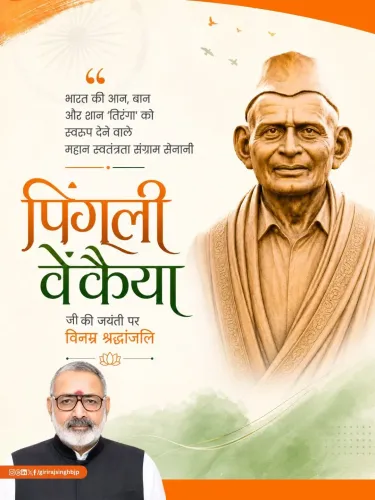
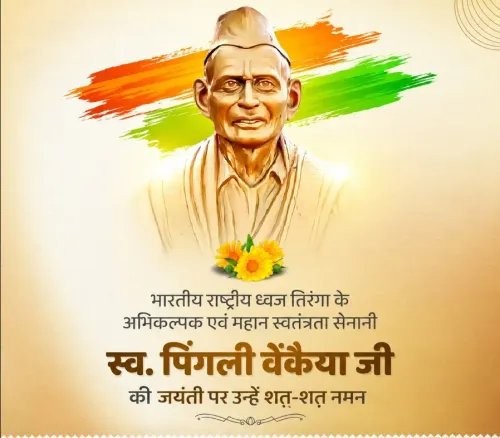
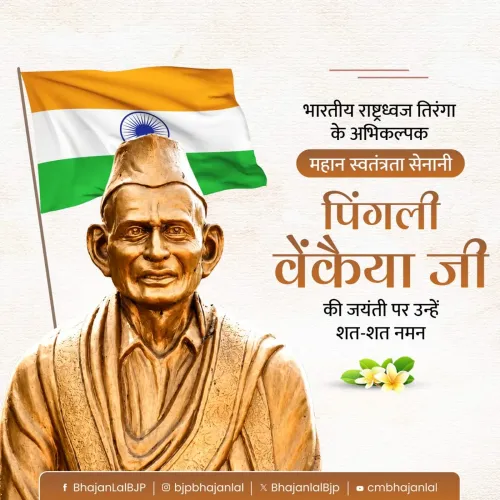
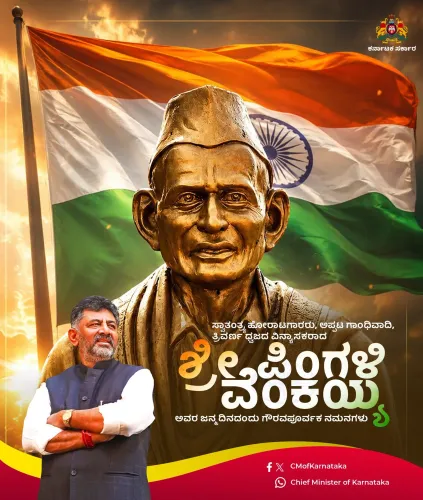
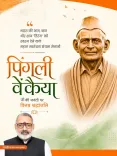
Nadda pays tribute to Pingali Venkayya on flag designer's birth anniversary
Synopsis
Union Health Minister J. P. Nadda honoured Pingali Venkayya, the freedom fighter who designed India's Tricolour in 1921, on his birth anniversary, calling the flag an enduring symbol of unity, integrity, and diversity. The Constituent Assembly officially adopted Venkayya's design on 22 July 1947.
Key Takeaways
Nadda paid tribute to Pingali Venkayya on his birth anniversary on 2 August 2026 .
Venkayya first presented a flag design featuring the charkha to Mahatma Gandhi at the 1921 Congress session in Vijayawada.
The Ashoka Chakra replaced the charkha in the final design; the flag was officially adopted by the Constituent Assembly on 22 July 1947 .
Nadda described the Tricolour as a symbol of 'unity, integrity, and diversity in unity.' Venkayya passed away in 1963 and was born in Bhatlapenumarru, Andhra Pradesh .
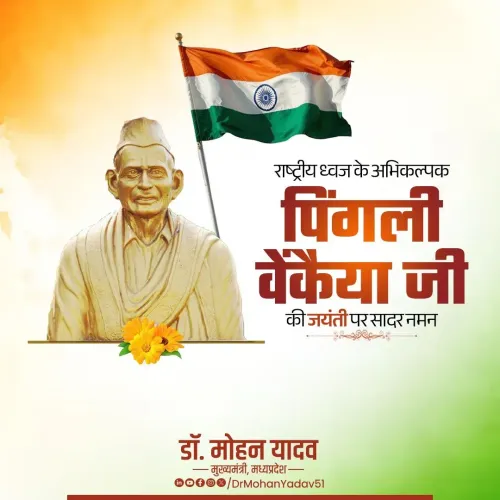
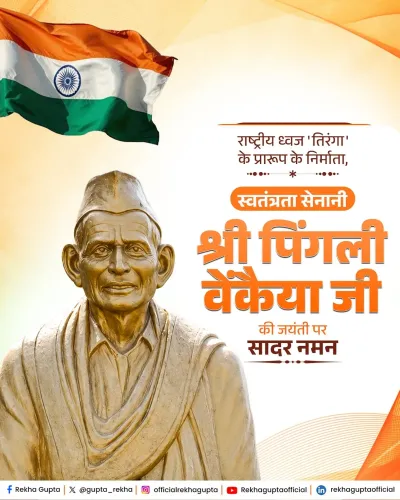
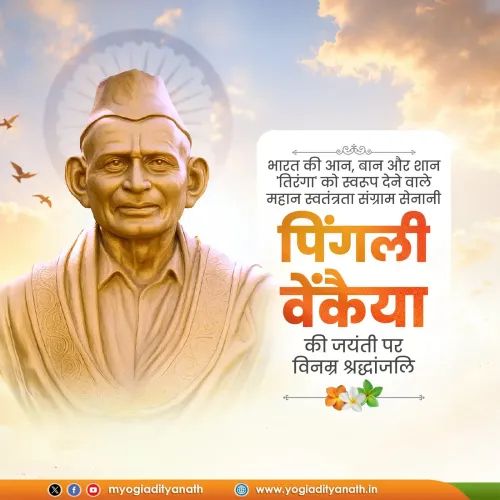
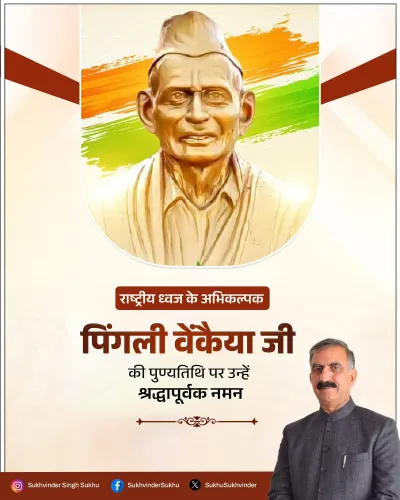
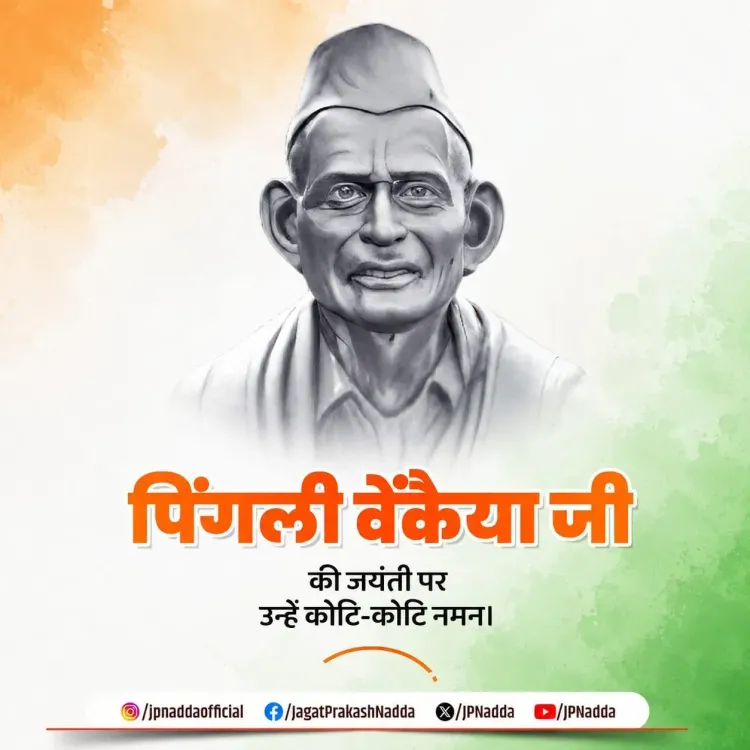
Every time the Tricolour rises — at a school assembly, a Republic Day parade, a stadium full of cheering fans — it carries the imprint of one man's vision. Union Health Minister J. P. Nadda on Sunday, 2 August 2026, paid homage to Pingali Venkayya, the freedom fighter who designed India's national flag, on his birth anniversary.
In his post, Nadda wrote: 'भारत के राष्ट्रीय ध्वज 'तिरंगा' के प्रारूपकार श्रद्धेय श्री पिंगली वेंकैया जी की जयंती पर उन्हें कोटिशः नमन।' — 'Heartfelt salutations to revered Shri Pingali Venkayya ji, designer of India's national flag 'Tiranga', on his birth anniversary.' He described Venkayya's contribution as giving the nation's identity 'a new recognition', and called the Tricolour an enduring symbol of 'unity, integrity, and diversity in unity.'
The man behind the Tricolour
Pingali Venkayya, born in Bhatlapenumarru, present-day Andhra Pradesh, was a polymath, geologist, and dedicated soldier of the independence movement. His most consequential act came in 1921, when he presented a flag design to Mahatma Gandhi at the Congress session in Vijayawada — a design featuring a spinning wheel, the charkha, at its centre as a symbol of self-reliance and mass mobilisation. The design evolved over the following decades. When India stood on the threshold of independence, the charkha gave way to the Ashoka Chakra — the 24-spoked wheel from the Lion Capital of Ashoka at Sarnath — representing the eternal wheel of law and progress. On 22 July 1947, the Constituent Assembly officially adopted the flag in its final form, just weeks before the country's first Independence Day.A symbol stitched into national memory
Venkayya never received a Bharat Ratna in his lifetime; he died in 1963 in relative obscurity. Yet his creation flies over every government building, drapes the coffins of martyrs, and has been hoisted by Indians on every continent. Nadda's tribute reflects a broader, cross-party tradition of commemorating independence-era figures who shaped national symbols — a ritual that intensifies in the weeks leading up to 15 August. The Tricolour's three bands — saffron for courage and sacrifice, white for peace and truth, green for faith and chivalry — and the navy-blue Chakra at its heart remain as legible today as they were in 1947. That staying power is Venkayya's real monument. As the 15 August flag-hoisting season approaches, the man who gave India its flag deserves to be more than a footnote — and tributes like Nadda's keep that conversation alive.Point of View
Arriving days before Independence Day, fits a deliberate pattern of associating the ruling dispensation with foundational national symbols. The omission of a Bharat Ratna for Venkayya in his lifetime remains a quiet undercurrent in these commemorations, occasionally prompting calls for a posthumous award. Cross-party consensus on honouring flag-era figures underscores that the Tricolour functions as one of India's few genuinely non-partisan touchstones.
NationPress
2 Aug 2026
Frequently Asked Questions
Who designed the Indian national flag?
Pingali Venkayya , a freedom fighter from present-day Andhra Pradesh, designed the Indian national flag. He first presented his design to Mahatma Gandhi in 1921, and a modified version was officially adopted by the Constituent Assembly on 22 July 1947 .
When is Pingali Venkayya's birth anniversary?
Pingali Venkayya's birth anniversary falls on 2 August . Indian leaders across parties mark the occasion with tributes, particularly in the weeks leading up to Independence Day on 15 August.
What is the significance of the Ashoka Chakra on the Indian flag?
The Ashoka Chakra , a 24-spoked navy-blue wheel, replaced the charkha in the final flag design. It is drawn from the Lion Capital of Ashoka at Sarnath and represents the eternal wheel of law, dharma, and progress.
Did Pingali Venkayya receive the Bharat Ratna?
No. Pingali Venkayya did not receive the Bharat Ratna during his lifetime. He passed away in 1963 , and calls for a posthumous award have been raised periodically by politicians and historians.
What did J. P. Nadda say about Pingali Venkayya?
J. P. Nadda called Venkayya a 'dedicated soldier of the freedom struggle' whose contribution gave India's national identity 'a new recognition.' He described the Tricolour as an enduring symbol of 'unity, integrity, and diversity in unity.'