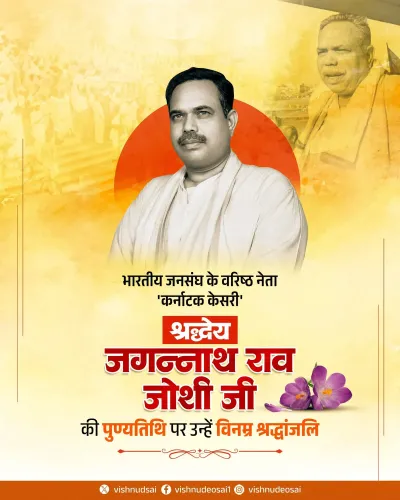
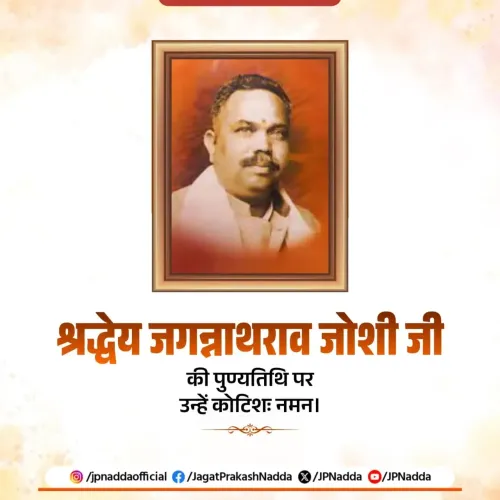
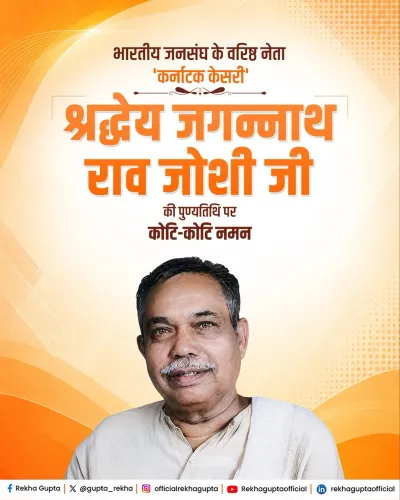
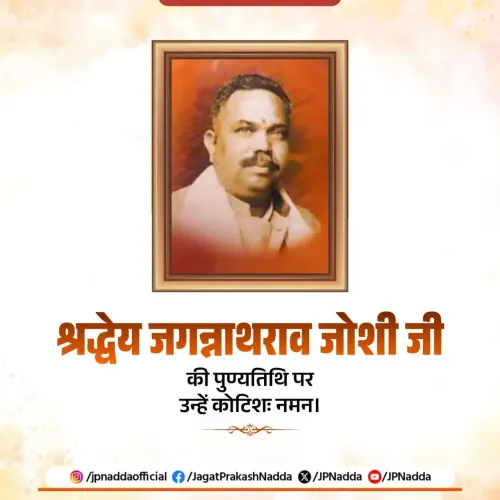
Nadda pays tribute to Jana Sangh leader Jagannath Rao Joshi on birth anniversary
Synopsis
Union Health Minister J. P. Nadda paid tribute to senior Jana Sangh leader and Karnataka Kesari Jagannath Rao Joshi on his birth anniversary on 23 June 2026, crediting him with a key role in ending entry permit restrictions for Indians in Goa and praising his contribution to nation-building.
Key Takeaways
Nadda , Union Health Minister and BJP national president, posted a tribute to Jagannath Rao Joshi on his birth anniversary on 23 June 2026 .
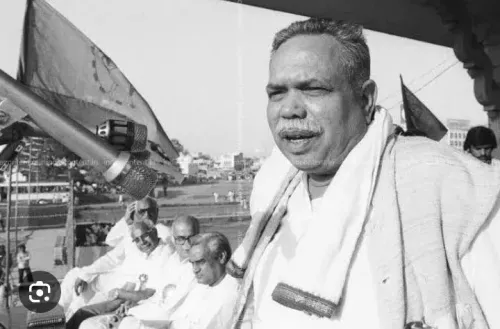
Joshi was a senior Bharatiya Jana Sangh leader known by the title Karnataka Kesari and was associated with the Goa Mukti Andolan .
Nadda credited Joshi with playing a 'prominent role' in ending the permit system that restricted the entry of Indians into Goa under Portuguese colonial administration.
Goa was liberated from Portuguese rule through Operation Vijay on 19 December 1961 .
The Bharatiya Jana Sangh, founded in 1951 , is the ideological predecessor of the present-day BJP .
The tribute is part of the BJP leadership's practice of commemorating Jana Sangh-era figures to emphasise historical and organisational continuity.
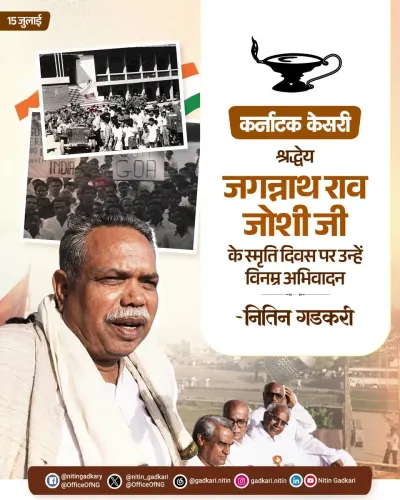
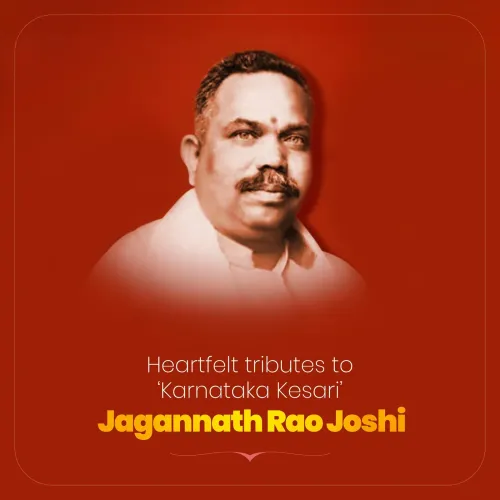
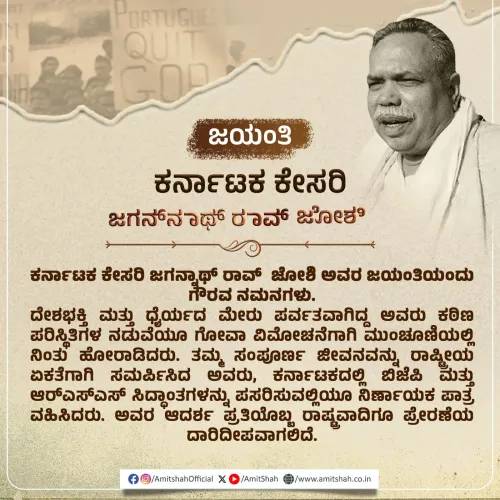
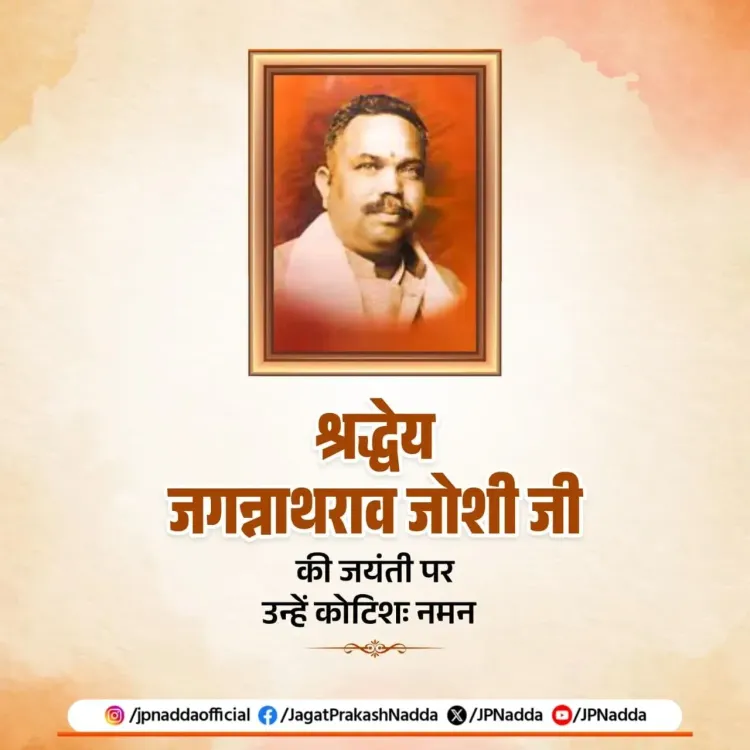
Union Health Minister and BJP national president J. P. Nadda on Tuesday, 23 June 2026 paid tribute to senior Bharatiya Jana Sangh leader Jagannath Rao Joshi, popularly known as Karnataka Kesari, on his birth anniversary, honouring his contributions to the Goa liberation movement and nation-building.
Context
Nadda, posting in Hindi on X, wrote: 'भारतीय जनसंघ के वरिष्ठ नेता, गोवा मुक्ति आंदोलन के नेतृत्वकर्ता, कर्नाटक केसरी श्रद्धेय जगन्नाथ राव जोशी जी की जयंती पर उन्हें कोटि-कोटि नमन करता हूँ।' — translating to: 'I offer crores of salutations to revered Jagannath Rao Joshi ji, senior leader of the Bharatiya Jana Sangh, leader of the Goa liberation movement, Karnataka Kesari, on his birth anniversary.' The minister specifically credited Joshi with playing a 'prominent role' in ending the permit system that restricted the entry of Indians into Goa.
Nadda further noted that Joshi's 'incomparable contribution to nation-building is unforgettable' and described his ideals, organisational skills, and philosophy of service to the nation and people as 'eternally worthy of emulation for all of us.'
Policy Backdrop
The Bharatiya Jana Sangh, founded in 1951 by Syama Prasad Mookerjee, was the ideological forerunner to the BJP, advocating cultural nationalism and national integration. Goa was liberated from Portuguese colonial rule through Operation Vijay on 19 December 1961, ending over four centuries of Portuguese presence on Indian soil.
Following liberation, administrative measures including entry permits for Indian nationals were progressively dismantled. Jagannath Rao Joshi, as a Jana Sangh leader associated with the Goa Mukti Andolan, was among those who pressed for these colonial-era restrictions to be removed. His title Karnataka Kesari — meaning 'Lion of Karnataka' — reflects the stature he commanded in the southern political landscape.
Stakeholders and Impact
The tribute resonates with BJP workers in both Karnataka and Goa, two states where the party has significant organisational presence. By invoking a leader from outside the Hindi heartland, Nadda's message underscores the BJP's effort to project its historical roots as pan-Indian rather than region-specific.
The Goa liberation movement remains a touchstone for narratives around national integration and the removal of colonial legacies — themes the BJP consistently emphasises in its political communication. Commemorating Jana Sangh-era figures on birth anniversaries is a recurring practice among BJP leadership, serving to assert organisational continuity between the Jana Sangh and the present-day party.
What's Next
Similar tributes from other BJP leaders, particularly those with roots in Karnataka or Goa, may follow through the day. State-level commemorative events honouring Joshi's legacy could be organised by BJP units in both states. The broader cycle of such commemorations is likely to continue around key dates including Goa Liberation Day on 19 December and the Jana Sangh foundation anniversary on 21 October.
Point of View
Connecting the BJP's present leadership to the Jana Sangh's pre-Independence and post-Independence activism. By specifically highlighting Joshi's role in dismantling colonial-era entry restrictions in Goa, the message anchors the party's identity in concrete acts of national integration rather than abstract ideology. The choice of a Karnataka figure also reflects the BJP's ongoing effort to deepen its southern footprint by elevating regional heroes within the party's historical canon. Such commemorations, issued by Union ministers on official channels, function simultaneously as internal party messaging and public historical framing.
NationPress
21 Sept 2026
Frequently Asked Questions
Who is Jagannath Rao Joshi?
Jagannath Rao Joshi was a senior leader of the Bharatiya Jana Sangh, the ideological forerunner to the BJP, and was associated with the Goa liberation movement. He was popularly known as Karnataka Kesari, meaning 'Lion of Karnataka,' reflecting his stature in southern Indian politics.
What was the permit system for entry into Goa?
Under Portuguese colonial administration, Indians required permits to enter Goa. After Goa's liberation through Operation Vijay on 19 December 1961, these colonial-era restrictions were progressively dismantled. J. P. Nadda credited Jagannath Rao Joshi with playing a prominent role in ending this permit system.
What is the Goa Mukti Andolan?
The Goa Mukti Andolan, or Goa liberation movement, was a campaign against Portuguese colonial rule in Goa. It culminated in India's military action — Operation Vijay — on 19 December 1961, which led to Goa's integration into India.
What is the Bharatiya Jana Sangh?
The Bharatiya Jana Sangh was an Indian political party founded in 1951 by Syama Prasad Mookerjee. It advocated cultural nationalism and national integration and is considered the ideological predecessor of the present-day Bharatiya Janata Party (BJP).
Why does the BJP commemorate Jana Sangh leaders?
The BJP regularly commemorates Jana Sangh-era leaders on birth and death anniversaries to assert organisational continuity between the two parties and to highlight contributions from leaders across different regions of India, reinforcing the party's pan-Indian historical narrative.