Nadda pays tribute to Jagannath Rao Joshi on death anniversary
Synopsis
Union Health Minister and BJP president J. P. Nadda on 15 July 2026 honoured Jagannath Rao Joshi — Jana Sangh leader, 'Karnataka Kesari', and Goa Liberation Movement pioneer — on his death anniversary, crediting him with ending colonial-era entry restrictions on Indians entering Goa.
Key Takeaways
Nadda , Union Health Minister and BJP national president, paid tribute to Jagannath Rao Joshi on his death anniversary on 15 July 2026 .
Joshi was a senior leader of the Bharatiya Jan Sangh (founded 1951 ) and a pioneer of the Goa Liberation Movement .
He was popularly known as 'Karnataka Kesari' (Lion of Karnataka).
Nadda credited Joshi with playing a significant role in abolishing the permit system that restricted Indian nationals from entering Goa during Portuguese colonial rule.
Operation Vijay (December 1961) ended Portuguese rule in Goa; the territory attained full statehood on 30 May 1987 .
The tribute is part of the BJP's broader practice of publicly commemorating Jana Sangh-era figures who contributed to national integration.
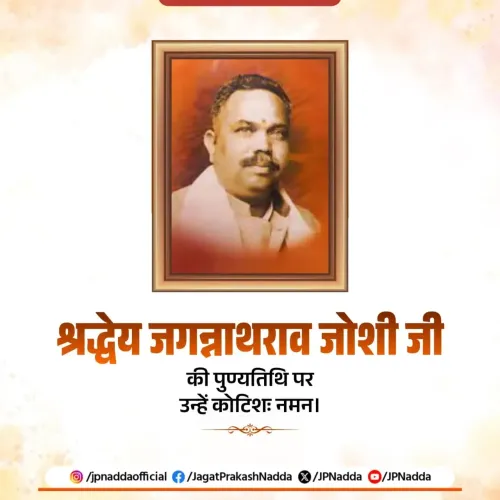
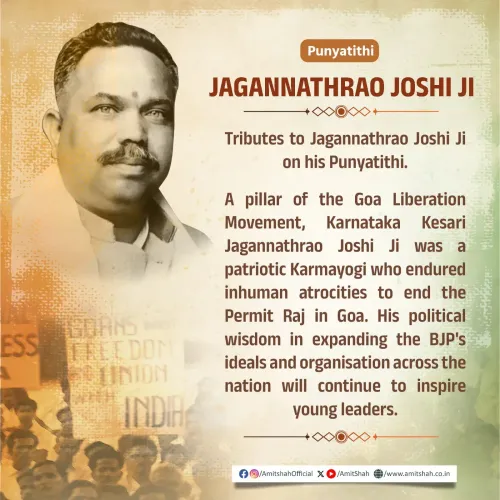
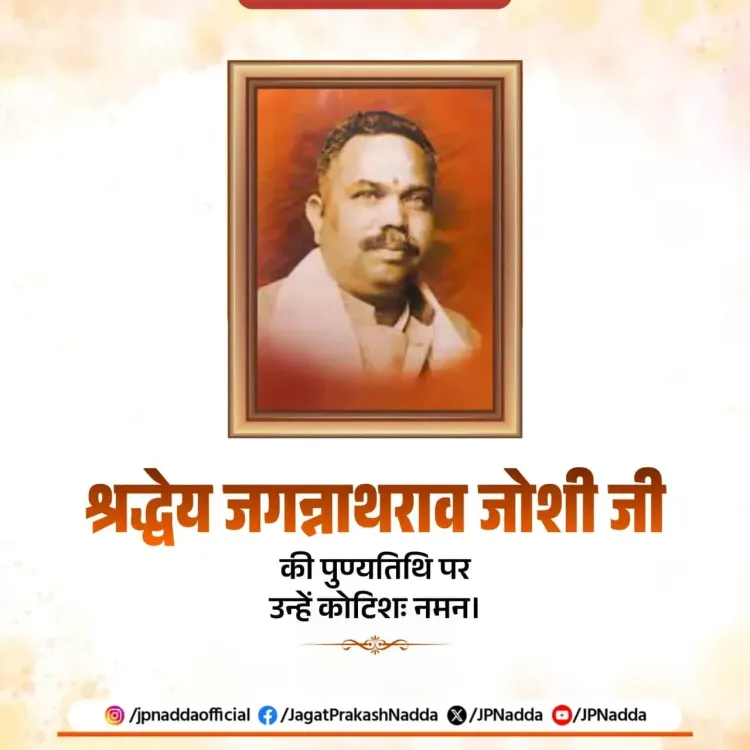
Union Health Minister and BJP national president J. P. Nadda on Wednesday, 15 July 2026 paid homage to senior Bharatiya Jan Sangh leader and Goa Liberation Movement pioneer Jagannath Rao Joshi, popularly known as 'Karnataka Kesari' (Lion of Karnataka), on his death anniversary.
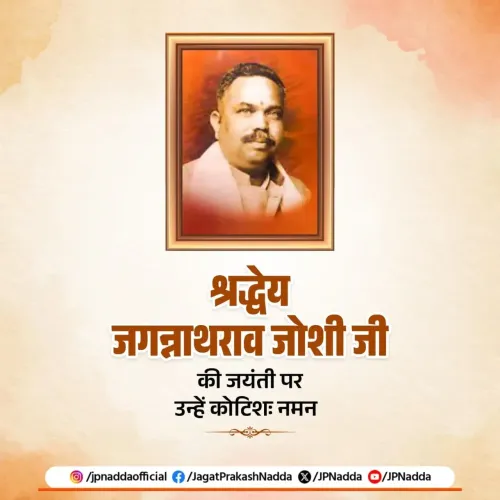
In a post on X, Nadda offered 'kotishaha naman' (salutations from millions) to Joshi, saying: 'I pay my deepest respects to the revered Jagannath Rao Joshi ji — senior leader of the Bharatiya Jan Sangh, pioneering leader of the Goa Liberation Movement, and 'Karnataka Kesari' — on his death anniversary.' He specifically credited Joshi with playing a 'significant role' in abolishing the permit system that restricted the entry of Indians into Goa during the era of Portuguese colonial administration.
Context
Jagannath Rao Joshi was a prominent figure in the Bharatiya Jan Sangh, the political party founded in 1951 that championed cultural nationalism and territorial integrity. He earned the sobriquet 'Karnataka Kesari' for his activism and organisational work in the Karnataka region. His association with the Goa Liberation Movement placed him among the nationalists who agitated against Portuguese colonial rule in the enclave.
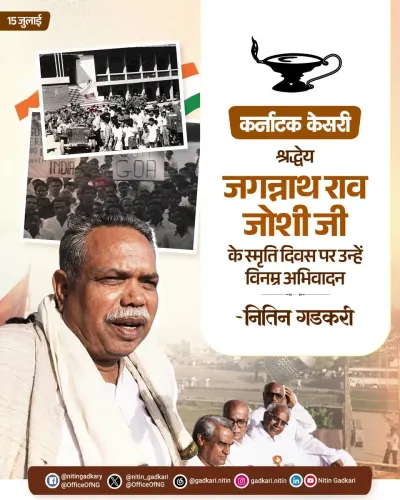
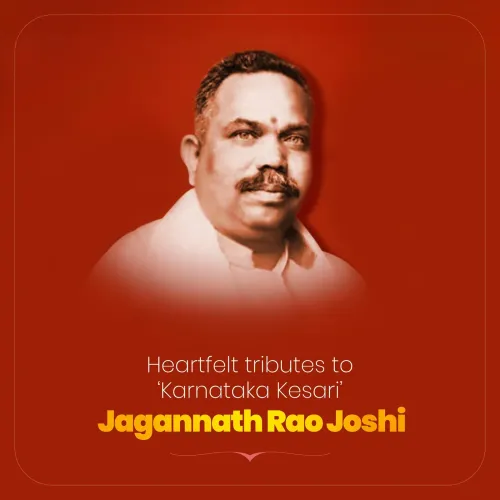
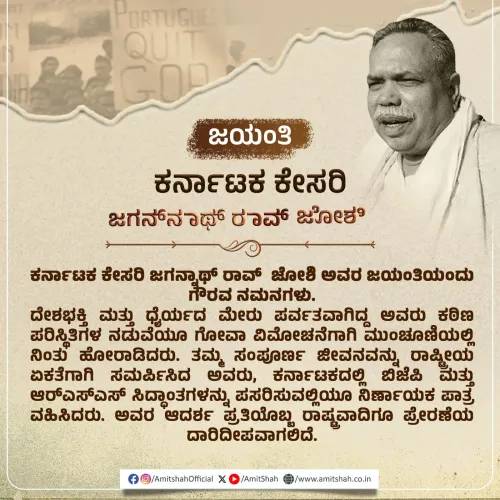
Nadda's tribute noted that Joshi's 'ascetic life devoted to national unity, integrity, and cultural consciousness remains an ideal of patriotic service and an inspiration for every party worker.' The post was accompanied by an image, likely a photograph of Joshi.
Policy Backdrop
The Goa Liberation Movement culminated in Operation Vijay in December 1961, when Indian armed forces ended over four centuries of Portuguese colonial rule and integrated Goa into the Indian Union. One of the colonial-era legacies that activists like Joshi challenged was the permit system that placed restrictions on the movement of Indian nationals into Goa — a measure widely seen as an assertion of Portuguese sovereign authority over the territory.
Goa was subsequently administered as a Union Territory before being granted full statehood on 30 May 1987, completing its constitutional integration into the Republic of India. The Bharatiya Jan Sangh, which dissolved in 1977 to merge into the Janata Party, is widely regarded as the direct ideological and organisational predecessor of the present-day BJP.
Stakeholders and Impact
The tribute carries significance for BJP workers and Goan nationalists, for whom figures like Joshi represent an early chapter in the party's lineage of championing national integration. By publicly commemorating Jana Sangh-era leaders, the BJP's current national president reinforces a narrative that connects the party's present leadership with pre-independence and post-independence struggles against colonial rule.
For Karnataka, where Joshi's legacy is particularly resonant given his honorary title, the tribute also serves as an acknowledgement of the state's contribution to national integration movements beyond its own borders.
What's Next
Commemorative activity around Joshi's legacy is likely to intensify as Goa Liberation Day (19 December) approaches each year, when the BJP and affiliated organisations typically hold events recalling the movement's key figures. Nadda's post may also prompt references in parliamentary discussions on the historical contributions of Jana Sangh leaders to national integration — a theme the ruling party has consistently sought to foreground in public discourse.
Point of View
The post grounds the tribute in a concrete policy achievement rather than generic hagiography. This approach serves a dual purpose: reinforcing ideological continuity within the party cadre and asserting a historical legitimacy that extends well beyond the BJP's formal founding in 1980. With Goa remaining a politically competitive state, such commemorations also carry an implicit electoral resonance.
NationPress
13 Oct 2026
Frequently Asked Questions
Who was Jagannath Rao Joshi?
Jagannath Rao Joshi was a senior leader of the Bharatiya Jan Sangh and a pioneering figure in the Goa Liberation Movement, popularly known as 'Karnataka Kesari' for his activism in the Karnataka region.
Why did JP Nadda pay tribute to Jagannath Rao Joshi?
J. P. Nadda paid tribute on Joshi's death anniversary on 15 July 2026, honouring his role in the Goa Liberation Movement and his contribution to abolishing the colonial-era permit system that restricted Indians from entering Goa.
What was the permit system for Goa that Joshi helped abolish?
During Portuguese colonial rule, a permit system restricted the movement of Indian nationals into Goa. Activists like Jagannath Rao Joshi agitated against this system as part of the broader campaign to integrate Goa into the Indian Union.
When was Goa liberated from Portuguese rule?
India's Operation Vijay in December 1961 ended Portuguese colonial rule in Goa. The territory was later granted full statehood on 30 May 1987.
What is the connection between the Bharatiya Jan Sangh and the BJP?
The Bharatiya Jan Sangh, founded in 1951, is widely regarded as the direct ideological and organisational predecessor of the BJP. The Jana Sangh dissolved in 1977 to merge into the Janata Party, before its members reconstituted the BJP in 1980.