CM Himanta's Assam Links Schools, Industry for Global Jobs
Synopsis
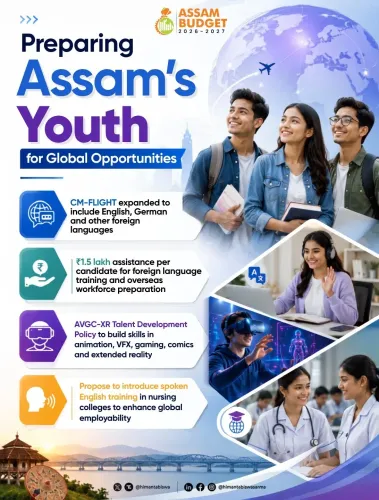
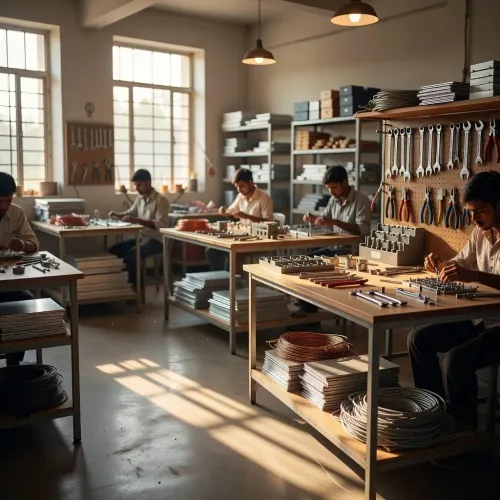
The Chief Minister's Office of Assam on July 15, 2026 announced a push to strengthen the state's youth skill ecosystem by connecting schools, industry, and world-class training institutions, aiming to open global employment pathways for Assamese youth under the Himanta Biswa Sarma government.
Key Takeaways
The Chief Minister's Office of Assam announced on July 15, 2026 that the state is strengthening its youth skill ecosystem.
The initiative connects schools, industry, and world-class training to create global employment opportunities.
Chief Minister Himanta Biswa Sarma has prioritised skill development since assuming office in May 2021 .
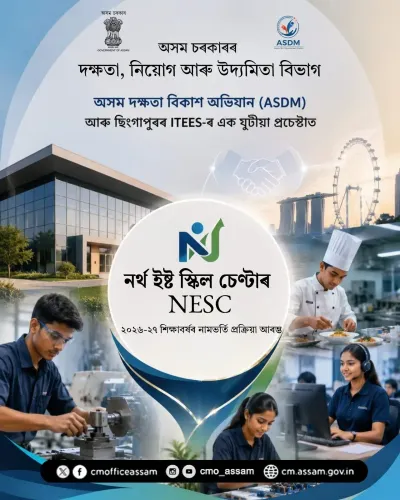
The Assam Skill Development Mission serves as the state body coordinating vocational training and industry linkages.
The initiative aligns with the national Skill India Mission (launched 2015) and National Education Policy 2020 .
Key outcomes to watch include MoUs with global institutes and placement data to be reported in state assembly sessions.
The Chief Minister's Office of Assam announced on Wednesday, July 15, 2026 that the state is actively strengthening its youth skill ecosystem by forging connections between schools, industry, and world-class training institutions to create global employment opportunities for Assamese youth.
Context
The post, shared from the official CMOfficeAssam account, states that Assam is 'strengthening its youth skill ecosystem by connecting schools, industry and world-class training to create global employment opportunities.' The announcement signals a deliberate pivot by the Himanta Biswa Sarma-led government toward structured, multi-stakeholder frameworks that bridge classroom learning with industry demand and international placement potential.
Chief Minister Himanta Biswa Sarma, who has held education and health portfolios in prior roles before assuming office in May 2021, has consistently positioned skill development as a pillar of Assam's economic transformation agenda.
Policy Backdrop
Assam's push sits within a well-established national framework. The Skill India Mission, launched by the Government of India in 2015, set an ambitious target of training over 400 million people by 2022 and was subsequently extended with renewed state-level mandates. The Assam Skill Development Mission, a dedicated state body, was established to coordinate vocational training programmes and build industry linkages that improve youth employability across the state.
The National Education Policy 2020 further reinforced the school-industry-training convergence model, urging states to integrate vocational education from secondary level onward. Assam's latest initiative appears to operationalise these twin frameworks — Skill India and NEP 2020 — into a cohesive, globally oriented pipeline for its youth.
Indian states have broadly expanded such partnerships to address persistent employability gaps and leverage the country's demographic advantage, directing trained youth toward both domestic industries and overseas job markets.
Stakeholders and Impact
The primary beneficiaries are Assamese youth, particularly students at the school level who stand to gain early exposure to vocational pathways aligned with industry requirements. Local industries in the state are also key stakeholders, as the model promises a pipeline of work-ready graduates suited to their operational needs.
By emphasising 'world-class training' and 'global employment opportunities,' the initiative signals intent to connect Assam's workforce to international labour markets — a significant aspiration for a state that has historically seen out-migration due to limited local opportunity. If executed effectively, the programme could reduce brain drain while simultaneously positioning Assam as a talent-exporting state within South and Southeast Asian employment corridors.
What's Next
Observers will closely watch for the rollout timelines of new training modules, the signing of Memoranda of Understanding with global training institutes, and placement outcome data that the state government may present in upcoming Assam Legislative Assembly sessions. The depth and scale of industry partnerships — particularly whether they extend to sectors such as technology, healthcare, and manufacturing — will determine whether this initiative translates into measurable employment gains.
As Assam advances this school-industry-training convergence, its model could serve as a reference point for other northeastern states seeking to channel demographic dividends into structured global employment pathways.
Point of View
The Sarma government is attempting to build a longer, more structured talent pipeline than short-duration vocational courses typically allow. This move dovetails with the Centre's NEP 2020 push for early vocational integration, suggesting Assam is positioning itself as a model implementer in the northeast. The real test will be whether industry partnerships and placement numbers substantiate the ambition when scrutinised in the state legislature.
NationPress
15 Jul 2026
Frequently Asked Questions
What is Assam's youth skill ecosystem initiative announced in July 2026?
The Chief Minister's Office of Assam announced on July 15, 2026 that the state is strengthening its youth skill ecosystem by connecting schools, industry, and world-class training institutions to create global employment opportunities for Assamese youth.
What is the Assam Skill Development Mission?
The Assam Skill Development Mission is a state body established to coordinate vocational training programmes and build industry linkages that improve youth employability across Assam, operating under the broader national Skill India framework.
How does Assam's skill initiative relate to Skill India and NEP 2020?
Assam's initiative builds on the national Skill India Mission launched in 2015 and the National Education Policy 2020, both of which encourage school-industry-training convergence to address employability gaps and integrate vocational education from the secondary level.
Who is overseeing Assam's skill development push?
Chief Minister Himanta Biswa Sarma, who has held prior education and health portfolios and has been in office since May 2021, is overseeing Assam's skill development agenda.
What should we watch for next in Assam's skill development programme?
Key developments to track include rollout timelines for new training modules, MoUs signed with global training institutes, and placement outcome data expected to be reported in Assam Legislative Assembly sessions.