CM Assam Promotes Vanilla Farming for Forest Fringe Villages
Synopsis
The Chief Minister's Office of Assam spotlighted vanilla farming on 15 July 2026 as an emerging livelihood option for forest-fringe villages, reflecting the state's push to diversify rural incomes through high-value horticulture aligned with central organic farming schemes.
Key Takeaways
The Chief Minister's Office of Assam shared coverage on 15 July 2026 highlighting vanilla farming as a new income avenue for forest-fringe communities.
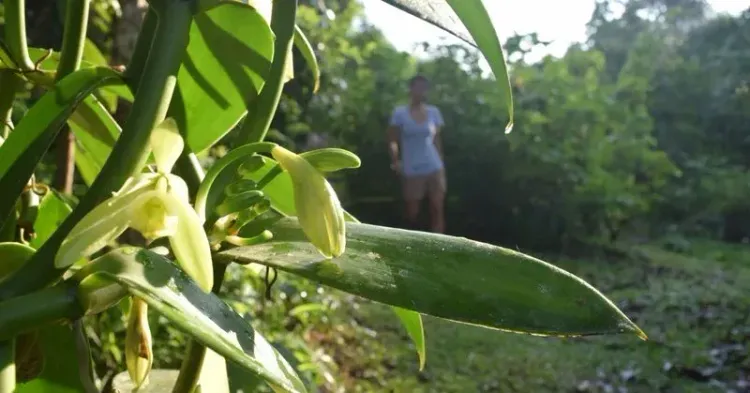
Vanilla is suited to Assam's humid, partially shaded forest-edge ecology and commands high market value domestically and in export markets.
The initiative aligns with the Mission Organic Value Chain Development for North Eastern Region (MOVCDNER) , a central scheme active since 2015 .
Small and marginal farmers in forest-fringe villages are the primary target beneficiaries, with vanilla offering significantly higher per-acre returns than traditional staples.
Successful scaling could reduce Assam's dependence on tea and paddy while discouraging forest encroachment by making legal smallholder farming more profitable.
Next steps include sapling distribution, farmer training, market linkage, and potential organic certification for vanilla under Assam's horticulture mission.
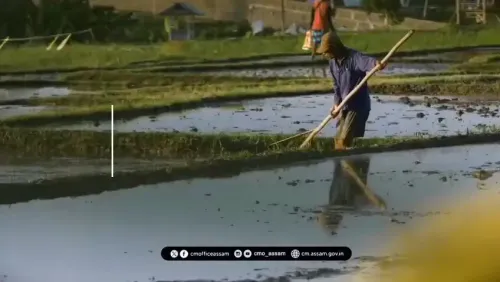
The Chief Minister's Office of Assam highlighted on Wednesday, 15 July 2026 how vanilla farming is emerging as a new income avenue for villages on the fringes of Assam's forests, sharing coverage of the initiative that positions the high-value crop as a pathway from subsistence to sustainable earnings for rural communities in the state.
Context
Assam has long depended on tea and paddy as its dominant agricultural pillars, but communities living along forest edges have historically had limited access to high-return crops suited to their microclimate and land-use constraints. Vanilla, a tropical orchid vine that thrives in humid, partially shaded conditions, is well-suited to the forest-fringe ecology of Northeast India. The crop commands significant market value — both domestically and in export markets — making it an attractive alternative for smallholder farmers.
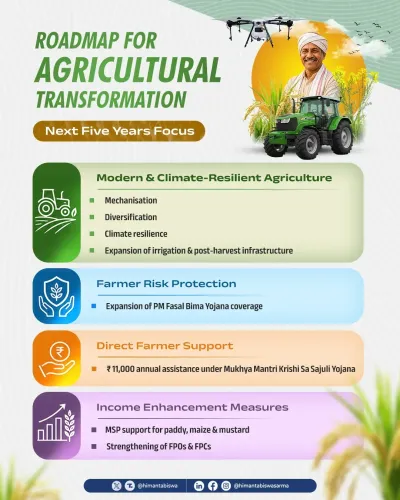
The post by the Chief Minister's Office frames this as a 'forest fringe to fortune' transition, signalling the state government's intent to spotlight and scale such diversification efforts. The initiative aligns with Chief Minister Himanta Biswa Sarma's broader push since May 2021 to modernise Assam's rural economy through high-value horticulture and agri-entrepreneurship.
Policy Backdrop
The push for vanilla and other exotic horticulture crops in Assam sits within a layered policy framework. The Mission Organic Value Chain Development for North Eastern Region (MOVCDNER), a central government scheme launched in 2015, was specifically designed to support organic and alternative crop cultivation across the eight northeastern states, including Assam. It provides end-to-end support covering cultivation, processing, and market linkage.
Assam's state horticulture mission has worked in parallel to identify crops with strong price realisations that can be grown sustainably near forest zones without encroaching on protected land. Vanilla, with its requirement for shade and support structures, can be intercropped with existing trees — reducing land-use conflict while boosting incomes for small and marginal farmers.
Similar exotic horticulture pilots — including dragon fruit in Arunachal Pradesh and kiwi in Meghalaya — have demonstrated that Northeast India's biodiversity-rich microclimates can support premium crops that fetch multiples of what traditional staples earn per hectare.
Stakeholders and Impact
The primary beneficiaries of vanilla farming expansion are small farmers and forest-fringe village communities in Assam — groups that have historically been excluded from high-value agricultural supply chains due to limited capital, market access, and technical knowledge. Vanilla cultivation, once training and planting material are made available, can generate significantly higher per-acre returns compared to paddy.
For the state government, successful vanilla clusters would serve multiple goals: reducing rural poverty in ecologically sensitive zones, discouraging forest encroachment by making legal land use more profitable, and building an exportable product that can be linked to Assam's growing organic and premium agri-brand. Traders, agri-processors, and export intermediaries in the vanilla value chain are also potential stakeholders as volumes scale.
What's Next
Observers will watch for the rollout of structured support — including sapling distribution, farmer training programmes, and assured market linkage — under Assam's horticulture mission and relevant central schemes. The inclusion of vanilla in Assam's organic certification pipeline and export promotion activities would be a significant next step that determines whether the initiative remains a pilot or scales into a transformative livelihood programme.
If vanilla farming gains traction across multiple forest-fringe districts, Assam could position itself as a domestic supplier of a crop that India currently imports in significant quantities — turning a biodiversity asset into an economic one for communities that have long lived on the margins of both the forest and the formal economy.
Point of View
Addressing two pressure points simultaneously. This fits a broader Northeast India pattern where state governments are leveraging unique microclimates to leapfrog into premium agri-value chains rather than competing on volume with the Indo-Gangetic plains. The real test will be whether market linkage and pricing support materialise at scale, or whether vanilla joins a long list of promising pilot crops that never moved the needle for smallholders.
NationPress
13 Oct 2026
Frequently Asked Questions
Why is vanilla farming being promoted in Assam?
Vanilla thrives in Assam's humid, shaded forest-fringe conditions and fetches high market prices, making it an attractive alternative to low-return traditional crops like paddy for smallholder farmers in these areas.
Which government scheme supports vanilla and organic farming in Assam?
The Mission Organic Value Chain Development for North Eastern Region (MOVCDNER), launched by the central government in 2015, supports organic and alternative crop cultivation including exotic horticulture across Assam and other northeastern states.
Who benefits from vanilla farming in Assam?
Small and marginal farmers living in villages on the fringes of Assam's forests are the primary beneficiaries, as vanilla cultivation can significantly increase per-acre income compared to conventional crops.
Can Assam export vanilla?
Assam has the potential to supply vanilla domestically and for export, particularly if the crop is brought under organic certification and linked to premium agri-export channels — steps that observers say are the logical next phase of the initiative.
What is Assam's broader agricultural diversification strategy?
Under Chief Minister Himanta Biswa Sarma, Assam has pursued high-value horticulture and agri-entrepreneurship to reduce dependence on tea and paddy, integrate forest-adjacent communities into market-linked farming, and build exportable premium agricultural products.