Nadda Visits Veteran Freedom Fighter-Journalist Chhabra in Jaipur
Synopsis
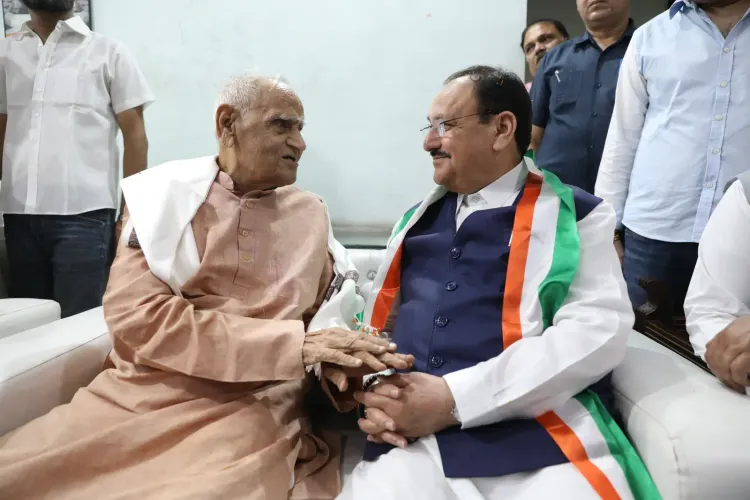
Union Health Minister and BJP president J. P. Nadda paid a personal visit to freedom fighter and veteran journalist Praveen Chandra Chhabra at his Jaipur residence, calling the experience of listening to his life memoirs deeply moving and unforgettable.
Key Takeaways
Nadda , Union Health Minister and BJP national president, visited Praveen Chandra Chhabra at his Jaipur home on August 9, 2026 .
Chhabra is described as a freedom fighter who witnessed India's independence movement firsthand.
He enriched Rajasthan's journalism with his writing for more than seven decades .
Nadda called the meeting 'extremely moving and unforgettable' and listened to Chhabra's life memoirs.
Nadda wished Chhabra good health and a long life, citing his service as a lasting source of inspiration.
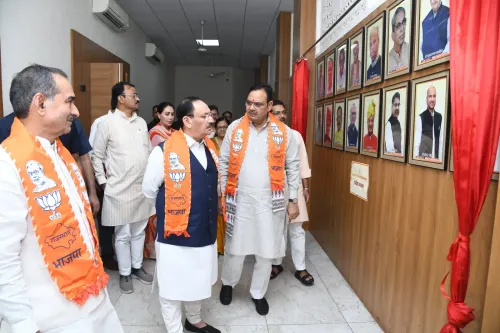
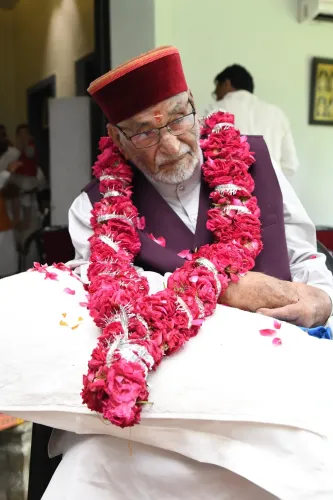
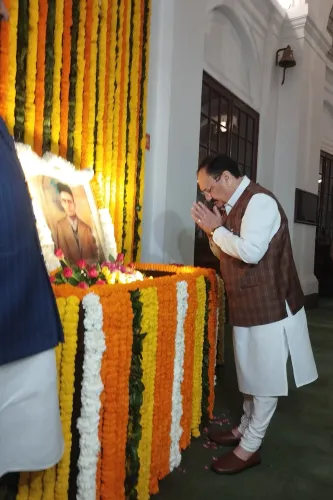
A life spanning the last gasps of British rule, seven decades of Rajasthan's journalism, and a legacy of quiet national service — Union Health Minister J. P. Nadda paid a warm personal visit to freedom fighter and senior journalist Shri Praveen Chandra Chhabra at his Jaipur residence on Sunday, August 9, 2026, sitting with him to hear stories that most Indians will never get to hear firsthand.
Nadda described the meeting as deeply emotional and unforgettable. 'Listening to his experiences and life memoirs with warmth was an extremely moving and memorable experience for me,' he wrote, paying tribute to a man who witnessed the independence movement's struggles from up close and went on to enrich Rajasthan's journalism with his pen for more than seven decades.
A Life the Independence Movement Shaped
Chhabra belongs to a generation that is rapidly thinning — those who did not just read about India's freedom struggle but lived inside it. Nadda's post frames his life as an 'preranadayi gatha' (inspiring saga) of national service, sacrifice, struggle, and dedication. That framing is deliberate: for a BJP national president visiting on the eve of a symbolic date, the gesture carries the weight of institutional memory.
Nadda wished Chhabra good health and a long life, closing with a line that underscored the visit's purpose — that such service to the nation and society 'will always continue to inspire.'
Why Senior Leaders Make These Calls
Visits by national leaders to elderly freedom fighters and veteran journalists are a thread woven through Indian political culture across party lines. They serve as living bridges to a founding generation, and they signal that institutional memory is still valued. For Nadda — who holds both a cabinet portfolio and the BJP's top organisational post — a personal call at someone's home, rather than a formal event, amplifies the sincerity of the gesture.
Seven decades of journalism in one state is not a footnote. It is an archive. The leaders who sit down to listen to it are, in a small way, preserving it.
Point of View
Such gestures help humanise leadership and keep the freedom movement's memory active in public discourse. No policy shift follows, but the optics of continuity with the founding generation remain potent.
NationPress
24 Sept 2026
Frequently Asked Questions
Who is Praveen Chandra Chhabra?
Praveen Chandra Chhabra is a freedom fighter and senior journalist from Rajasthan who witnessed India's independence movement and contributed to Rajasthan's journalism for more than seven decades, according to J. P. Nadda's post.
Why did JP Nadda visit Jaipur on August 9, 2026?
Nadda visited Jaipur to meet veteran freedom fighter and journalist Praveen Chandra Chhabra at his residence, describing the meeting as a personal and deeply emotional experience.
What did JP Nadda say about the meeting with Chhabra?
Nadda said listening to Chhabra's experiences and life memoirs was 'extremely moving and unforgettable' and praised his life as an inspiring saga of national service, sacrifice, and dedication.
What is JP Nadda's current position?
J. P. Nadda is India's Union Minister of Health and Family Welfare and Minister of Chemicals and Fertilizers, and also serves as the national president of the Bharatiya Janata Party (BJP).
How long has Praveen Chandra Chhabra been associated with journalism?
According to Nadda's post, Chhabra enriched Rajasthan's journalism with his writing for more than seven decades.