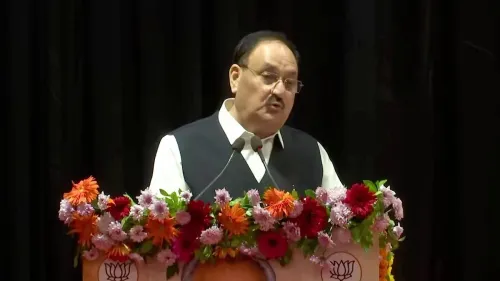
Nadda pays tribute to late Kedar Nath Sahani, calls him an institution
Synopsis
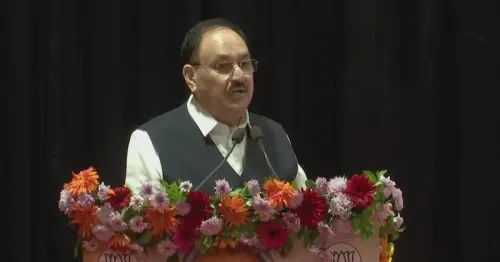
Union Health Minister and BJP national president J. P. Nadda paid tribute to late party leader Kedar Nath Sahani on October 24, 2026, calling him a multifaceted talent, 'an institution in himself,' and an enduring source of inspiration for his ideological commitment and courage in building the party.
Key Takeaways
Nadda , Union Health Minister and BJP national president, paid tribute to late leader Kedar Nath Sahani on October 24, 2026 .
Nadda described Sahani as 'endowed with multifaceted talent and an institution in himself.' He praised Sahani as 'always a leader, never a follower.' Nadda highlighted Sahani's ideological commitment and courage even in adverse circumstances as an inspiration for all.
The tribute was posted in Hindi on X by the BJP's national president, lending it formal organisational weight.
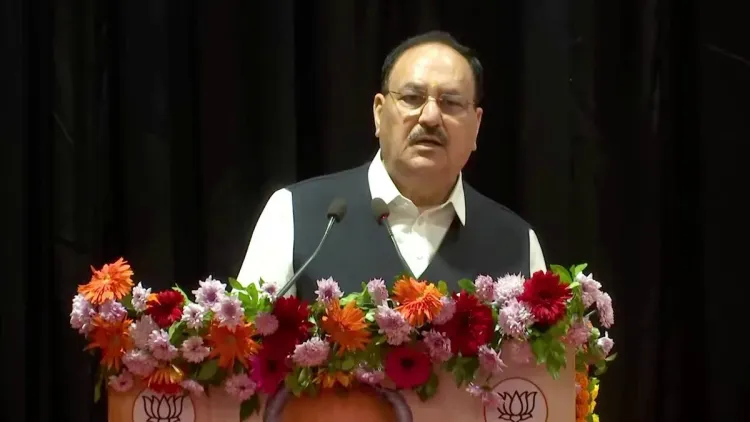
A leader who never followed — that is how Union Health Minister J. P. Nadda chose to remember the late Kedar Nath Sahani on Saturday, October 24, 2026, in a heartfelt tribute posted on X that cast the departed leader as a man of rare, multi-dimensional talent and unshakeable ideological commitment.
Nadda wrote in Hindi: 'स्वर्गीय केदार नाथ साहनी जी बहुआयामी प्रतिभा के धनी और अपने आप में एक संस्थान थे।' ('The late Kedar Nath Sahani ji was endowed with multifaceted talent and was an institution in himself.') The tribute underscored a man who, in Nadda's framing, led from the front even when circumstances turned hostile.
A leader defined by conviction, not comfort
At the heart of Nadda's message was a sharp, two-line portrait: Sahani was 'always a leader, never a follower.' More striking still was the tribute to his resolve during adversity — his ideological commitment and the courage he showed in building the party even when the winds blew against him, qualities Nadda described as a source of inspiration for all.
The phrase 'विपरीत परिस्थितियों में भी' — 'even in adverse circumstances' — carries weight in Indian political culture. It is the hallmark tribute reserved for those who held the line when the party was weak, a reminder that institutions are built not in victory laps but in difficult years.
What the tribute signals in BJP's internal memory
Nadda's choice of words — 'an institution in himself' — is among the highest honours in political discourse, placing Sahani alongside figures whose personal legacy outlasts any single office or election. The tribute coming from the BJP national president and a senior Union Minister adds formal weight, signalling that Sahani's contribution to the party's ideological and organisational foundation is being formally acknowledged at the highest level.
Such remembrances serve a dual purpose: honouring the departed and, simultaneously, holding up a model of conduct for the cadre — perseverance, ideological steadiness, and the willingness to build rather than simply occupy.
Point of View
Not opportunism. By describing Sahani as 'an institution in himself,' Nadda places him in a select pantheon that the party uses to define its internal identity. The tribute doubles as a message to the cadre — perseverance through adversity is the gold standard of BJP service. Coming from the party's sitting national president, it also signals that Sahani's legacy carries formal, not merely sentimental, recognition.
NationPress
24 Oct 2026
Frequently Asked Questions
Who was Kedar Nath Sahani?
Kedar Nath Sahani was a senior BJP leader remembered for his multifaceted talent, ideological commitment, and role in building the party, as described in J. P. Nadda's tribute posted on October 24, 2026.
What did J. P. Nadda say about Kedar Nath Sahani?
Nadda called Sahani 'an institution in himself,' praised him as 'always a leader, never a follower,' and said his ideological commitment and courage in adverse circumstances was a source of inspiration for all.
Why did Nadda post a tribute to Kedar Nath Sahani?
Nadda paid tribute to mark the passing of Kedar Nath Sahani, honouring his contributions to the BJP's ideological and organisational development.
What does 'an institution in himself' mean in Indian political tributes?
In Indian political culture, calling someone 'an institution in themselves' is among the highest posthumous honours, recognising that their personal legacy and influence outlasted any single office or role they held.
What is J. P. Nadda's current position?
J. P. Nadda is currently the Union Minister of Health and Family Welfare, Union Minister of Chemicals and Fertilizers, and the national president of the Bharatiya Janata Party (BJP).