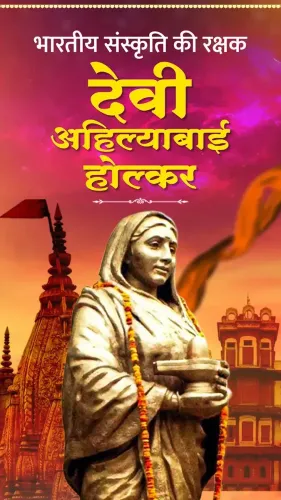
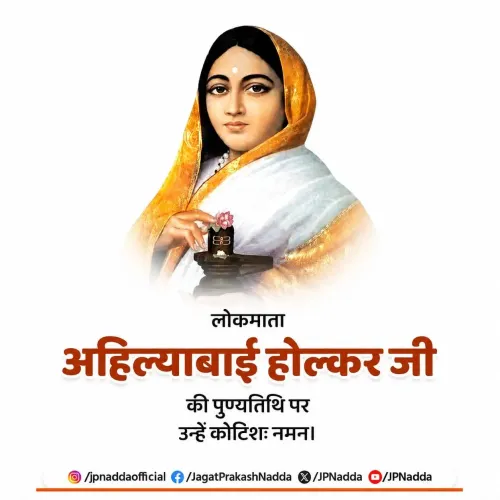
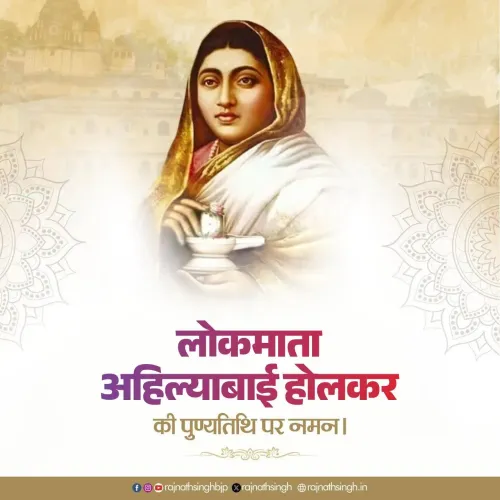
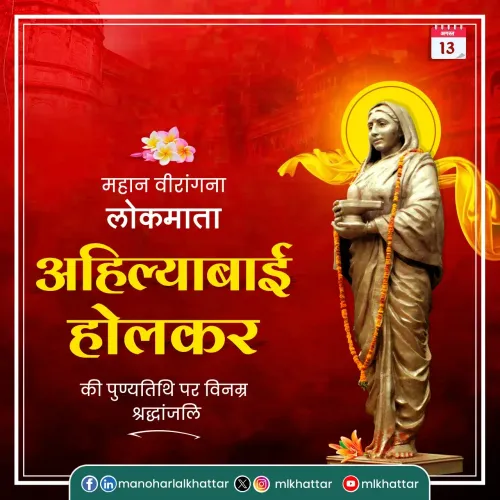
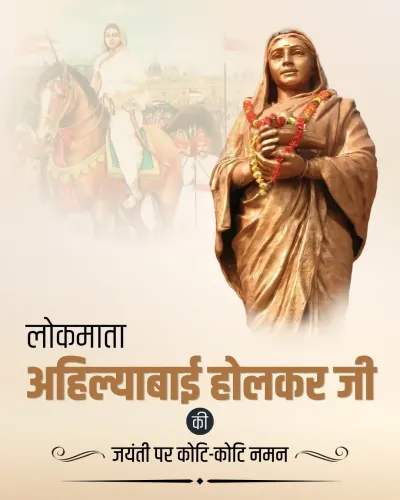
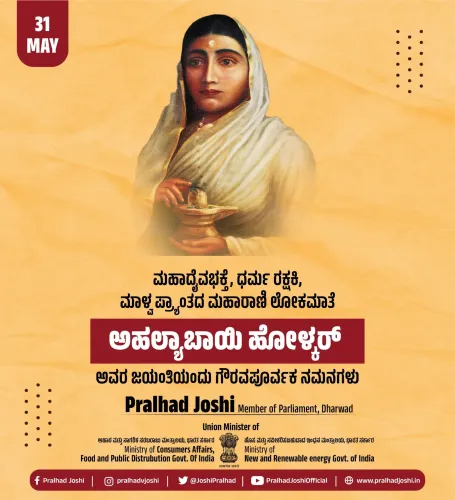
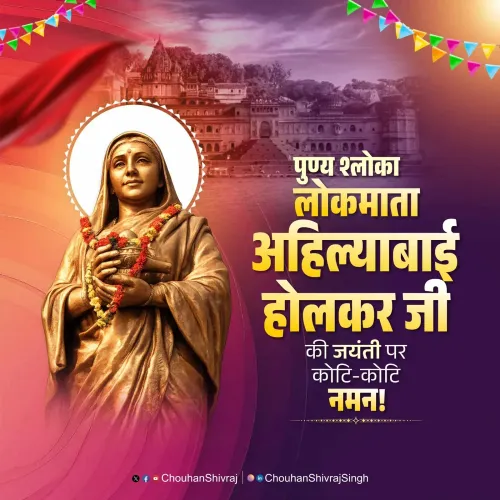
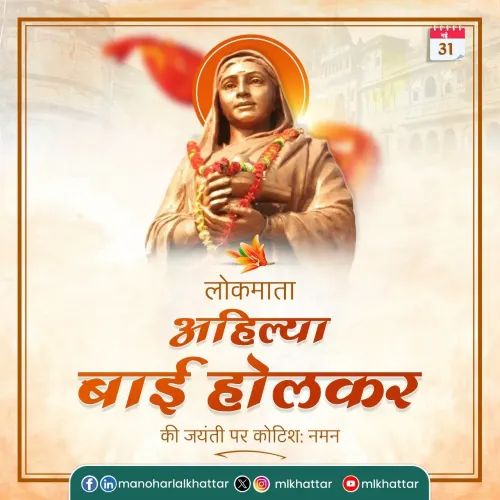
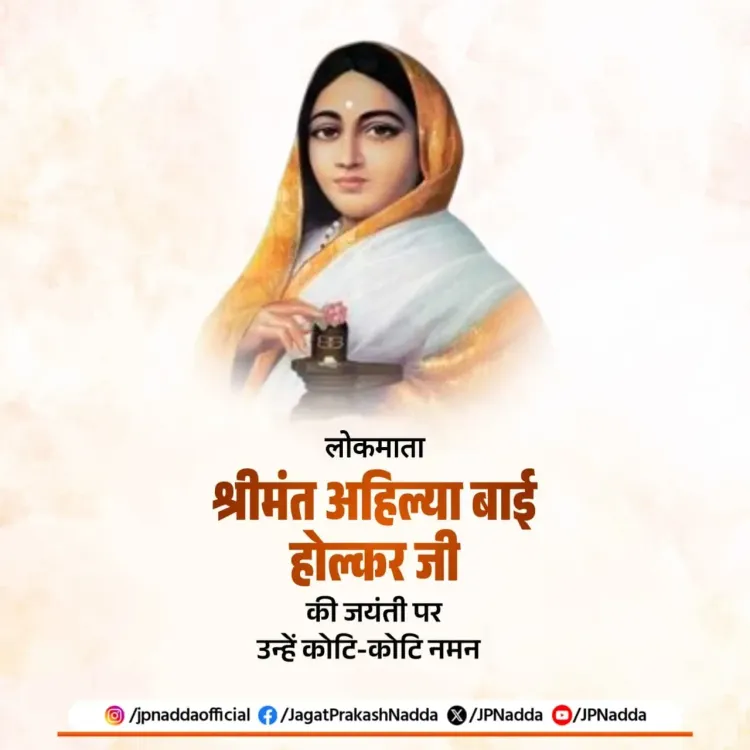
Nadda pays tribute to Ahilyabai Holkar on her birth anniversary
Synopsis
Union Health Minister J. P. Nadda on 31 May 2026 paid tribute to 18th-century Malwa ruler Ahilyabai Holkar on her birth anniversary, calling her a protector of culture, a great social reformer, and an enduring inspiration for women's empowerment and national uplift.
Key Takeaways
Nadda , Union Health Minister and BJP national president , posted a tribute to Ahilyabai Holkar on her birth anniversary on 31 May 2026 .
Nadda described her as an embodiment of dharma , public service, and dedication, and as Lokmata — mother of the people.
Ahilyabai Holkar ruled the Malwa kingdom from 1767 to 1795 , commissioning temples, roads, and reforms that advanced women's participation in public life.
Her legacy holds particular cultural weight in Madhya Pradesh and Maharashtra , states where her birth anniversary is marked with formal commemorations.
Indian political leaders routinely invoke pre-colonial women rulers to reinforce contemporary policy priorities around women's welfare and cultural heritage.
Union Health Minister J. P. Nadda on Sunday, 31 May 2026, paid tribute to Ahilyabai Holkar, the 18th-century ruler of the Malwa kingdom, on the occasion of her birth anniversary, hailing her as an embodiment of dharma, public service, and dedication.
Context
In his post on X, Nadda offered what he called 'kotishaha naman' (countless salutations) to Ahilyabai Holkar, describing her as 'Lokmata' — mother of the people. He characterised her as a 'great social reformer' who was simultaneously a 'protector of religion and culture.' The post, written in Hindi, described her contributions to women's empowerment and cultural preservation as 'historical and effective steps' that continue to serve as a source of inspiration.
Ahilyabai Holkar is widely regarded as one of the most consequential rulers of pre-colonial India. She governed the Malwa Sultanate from 1767 to 1795, commissioning temples, public infrastructure including roads and rest houses, and administrative reforms that extended participation in public life to women.
Policy Backdrop
The tribute fits a well-established pattern in Indian political discourse, where central and state leaders invoke the legacies of pre-colonial women rulers to reinforce contemporary priorities around inclusive development and heritage conservation. Successive governments have drawn on such historical examples to frame social policy, particularly around women's welfare.
The Beti Bachao Beti Padhao scheme, launched in 2015, is among the flagship central programmes that have cited the need to address gender imbalance and promote girls' education — values that leaders frequently link to the administrative example set by figures like Ahilyabai Holkar. Nadda, in his capacity as BJP national president, has on previous occasions connected the party's women-centric policy agenda to India's historical tradition of women in leadership.
Stakeholders and Impact
The tribute resonates with heritage organisations, women's groups, and communities in Madhya Pradesh and Maharashtra — states where Ahilyabai Holkar's legacy holds particular cultural significance. Her birth anniversary is observed annually with commemorations at Maheshwar, the capital she built on the banks of the Narmada river, and at temples she commissioned across the subcontinent, including the Kashi Vishwanath temple in Varanasi.
For the BJP, such tributes also carry political salience in states like Madhya Pradesh, where Holkar's memory is deeply woven into regional identity and where the party has a strong electoral presence.
What's Next
Observers will watch for any follow-through in the form of Ministry of Culture events or parliamentary references that connect Ahilyabai Holkar's legacy to ongoing women-focused welfare initiatives. Her birth anniversary has in recent years served as an occasion to announce or highlight schemes related to women's empowerment and cultural heritage preservation, and similar announcements from other ministries cannot be ruled out in the days ahead.
Point of View
Lending ideological continuity to schemes like Beti Bachao Beti Padhao. By invoking her as both a cultural guardian and a social reformer, the party frames its gender-policy agenda not as a modern import but as a revival of an indigenous governance ethos. The timing — a Sunday morning post with an image — suggests deliberate outreach to audiences in Madhya Pradesh and Maharashtra ahead of any regional commemorations. Such tributes also allow senior leaders to signal cultural alignment with Hindu heritage constituencies without making explicit policy commitments.
NationPress
21 Sept 2026
Frequently Asked Questions
Who was Ahilyabai Holkar?
Ahilyabai Holkar was an 18th-century ruler of the Malwa kingdom who governed from 1767 to 1795. She is remembered for commissioning temples across India, building public infrastructure, and implementing administrative reforms that extended opportunities to women in public life.
Why did J. P. Nadda pay tribute to Ahilyabai Holkar?
J. P. Nadda paid tribute on the occasion of Ahilyabai Holkar's birth anniversary on 31 May 2026, describing her as an embodiment of dharma, public service, and dedication, and as an inspiration for women's empowerment and national uplift.
What did J. P. Nadda say about Ahilyabai Holkar?
Nadda called her a protector of religion and culture, a great social reformer, and 'Lokmata' — mother of the people. He said her ideas and work for national uplift and public welfare remain a source of inspiration for all.
Where is Ahilyabai Holkar's legacy most prominent in India?
Her legacy is most prominent in Madhya Pradesh and Maharashtra. Her capital Maheshwar on the Narmada river remains a major site of commemoration, and temples she commissioned — including the Kashi Vishwanath temple in Varanasi — stand across the country.
What is the Beti Bachao Beti Padhao scheme?
Beti Bachao Beti Padhao is a central government scheme launched in 2015 to address the declining child sex ratio and promote girls' education and empowerment. Leaders have frequently linked its objectives to the historical example of women rulers like Ahilyabai Holkar.