CM Yogi declares UP no longer 'sick', claims top-3 economy status
Synopsis
Chief Minister Yogi Adityanath declared on 24 October 2026 that Uttar Pradesh has shed its BIMARU-era economic stigma and now counts among India's top-three state economies, citing reforms and infrastructure expansion since 2017.
Key Takeaways
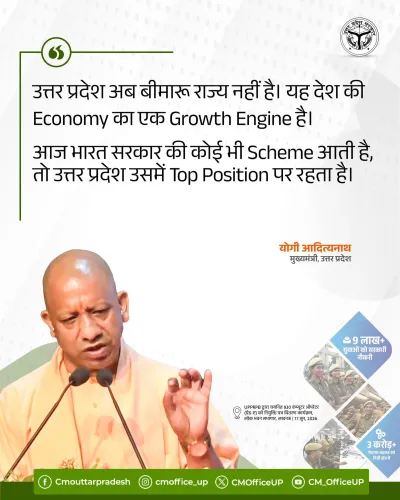
CM Yogi Adityanath posted on 24 October 2026 that Uttar Pradesh is no longer 'sick' and ranks among India's top-three state economies .
The statement directly invokes and rejects the BIMARU label — a decades-old tag grouping UP with India's most economically lagging states.
The BJP government has pursued ease-of-doing-business reforms, investor summits, and infrastructure expansion since winning power in March 2017 .
Uttar Pradesh is India's most populous state, with over 200 million people across more than 240,000 sq km .
The top-3 GSDP claim awaits independent verification from official central government statistical releases.
The declaration forms a central plank of the BJP's electoral narrative heading into the next UP assembly cycle.
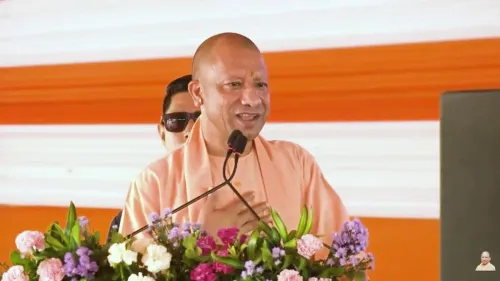
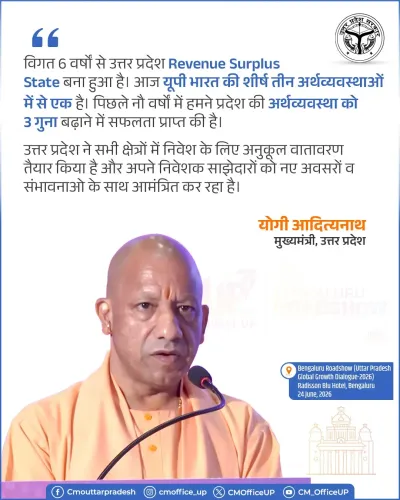
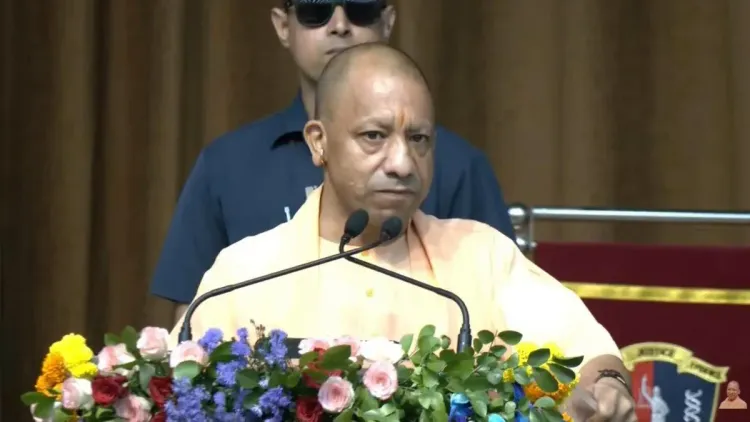
A state once synonymous with economic stagnation is now, according to its own Chief Minister, punching with the heaviest hitters in India. Uttar Pradesh Chief Minister Yogi Adityanath declared on Saturday, 24 October 2026 that the country's most populous state has shed its old identity as a laggard and now ranks among India's top-three state economies.
Posting on X, CM Yogi stated — 'Ab UP bimaar nahin hai' ('Uttar Pradesh is no longer sick') — a pointed reference to the state's decades-long classification within the infamous BIMARU grouping, an acronym coined in the 1980s to describe Bihar, Madhya Pradesh, Rajasthan and Uttar Pradesh as India's most economically distressed large states. The phrase was a stigma. Invoking it to declare its end is a deliberate political and economic statement.
From BIMARU to boardroom: what changed after 2017
When the BJP came to power in Uttar Pradesh in the March 2017 assembly elections, the state's gross state domestic product ranked it well outside the top tier. The Adityanath government moved quickly on ease-of-doing-business reforms, land policy changes, and a series of high-profile investor summits designed to signal that Lucknow was open for capital.
Infrastructure became the centrepiece — expressways, logistics corridors, and industrial townships spread across a state that spans more than 240,000 square kilometres and holds over 200 million people. The bet was straightforward: fix connectivity and law-and-order optics, and investment follows. Over successive years, that wager appeared to pay dividends in GSDP growth trajectories.
The top-3 claim and what the numbers represent
A top-three ranking in nominal GSDP terms would place Uttar Pradesh alongside economic powerhouses like Maharashtra and Tamil Nadu — states with far smaller populations but far longer industrial histories. If the claim holds against official data, it marks a structural shift, not merely a cyclical uptick.
The research note flags that the precise ranking draws on GSDP figures that require verification against the latest official economic survey or budget documents. What is documented is the consistent upward trajectory the state has reported across multiple budget cycles under the current administration.
Why the 'bimaar' metaphor still lands
The BIMARU label was never just an economic descriptor — it carried cultural and political weight, used by critics and commentators alike to explain why India's development story felt uneven. For a Chief Minister who has staked his tenure on reversing that narrative, declaring 'UP bimaar nahin hai' is as much a campaign landmark as it is a policy claim. The state heads into its next electoral cycle with this reframing at the centre of the BJP's pitch to voters.
The real test will come when independent GSDP rankings from the central government's statistical office are published — numbers that will either cement the claim or complicate it. Either way, the conversation about Uttar Pradesh's economic identity has already shifted.
Point of View
It becomes one of the most consequential state-level economic turnaround stories in post-liberalisation India. If the numbers fall short, opponents will use the same dramatic phrasing as a liability. Either way, the post marks a shift in how UP's political economy is being argued — from damage control to confident assertion.
NationPress
24 Oct 2026
Frequently Asked Questions
Is Uttar Pradesh really a top-3 economy in India?
CM Yogi Adityanath claimed on 24 October 2026 that UP ranks among India's top-three state economies by GSDP. The precise ranking requires verification against official central government statistical data, which has not yet been independently confirmed.
What does BIMARU mean and why does it matter for UP?
BIMARU is an acronym coined in the 1980s for Bihar, Madhya Pradesh, Rajasthan, and Uttar Pradesh — states then identified as economically distressed. It carried lasting stigma, making CM Yogi's declaration that 'UP is no longer sick' a pointed political and economic statement.
What reforms has the Yogi Adityanath government introduced to grow UP's economy?
Since taking office in March 2017, the Adityanath government has pursued ease-of-doing-business reforms, investor summits, land policy changes, and large-scale infrastructure projects including expressways and industrial townships.
Which states make up India's top-3 economies by GSDP?
Traditionally, Maharashtra and Tamil Nadu have led India's state GSDP rankings. If UP's claim is verified, it would place the state alongside these long-established industrial powerhouses, marking a significant structural shift.
When did Yogi Adityanath become Chief Minister of Uttar Pradesh?
Yogi Adityanath became Chief Minister of Uttar Pradesh in March 2017 after the BJP won the state assembly elections. He is also the head of the Gorakhnath Math religious institution.