CM Fadnavis: India's ancient education legacy must be preserved
Synopsis
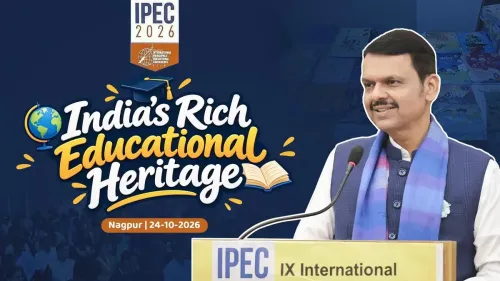
Chief Minister Devendra Fadnavis declared on 24 October 2026 that preserving India's ancient educational heritage is essential, signalling Maharashtra's intent to align state education policy with the cultural-continuity goals of the National Education Policy 2020.
Key Takeaways
CM Devendra Fadnavis on 24 October 2026 stated that preserving India's ancient educational heritage is necessary.
The statement was shared by the Chief Minister's Office of Maharashtra as part of the day's official summary on X.
The National Education Policy 2020 explicitly calls for integrating classical Indian knowledge systems — including gurukul traditions — into modern curricula.
Maharashtra, home to major economic and educational hubs, faces the challenge of balancing modernisation with cultural continuity in public education.
Key watch-points include NEP-aligned curriculum rollouts, state education conferences, and Maharashtra-specific policy updates in coming months.
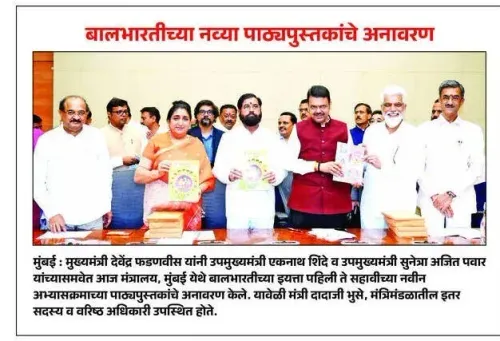
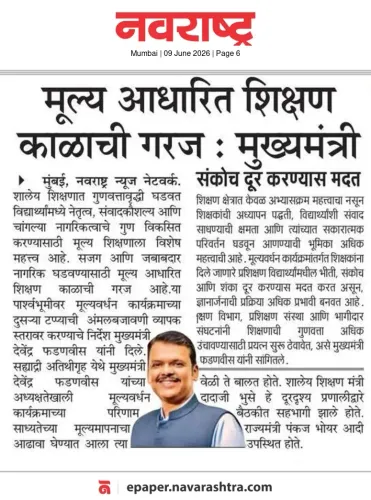
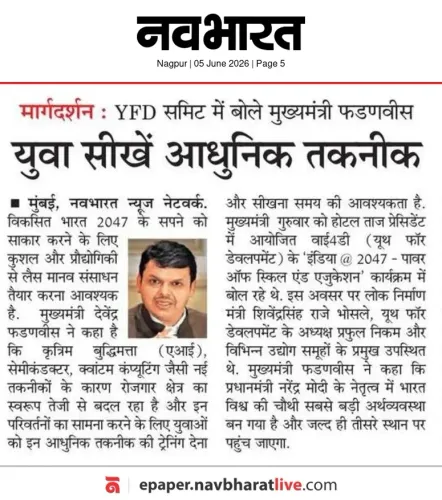
India's millennia-old tradition of learning — from the gurukuls of the Vedic age to the great universities of Nalanda and Takshashila — deserves a place at the centre of the modern classroom, Chief Minister Devendra Fadnavis said on Saturday, 24 October 2026, as the Chief Minister's Office of Maharashtra shared the day's summary on X, anchoring it to his call for protecting the country's ancient educational heritage.
The post, captioned 'आजच्या दिवसाचा सारांश' ('Summary of today'), carried Fadnavis's pointed assertion: 'It is necessary to preserve the ancient heritage of the Indian education system.' The statement, brief as it was, lands inside a much larger national conversation — one that the National Education Policy 2020 formally opened when it called for weaving India's classical knowledge traditions back into a curriculum that had drifted far from them.
NEP 2020 and the push to reclaim classical roots
The NEP 2020 was explicit: gurukul pedagogy, mother-tongue instruction, and ancient Indian disciplines — from mathematics and astronomy to philosophy and medicine — should find space alongside STEM and global competencies. Maharashtra, as one of India's most industrialised and educationally diverse states, sits at a particularly sharp intersection of that tension between modernisation and cultural continuity.
State governments across India have periodically aligned their education messaging with NEP's cultural-heritage provisions, but translating that alignment into curriculum, teacher training, and institutional change is where the real work — and the real scrutiny — begins. Fadnavis's remark signals that Maharashtra intends to stay in that conversation actively.
What Maharashtra's classrooms could look like next
Devendra Fadnavis, a BJP leader who has served multiple terms as Chief Minister, has consistently positioned Maharashtra as a state that can marry economic ambition with civilisational pride. His education remarks fit that frame: a state that hosts Mumbai's global financial engine and Pune's technology corridor is also, in his telling, a custodian of something older and deeper.
The immediate watch-points are concrete: NEP-aligned curriculum rollouts, state-level education conferences, and any Maharashtra-specific policy updates that translate this heritage emphasis into school timetables and university syllabi. Students and educators — the two communities most directly affected — will be the first to feel whether the sentiment becomes structure.
Ancient wisdom and modern aspiration are not opposites. The question Maharashtra must now answer is whether it can build a classroom that holds both — and whether a statement becomes a syllabus.
Point of View
Where NEP 2020 serves as both a reform document and an ideological bridge to classical India. The real test will come in implementation: whether heritage integration means enriched curricula or ideological substitution is a distinction that educators, parents, and opposition parties will press hard. For a state with Maharashtra's economic weight and educational diversity, the stakes of getting that balance wrong — or right — are national in scale.
NationPress
25 Oct 2026
Frequently Asked Questions
What did CM Devendra Fadnavis say about Indian education?
On 24 October 2026, CM Devendra Fadnavis stated that it is necessary to preserve the ancient heritage of the Indian education system, emphasising the importance of classical knowledge traditions alongside modern learning.
What is the National Education Policy 2020 and how does it relate to ancient Indian knowledge?
The NEP 2020 is India's landmark education reform framework that, among other goals, calls for integrating classical Indian knowledge systems — such as gurukul pedagogy, mother-tongue instruction, and ancient disciplines — into contemporary curricula.
How is Maharashtra implementing NEP 2020?
Maharashtra is in the process of aligning its curriculum and institutional frameworks with NEP 2020 guidelines; specific rollouts, state education conferences, and policy updates are expected in the coming months and represent the key watch-points.
Who is Devendra Fadnavis?
Devendra Fadnavis is a BJP leader who has served multiple terms as Chief Minister of Maharashtra, overseeing state governance, economic policy, and social initiatives including education reform.
Why does preserving ancient education heritage matter in modern India?
Proponents argue that India's classical knowledge systems — spanning mathematics, philosophy, medicine, and linguistics — offer pedagogical depth that complements modern STEM education, fostering cultural identity alongside global competitiveness.