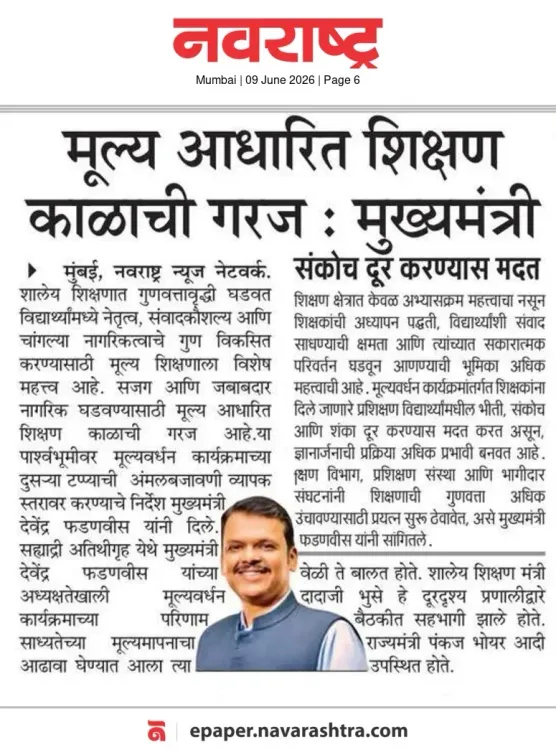
CM Fadnavis: Value-Based Education Is Need of the Hour
Synopsis
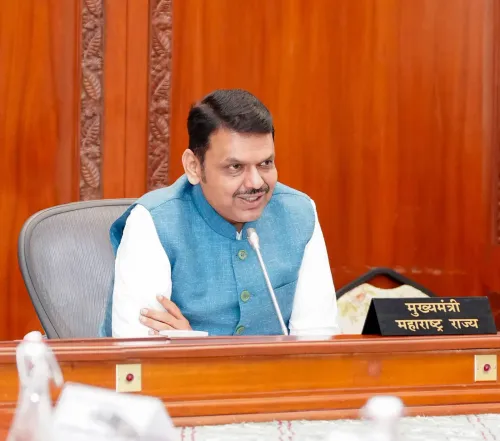
Chief Minister Devendra Fadnavis declared value-based education a pressing need of the times, as the Maharashtra CMO shared his remarks tied to a Value Addition Programme on June 9, 2026, signalling alignment with the NEP 2020 framework for holistic school learning.
Key Takeaways
CM Devendra Fadnavis stated that value-based education is 'the need of the hour' on June 9, 2026 .
The statement was made in the context of a Value Addition Programme referenced by the Chief Minister's Office of Maharashtra.
The emphasis aligns with the National Education Policy 2020 , which mandates integration of ethical and character-building education in state schools.
School students and teachers across Maharashtra are the primary stakeholders of any resulting curriculum changes.
No specific implementation details or programme rollout dates have been officially announced alongside the statement.
The Chief Minister's Office of Maharashtra on Tuesday, June 9, 2026, shared a statement from Chief Minister Devendra Fadnavis underlining that value-based education is an essential requirement of the times, signalling the state government's intent to prioritise ethical and character-driven learning alongside academic instruction.
Context
The post, shared in Marathi, quotes CM Devendra Fadnavis as saying 'Mulya aadhaarit shikshan kaalaachi garaj' — meaning 'Value-based education is the need of the hour.' The statement was made in the context of a Value Addition Programme, though specific details of the programme have not been officially elaborated in the post. The remark reflects a broader push by the Maharashtra government to integrate moral and ethical dimensions into the state's education framework.
Policy Backdrop
The emphasis on value-based education aligns directly with the National Education Policy (NEP) 2020, which directed all Indian states to incorporate holistic, ethical, and character-building components into school curricula. Maharashtra has been among the states actively referencing this framework in its education policy communications. The NEP's vision goes beyond rote learning, calling for the nurturing of students as responsible, empathetic, and culturally grounded citizens.
Indian states have increasingly used value education as a policy lever to complement skill development with ethical formation. For Maharashtra — one of India's most populous and educationally significant states — any curriculum-level shift carries implications for millions of school-going children and the teaching community.
Stakeholders and Impact
The primary beneficiaries of a value-based education push would be school students across Maharashtra, particularly at the foundational and preparatory levels where character formation is considered most effective. Teachers would also be central stakeholders, as implementing value education modules requires pedagogical training and updated instructional materials.
Parents, school administrators, and curriculum designers in the state education department are also likely to be engaged as the government moves from intent to implementation. A formal rollout would require coordination between the state's education department and district-level school authorities.
What's Next
Attention will now turn to whether the Maharashtra government translates this stated priority into concrete curriculum notifications or teacher-training directives from the state education department. Any official gazette notification or departmental circular formalising the Value Addition Programme would mark the next significant step. Observers will also watch for budget allocations or institutional partnerships that could give the initiative operational scale across the state's vast school network.
Point of View
The Chief Minister signals state-level ownership of an agenda that has so far been driven largely by Central directives. The real test will be whether this rhetorical commitment translates into measurable curriculum changes, teacher training mandates, or dedicated budget lines in the state education department. Until then, the statement reads as an intent marker in an ongoing national conversation about what education should achieve beyond examination scores.
NationPress
24 Oct 2026
Frequently Asked Questions
What did CM Devendra Fadnavis say about value-based education?
CM Devendra Fadnavis stated that value-based education is the need of the hour, emphasising its importance in the context of a Value Addition Programme highlighted by the Chief Minister's Office of Maharashtra on June 9, 2026.
What is the Value Addition Programme in Maharashtra?
The Value Addition Programme was referenced by the Maharashtra CMO in connection with CM Fadnavis's remarks on value-based education, though specific details of its structure or rollout have not been officially elaborated in the post.
How does Maharashtra's value education push relate to NEP 2020?
The National Education Policy 2020 directed all Indian states to integrate ethical, moral, and character-building education into school curricula, and Maharashtra's emphasis on value-based education aligns directly with this Central framework.
Who benefits from value-based education in Maharashtra schools?
School students across Maharashtra are the primary beneficiaries, with teachers also being key stakeholders who would need training and updated materials to effectively deliver value education modules.
What should we watch for next on Maharashtra's education policy?
Watch for official curriculum notifications, teacher-training directives, or budget allocations from the Maharashtra education department that would give the Value Addition Programme concrete operational form across the state's school network.