Pradhan meets Maharashtra School Education Minister on NEP 2020
Synopsis
Union Education Minister Dharmendra Pradhan met Maharashtra School Education Minister Dadaji Bhuse on 27 May 2026 to advance NEP 2020 goals including holistic learning, sports integration, student safety, and infrastructure upgrades, linking the effort to the Viksit Bharat 2047 vision.
Key Takeaways
Union Education Minister Dharmendra Pradhan met Maharashtra's Dadaji Bhuse on 27 May 2026 to discuss NEP 2020 implementation.
The agenda covered holistic learning, sports and physical education, music and co-curricular activities, student safety, and school amenities.
The National Education Policy 2020 , approved in July 2020 , replaced the 1986 policy and introduced a 5+3+3+4 curricular structure .
Education on India's Concurrent List enables joint Centre-state policy steering, making such ministerial meetings structurally important.
Both ministers linked school-level reforms to the Viksit Bharat 2047 vision of a developed India by independence's centenary.
Likely next steps include joint reviews of Maharashtra's NEP-aligned curriculum and new projects under Samagra Shiksha annual work plans.
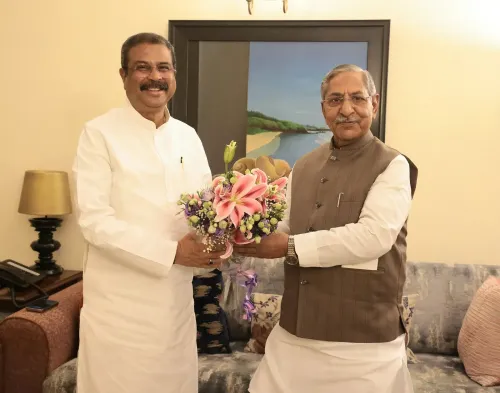
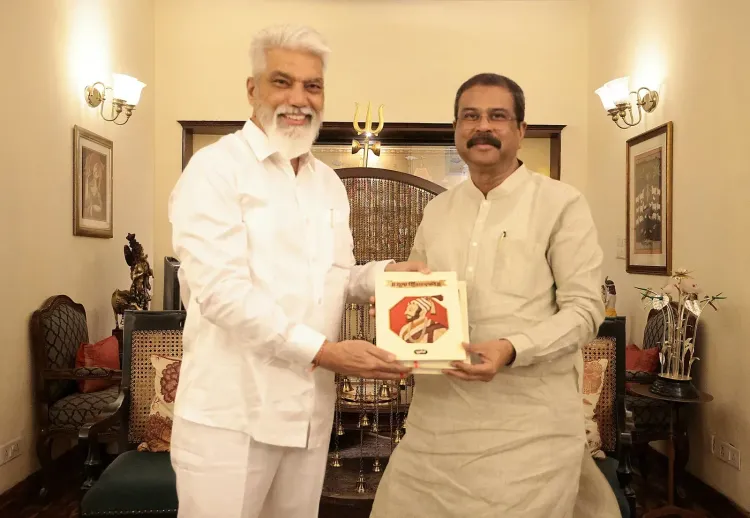
Union Education Minister Dharmendra Pradhan met Dadaji Bhuse, Maharashtra's Minister of School Education, on Wednesday, 27 May 2026, for discussions on accelerating the implementation of the National Education Policy 2020 across the state's school system.
Context
Pradhan described the meeting as 'meaningful', with both ministers focusing on a broad agenda: holistic learning, infrastructure upgrades, expanded sports and physical education facilities, integration of music and co-curricular activities, student safety, and improved access to basic amenities in schools. The Union Minister framed the conversation around ensuring 'inclusive, equitable and future-ready learning opportunities for every child.'
Bhuse holds responsibility for state-level school policy and implementation in Maharashtra, one of India's largest states by school enrolment, making the partnership significant for NEP 2020's national rollout.
Policy Backdrop
The National Education Policy 2020 was approved by the Union Cabinet in July 2020, replacing the 1986 National Education Policy. It introduced a revised 5+3+3+4 curricular structure, emphasising early childhood education, mother-tongue instruction, vocational integration, and multidisciplinary learning.
Since 2021, the Ministry of Education has held regular consultations with state education ministers to align state action plans with NEP 2020 goals. Education sits on India's Concurrent List, enabling the Centre and states to jointly steer policy, making such bilateral meetings a structural necessity rather than a formality.
Stakeholders and Impact
The immediate beneficiaries of any outcomes from this meeting are Maharashtra's school students and the state's education department, which is responsible for translating central policy into classroom reality. Sports integration and co-curricular activity expansion, two specific areas flagged by Pradhan, have been recurring priorities under the Samagra Shiksha umbrella programme that funds school-level infrastructure and quality improvements.
Student safety — also raised in the discussion — has gained policy salience following incidents at schools across the country, and its inclusion signals that both ministers view it as a non-negotiable pillar of school modernisation rather than a secondary concern.
What's Next
The broader ambition framing this meeting is Viksit Bharat 2047, the government's vision for a developed India by the centenary of independence, with education positioned as a primary driver of human capital. Pradhan stated that 'collaborative efforts will play a vital role in shaping an empowered generation and realising the vision of Viksit Bharat 2047.'
Next steps are likely to include joint review meetings on Maharashtra's NEP-aligned curriculum rollout and possible inclusion of specific infrastructure projects in upcoming Samagra Shiksha annual work plans. The pattern of such centre-state engagements suggests the Ministry of Education intends to sustain momentum on NEP 2020 implementation through direct ministerial coordination rather than administrative correspondence alone.
Point of View
Given its scale and political significance as a BJP-led state, is a high-visibility test case for demonstrating that NEP 2020 can move from policy text to classroom practice. The explicit mention of student safety alongside infrastructure and co-curricular activities suggests the ministry is broadening its NEP 2020 messaging beyond academics to address parental concerns. Anchoring the discussion in the Viksit Bharat 2047 framework also serves a political purpose: embedding school reform within a long-horizon national narrative that transcends election cycles.
NationPress
11 Oct 2026
Frequently Asked Questions
What did Dharmendra Pradhan and Dadaji Bhuse discuss?
They discussed advancing NEP 2020 in Maharashtra's schools, covering holistic learning, sports and physical education, music and co-curricular activities, student safety, infrastructure, and access to essential amenities.
What is NEP 2020 and why does it matter for Maharashtra?
The National Education Policy 2020, approved by the Union Cabinet in July 2020, replaced the 1986 policy and introduced a new 5+3+3+4 curricular structure. Maharashtra, one of India's largest states by enrolment, is a key implementation ground for these reforms.
Who is Dadaji Bhuse?
Dadaji Bhuse is the Minister of School Education in the Government of Maharashtra, responsible for state-level school policy and the on-ground rollout of centrally mandated reforms including NEP 2020.
What is Viksit Bharat 2047?
Viksit Bharat 2047 is the Government of India's vision to transform India into a developed nation by 2047, the centenary of independence, with education identified as a core enabler of the required human capital development.
What is Samagra Shiksha and how does it relate to this meeting?
Samagra Shiksha is the central government's integrated school education programme that funds infrastructure, quality improvements, and teacher training. Outcomes from centre-state meetings like this one often feed into its annual work plans for individual states.