CM Fadnavis invokes Takshashila, Nalanda at Nagpur edu meet
Synopsis
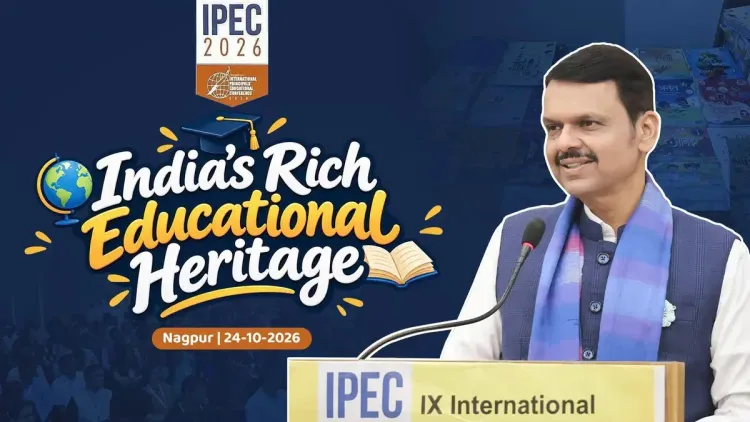
At the IX International Principals' Educational Conference 2026 in Nagpur, Maharashtra CM Devendra Fadnavis highlighted Takshashila, Nalanda and Vikramashila as proof of India's ancient global education leadership, connecting the legacy to the National Education Policy 2020's heritage-integration goals.
Key Takeaways
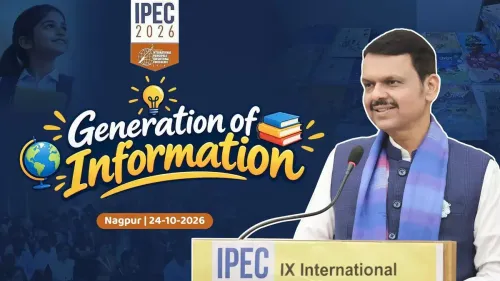
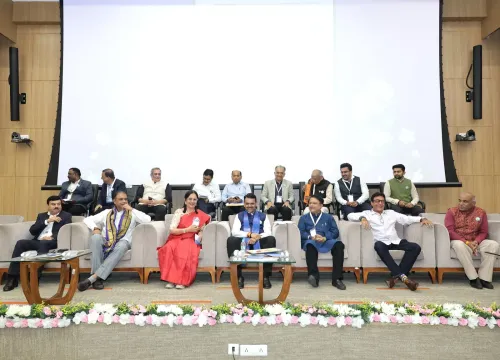
Devendra Fadnavis addressed the IX International Principals' Educational Conference 2026 in Nagpur on 24 October 2026 .
He cited Takshashila , Nalanda , and Vikramashila as ancient Indian universities that established India's educational legacy on the world map.
Nalanda operated from the 5th to 12th century CE ; Vikramashila was founded in the 8th century CE ; Takshashila attracted scholars from across Asia and the Mediterranean world.
The National Education Policy 2020 references these institutions in its framework for integrating traditional Indian knowledge into modern curricula.
The audience comprised international school principals, giving Fadnavis's remarks a cross-border dimension beyond routine domestic discourse.
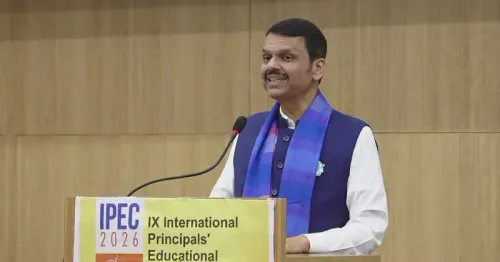
Ancient seats of learning that once drew scholars from across the known world stepped back into the spotlight on Saturday, 24 October 2026, as Maharashtra Chief Minister Devendra Fadnavis addressed the IX International Principals' Educational Conference 2026 in Nagpur, invoking the legacy of Takshashila, Nalanda, and Vikramashila to argue that India's credentials as a global education powerhouse run deep — centuries deep.
Speaking at the gathering of school leaders, CM Fadnavis declared: 'Takshashila, Nalanda and Vikramashila put India's rich educational heritage on the world map.' In Marathi, he framed it as a matter of national pride — भारताचा समृद्ध शैक्षणिक वारसा जगाच्या नकाशावर अधोरेखित केला ('India's rich educational heritage has been underscored on the world map').
Three universities that shaped civilisations
Takshashila, located in present-day Pakistan, was arguably the subcontinent's first great university — drawing students in medicine, astronomy, and philosophy from as far as Greece and China. Nalanda in Bihar operated from the 5th to 12th century CE as a Buddhist centre of learning with a library said to span multiple buildings. Vikramashila, also in Bihar, rose in the 8th century as a hub of tantric and philosophical scholarship. Together, they represent an era when India was not merely a participant in global knowledge exchange — it was the destination.
Where ancient heritage meets the National Education Policy
The reference is not purely ceremonial. The National Education Policy 2020 explicitly names Nalanda and Takshashila as touchstones for integrating traditional Indian knowledge systems into contemporary curricula. By invoking them before an international audience of school principals, CM Fadnavis connects Maharashtra's ground-level education leadership to a national framework that asks modern institutions to look backward before they look forward.
Indian leaders across the political spectrum periodically return to these institutions when making the case for India's civilisational contribution to learning — but doing so at an international principals' conference in Nagpur, the state's winter capital, carries a particular signal: that the conversation is aimed as much at global peers as at domestic audiences.
What principals at Nagpur are being asked to carry home
For the school leaders gathered at the conference, the invocation carries a practical edge. The NEP's push for multidisciplinary, heritage-rooted education filters down ultimately to the principal's desk — timetables, electives, institutional culture. A chief minister standing before an international gathering and anchoring the argument in Takshashila and Nalanda is, in effect, asking educators to see themselves as stewards of a very long tradition. That is a large ask. Whether conference declarations translate into curriculum shifts in Maharashtra's classrooms is the question the coming months will answer.
Point of View
Nalanda and Vikramashila before an international audience of school principals is a deliberate alignment of Maharashtra's education leadership with the civilisational framing embedded in the National Education Policy 2020 — signalling that the state intends to position heritage-rooted pedagogy as a policy priority, not just political rhetoric. The choice of Nagpur, the RSS's intellectual home city, as the venue for an international education conference adds a layer of ideological geography that observers will note. The real test is whether the oratory at the podium translates into measurable curricular shifts; for now, the conference puts Maharashtra's education establishment on notice that ancient learning is the benchmark being set.
NationPress
24 Oct 2026
Frequently Asked Questions
What did Devendra Fadnavis say at the Nagpur education conference in 2026?
CM Devendra Fadnavis said that Takshashila, Nalanda and Vikramashila put India's rich educational heritage on the world map, speaking at the IX International Principals' Educational Conference 2026 held in Nagpur on 24 October 2026.
What is the IX International Principals' Educational Conference 2026?
It is an international conference for school principals held in Nagpur, Maharashtra on 24 October 2026, attended by education leaders and addressed by CM Devendra Fadnavis.
Why does India invoke Takshashila and Nalanda in education policy?
The National Education Policy 2020 references Takshashila and Nalanda as symbols of India's ancient tradition of multidisciplinary learning, using them to justify integrating traditional knowledge systems into modern curricula.
Where was Takshashila university located?
Takshashila was located in what is present-day Pakistan; it was one of the earliest known universities in the world, drawing scholars in medicine, astronomy and philosophy from across Asia and beyond.
What is the connection between Nalanda and the National Education Policy 2020?
The NEP 2020 explicitly cites Nalanda and Takshashila as historical models to support its goal of incorporating India's traditional and classical knowledge systems into the contemporary education framework.