CM Yogi declares UP a growth engine, not BIMARU state
Synopsis
Chief Minister Yogi Adityanath declared on 17 June 2026 that Uttar Pradesh has shed its BIMARU tag and is now a growth engine of India's economy, citing the state's top rankings in central government schemes. The claim reflects a sustained political and policy narrative built since 2017.
Key Takeaways
CM Yogi Adityanath declared Uttar Pradesh is no longer a BIMARU state and now serves as a 'Growth Engine' of India's economy.
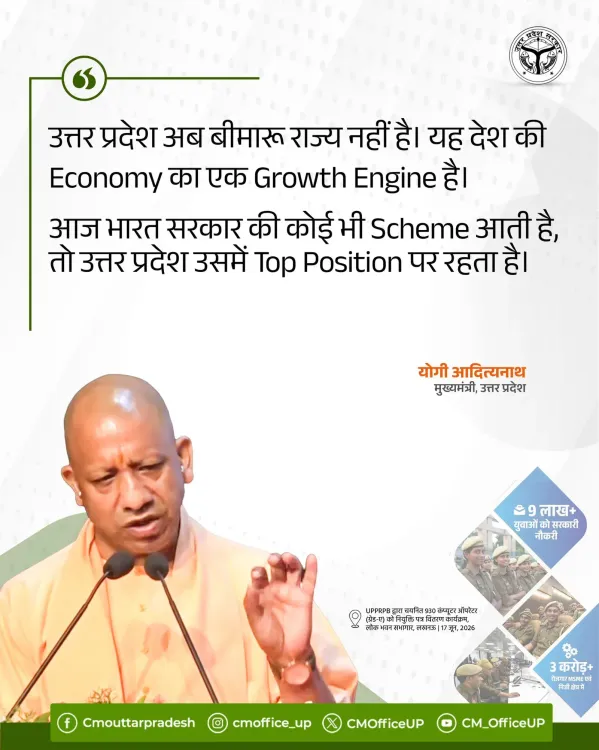
The CMO post, dated 17 June 2026 , quoted the Chief Minister asserting UP secures the top position in every central government scheme.
The BIMARU label dates to the 1980s and historically grouped UP with Bihar, Madhya Pradesh and Rajasthan as socio-economically laggard states.
Since 2017 , the state has hosted three Global Investors Summits and cited top rankings in PMAY, Swachh Bharat and PMGSY dashboards.
UP is India's most populous state, with over 24 crore residents, making its economic trajectory significant for national growth aggregates.
Independent analysts note that per-capita income in UP remains below the national average, adding nuance to the 'growth engine' claim.
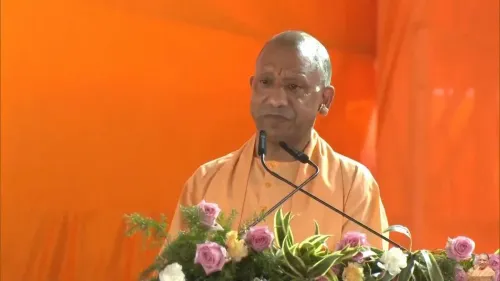
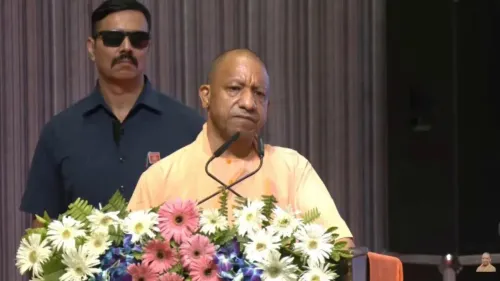
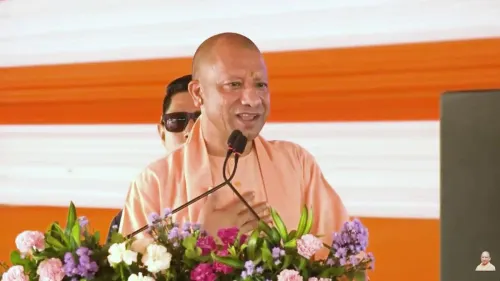
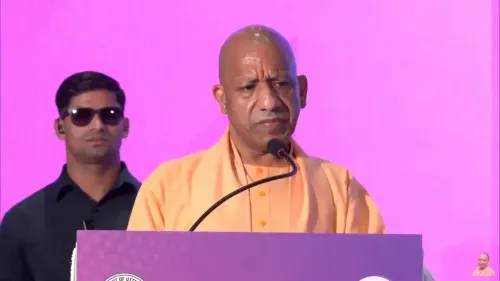
The Chief Minister's Office of Uttar Pradesh on Wednesday, 17 June 2026 shared remarks by Chief Minister Yogi Adityanath asserting that the state has shed its decades-old 'BIMARU' tag and now functions as a key driver of India's national economy.
Context
Speaking in remarks quoted by the CMO, CM Yogi Adityanath stated: 'Uttar Pradesh ab BIMARU rajya nahin hai. Yeh desh ki Economy ka ek Growth Engine hai' — 'Uttar Pradesh is no longer a BIMARU state. It is a Growth Engine of the country's economy.' He added that whenever the Government of India rolls out any scheme, Uttar Pradesh secures the top position in it.
The term 'BIMARU' — an acronym coined in the 1980s covering Bihar, Madhya Pradesh, Rajasthan and Uttar Pradesh — became shorthand for states with lagging socio-economic indicators, high poverty rates and poor human-development outcomes. Being labelled BIMARU carried significant political and economic stigma.
Policy Backdrop
Since March 2017, when Yogi Adityanath assumed office, the state government has pushed a 'double-engine' governance narrative, arguing that having the same party at the Centre and in Lucknow accelerates the delivery of central programmes and attracts private investment.
The state hosted major Global Investors Summits in 2018, 2021 and 2023, each announcing multi-trillion-rupee investment intents. The government has also cited rankings on central scheme dashboards — including PMAY (Pradhan Mantri Awas Yojana), Swachh Bharat Mission and PMGSY (Pradhan Mantri Gram Sadak Yojana) — as evidence of the state's improved administrative performance.
In several recent years, Uttar Pradesh has reported above-national-average Gross State Domestic Product (GSDP) growth rates, though analysts note that its per-capita income remains below the national average, reflecting the complexity of measuring progress in India's most populous state.
Stakeholders and Impact
Uttar Pradesh is home to more than 24 crore people, making it the country's most populous state and one whose economic trajectory has an outsized bearing on national aggregates. A sustained shift in its growth profile would affect labour markets, agricultural output and industrial capacity across northern India.
Private investors, central ministries overseeing scheme implementation, and the state's large rural and urban workforce all stand to be directly affected by whether the 'growth engine' claim translates into durable improvements in income and employment. Opposition parties have questioned whether headline investment announcements have converted into on-ground job creation at scale.
What's Next
The next round of state-level rankings on central government scheme portals, along with any fresh GSDP or industrial investment data releases from the UP government, will be closely watched to assess how far the 'top position' claim holds across programmes. Any new investor summit or central scheme dashboard update is likely to be cited by the state government as further evidence of the transformation it is projecting.
For Uttar Pradesh, sustaining this narrative through verifiable data — particularly on per-capita income growth and employment — will be critical to cementing its repositioning from a historically laggard state to a genuine engine of India's economic ambitions.
Point of View
Framing administrative performance on central schemes as a direct political dividend. The BIMARU counter-narrative has been a consistent thread since 2017, and repeating it publicly reinforces the idea that the transformation is now settled fact rather than work in progress. However, the gap between headline investment announcements and per-capita income data means the claim remains contested terrain for economists and opposition voices alike. The timing — mid-2026 — suggests the government is keen to lock in this image as new economic data rounds approach.
NationPress
17 Sept 2026
Frequently Asked Questions
What does BIMARU state mean and why was Uttar Pradesh called one?
BIMARU is an acronym coined in the 1980s for Bihar, Madhya Pradesh, Rajasthan and Uttar Pradesh — states that lagged on socio-economic indicators such as literacy, infant mortality and per-capita income. UP was included because of its historically high poverty rates and weak human-development outcomes.
What did CM Yogi Adityanath say about Uttar Pradesh's economy in June 2026?
CM Yogi Adityanath stated that Uttar Pradesh is no longer a BIMARU state and is now a growth engine of India's economy, adding that the state secures the top position whenever the central government launches any scheme.
Which central government schemes is Uttar Pradesh said to top?
The state government has cited rankings in schemes such as PMAY (Pradhan Mantri Awas Yojana), Swachh Bharat Mission and PMGSY (Pradhan Mantri Gram Sadak Yojana) as evidence of UP's top-ranked performance, though the claim of topping all schemes as of June 2026 has not been independently verified.
What is the 'double-engine' government model that UP follows?
'Double-engine' governance refers to the political argument that having the same party — in this case the BJP — in power both at the Centre and in the state government leads to faster implementation of central schemes and greater policy alignment, benefiting the state's development.
Has Uttar Pradesh's economy actually improved since 2017?
UP has reported above-national-average GSDP growth in several years since 2017 and hosted major investor summits in 2018, 2021 and 2023. However, the state's per-capita income remains below the national average, meaning the overall picture is mixed and continues to be debated by economists.