CM Yogi Claims UP Has Entered India's Top-3 Economies
Synopsis
Chief Minister Yogi Adityanath claimed on 15 July 2026 that Uttar Pradesh has entered India's top-three economies, invoking and rejecting the decades-old BIMARU label in a pointed assertion of the state's economic transformation since 2017.
Key Takeaways
Yogi Adityanath declared on 15 July 2026 that Uttar Pradesh now ranks among India's top-three state economies .
The post directly rejects the BIMARU label — coined in the 1980s — which grouped UP with Bihar, Madhya Pradesh, and Rajasthan as economically lagging states.
The BJP government has pursued investor summits and ease-of-doing-business reforms in UP since taking power in 2017 .
The precise GSDP ranking as of mid-2026 is subject to official confirmation by the Ministry of Statistics and Programme Implementation .
Uttar Pradesh holds 80 Lok Sabha seats , making its economic narrative central to national political messaging.
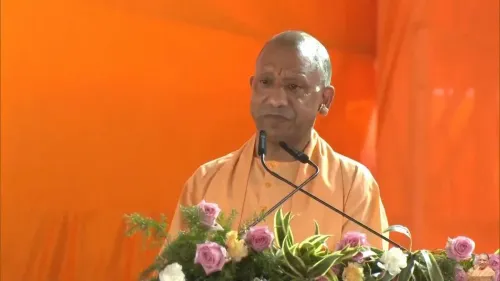
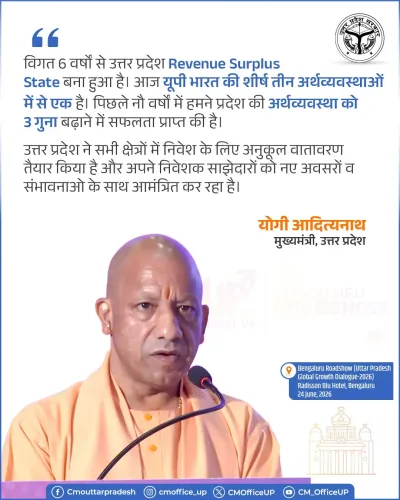
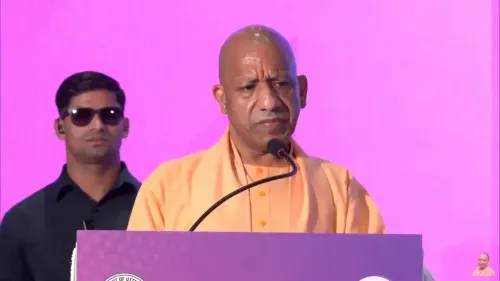
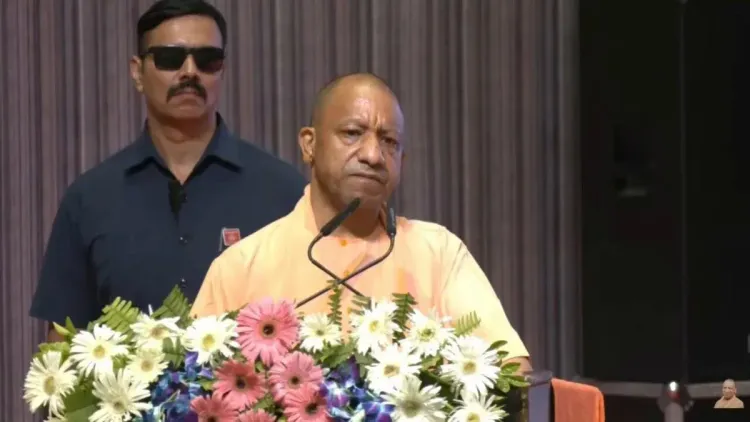
Uttar Pradesh Chief Minister Yogi Adityanath declared on Wednesday, 15 July 2026 that the state has secured a place among India's top three economies, asserting that Uttar Pradesh is no longer a laggard. The post, shared on his official X account, marked a pointed departure from the decades-old 'BIMARU' tag that had long defined the state's economic standing.
Context
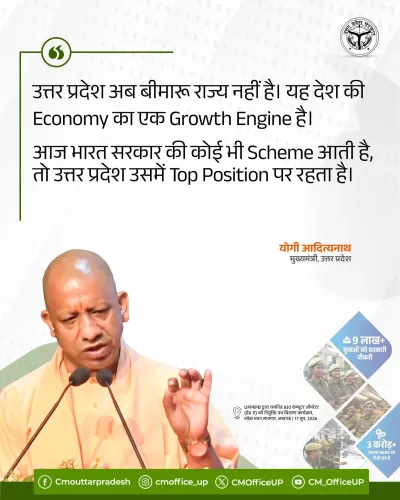
In his post, Yogi Adityanath wrote: 'Bharat ki Top-3 Economy mein UP ne apna sthan bana liya hai... Ab UP 'bimaar' nahin hai...' — translated as, 'UP has secured its place among India's top-3 economies... UP is no longer 'sick'...' The word 'bimaar' (sick) is a deliberate play on the BIMARU acronym, coined in the 1980s to group Bihar, Madhya Pradesh, Rajasthan, and Uttar Pradesh as states lagging in per-capita income and industrialisation. By invoking and rejecting that label, the Chief Minister framed his claim as a historic economic turning point.
The BIMARU designation stuck to Uttar Pradesh for much of the post-independence era, signalling weak industrial output, poor ease of doing business, and low per-capita income relative to states such as Maharashtra, Tamil Nadu, and Karnataka. The tag shaped investor sentiment and federal resource allocation debates for over three decades.
Policy Backdrop
Since the BJP government assumed power in Uttar Pradesh in 2017, the state administration has held successive investor summits — the Uttar Pradesh Investors Summit series — and rolled out reforms aimed at improving ease of doing business, land acquisition, and industrial licensing. The government has pointed to growth in sectors including defence manufacturing, food processing, and logistics as evidence of structural change.
The state's Gross State Domestic Product has grown substantially in nominal terms over the past several years, and the administration has consistently cited GSDP rankings in its political messaging. However, the Ministry of Statistics and Programme Implementation is the authoritative source for state-level GDP rankings, and the precise positioning of Uttar Pradesh in the national rankings as of mid-2026 is subject to official data releases.
Stakeholders and Impact
The claim carries direct significance for Uttar Pradesh's industrial and investment community. A confirmed top-three GSDP ranking would strengthen the state's negotiating position in attracting private capital, central government projects, and multinational manufacturing facilities — particularly as India positions itself as a global supply-chain alternative. Domestic and international investors tracking India's federal economy will look to official GSDP data to validate the assertion.
For the BJP, the messaging also carries electoral weight. Uttar Pradesh, with its 80 Lok Sabha seats, is the single most consequential state in national politics. Framing the state's economic trajectory as a governance success story reinforces the party's development narrative ahead of future state and national electoral cycles.
What's Next
Attention will now turn to the next official release of Advance Estimates or revised state domestic product figures by the Ministry of Statistics and Programme Implementation, which will either corroborate or complicate the Chief Minister's claim. Any announcement from a forthcoming Uttar Pradesh investor summit would also be closely watched as a follow-through signal. Rival state governments and opposition parties in Uttar Pradesh are likely to scrutinise the data underpinning the assertion and respond with their own economic narratives.
Point of View
Mid-term in a political cycle defined by development promises, suggests the messaging is as much about consolidating the BJP's governance narrative as it is about celebrating a statistical milestone. Whether official GSDP data fully supports a firm top-three ranking will determine whether this claim becomes a durable political asset or an exposed vulnerability. Across India's federal landscape, the race among large states to claim top economic rankings has intensified as they compete for private investment, central transfers, and political credibility.
NationPress
13 Oct 2026
Frequently Asked Questions
Is Uttar Pradesh now a top-3 economy in India?
Chief Minister Yogi Adityanath claimed on 15 July 2026 that UP has secured a place among India's top-three state economies by GSDP. The claim is consistent with the state's significant nominal GSDP growth since 2017, but the precise ranking for 2026 is subject to official confirmation by the Ministry of Statistics and Programme Implementation.
What does BIMARU mean and why is it significant for UP?
BIMARU is an acronym coined in the 1980s grouping Bihar, Madhya Pradesh, Rajasthan, and Uttar Pradesh as states with low per-capita income and weak industrialisation. Yogi Adityanath's post directly rejects this label, framing it as an outdated characterisation that no longer applies to UP.
What has the Yogi Adityanath government done to improve UP's economy?
Since 2017, the BJP government in UP has held a series of investor summits, reformed land acquisition and industrial licensing norms, and promoted sectors such as defence manufacturing, food processing, and logistics to attract private investment and improve ease of doing business.
Which states are currently in India's top-3 economies by GSDP?
Historically, Maharashtra and Tamil Nadu have ranked among the top state economies by GSDP. Uttar Pradesh's growing nominal GSDP has placed it in contention, but the definitive ranking for 2025-26 depends on official data yet to be released by the Ministry of Statistics and Programme Implementation.
What is the political significance of CM Yogi's economy claim?
Uttar Pradesh has 80 Lok Sabha seats, making it the most electorally significant state in India. Framing UP's economic rise as a BJP governance success reinforces the party's development narrative ahead of future state and national elections.