CM Naidu Marks World Bicycle Day, Hails Green Mobility Push
Synopsis
Andhra Pradesh Chief Minister N. Chandrababu Naidu marked World Bicycle Day on 3 June 2026 with an X post hailing the bicycle as a simple, affordable and environmentally sustainable mode of transport that supports healthier lives and a greener future, echoing the language of the United Nations resolution that established the global observance.
Key Takeaways
Andhra Pradesh CM N.
Chandrababu Naidu posted World Bicycle Day greetings on 3 June 2026 .
He described the bicycle as simple, affordable, reliable and environmentally sustainable .
The phrasing closely tracks UN General Assembly resolution A/RES/72/272 of 12 April 2018 .
The post contained no new scheme announcement or budget commitment.
Focus shifts to upcoming state budgets and municipal master plans for dedicated cycling infrastructure.
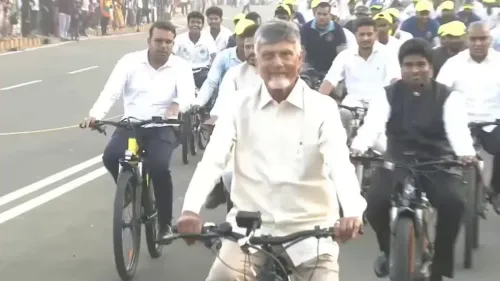
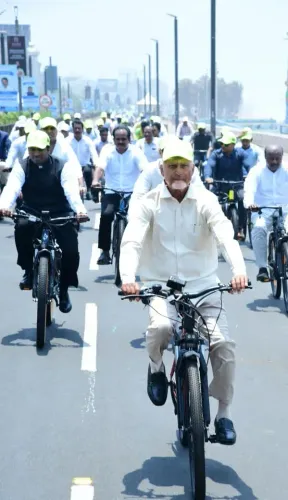
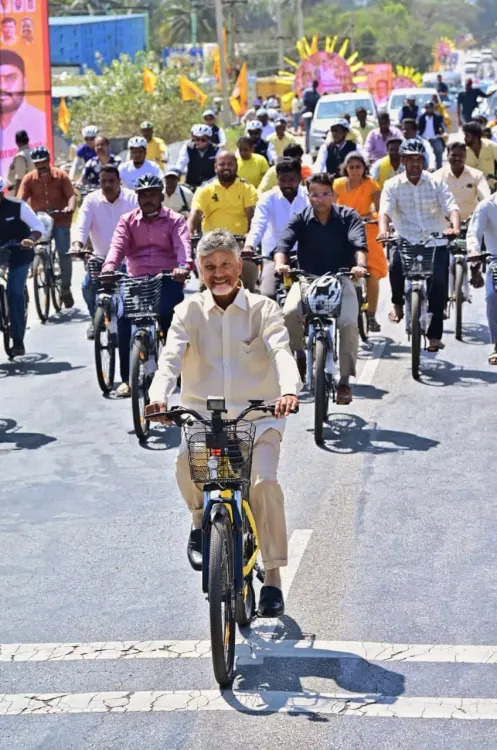
Andhra Pradesh Chief Minister N. Chandrababu Naidu on Wednesday, 3 June 2026, extended World Bicycle Day greetings to cyclists worldwide, framing the bicycle as a vehicle of sustainability, public health and affordable mobility. The Telugu Desam Party national president posted his message on X, accompanied by a single image, in a brief but pointed endorsement of low-carbon transport.
Context
In his post, the Chief Minister wrote, 'World Bicycle Day greetings to bicyclists and cycling enthusiasts around the world! Today recognizes the power of the humble bicycle, a simple, affordable, reliable, and environmentally sustainable means of transport that supports healthier lives and a greener future.'
The message, tagged #WorldBicycleDay, was issued in the late afternoon and aligns with a familiar pattern in which sub-national leaders use international observance days to reinforce sustainability themes without announcing fresh policy.
Policy backdrop
World Bicycle Day was formally established by the United Nations General Assembly through resolution A/RES/72/272, adopted on 12 April 2018. The resolution recognised the bicycle as a simple, affordable, reliable and environmentally sustainable means of transport, language that closely mirrors the Chief Minister's own phrasing.
Since then, member states and sub-national governments have used the 3 June observance to underline links between cycling, urban planning and climate goals. For India, the day intersects with central programmes on smart urban infrastructure and non-motorised transport, areas where state governments hold significant operational authority.
Stakeholders and impact
The primary audiences for such messaging are urban cyclists, state transport planners and municipal authorities tasked with translating sustainability rhetoric into roadway design. In Andhra Pradesh, this constituency has grown alongside expansion of the state's urban footprint, including the capital region around Amaravati.
Mr Naidu has long associated his political brand with technology-driven infrastructure and urban modernisation, themes he revisited during his earlier tenures as Chief Minister. A statement on cycling slots neatly into that broader narrative, signalling continuity with green-mobility components embedded in the state's urban-planning agenda.
Cycling advocates argue that consistent political endorsement at the highest level is a prerequisite for sustained investment in dedicated lanes, parking infrastructure and last-mile integration with public transport. Public-health practitioners similarly link routine cycling to reduced cardiovascular risk and lower urban air-pollution exposure, both salient concerns in fast-urbanising Indian states.
What's next
The Chief Minister's post does not commit the state to any specific scheme, allocation or timeline. Observers will instead look to forthcoming Andhra Pradesh budget cycles and municipal master-plan revisions for indications of dedicated cycling-lane funding, particularly in Amaravati and other Tier-II urban centres in the state.
Possible integration with central urban-development programmes, including successor phases of the Smart Cities Mission, would offer one route for converting symbolic endorsements into infrastructure on the ground. Any such alignment would also strengthen the state's positioning on national climate and sustainable-mobility commitments.
For now, the message functions primarily as a values statement: a senior Chief Minister using a global observance to associate his administration with low-carbon, equitable transport at a moment when Indian cities are weighing how aggressively to redesign streets around non-motorised users.
Point of View
But the signal matters in a state where the Chief Minister has historically tied his political identity to urban modernisation. By echoing the UN's own framing of the bicycle as sustainable transport, Mr Naidu places Andhra Pradesh within a broader sub-national sustainability narrative without taking on new fiscal obligations. The real test will be whether this rhetorical alignment translates into dedicated cycling infrastructure in Amaravati and other state cities. In the wider Indian context, it fits a pattern of state leaders using global observance days to keep climate-aligned mobility on the agenda.
NationPress
18 Oct 2026
Frequently Asked Questions
What did Chandrababu Naidu say on World Bicycle Day 2026?
He greeted cyclists worldwide and described the bicycle as a simple, affordable, reliable and environmentally sustainable mode of transport that supports healthier lives and a greener future. The message was posted on X on 3 June 2026.
When is World Bicycle Day observed and who established it?
World Bicycle Day is observed annually on 3 June. It was established by the United Nations General Assembly through resolution A/RES/72/272, adopted on 12 April 2018.
Did Naidu announce any new cycling scheme for Andhra Pradesh?
No, the post did not announce any new scheme, budget allocation or programme. It was a greeting message marking the global observance and did not commit the state to specific cycling infrastructure.
Why is cycling infrastructure relevant to Andhra Pradesh?
Cycling infrastructure is relevant because Andhra Pradesh has been expanding its urban footprint, including around the capital region of Amaravati, where non-motorised transport features within smart-city and green-mobility planning.
How does World Bicycle Day connect to India's climate goals?
World Bicycle Day reinforces low-carbon urban transport, which aligns with India's broader climate and sustainable-mobility commitments. Indian states often use the day to signal support for cycling within national urban-development frameworks.