Nashik Incident Sheds Light on Rising Radicalisation Trends Linked to PFI’s Vision for 2024

Synopsis
The alarming rise in radicalisation within India is exemplified by the Nashik case, where authorities suspect that seniority was exploited to convert vulnerable employees. Investigations are now expanding to uncover broader networks potentially inspired by the Popular Front of India's controversial Vision 2047.
Key Takeaways
Radicalisation in India has become increasingly concerning.
The Nashik case involves allegations of professional seniority being exploited for radicalisation .
Investigations are examining possible links to broader networks.
The PFI's Vision 2047 emphasizes radicalisation over traditional attacks.
Authorities are on alert for similar threats across the nation.
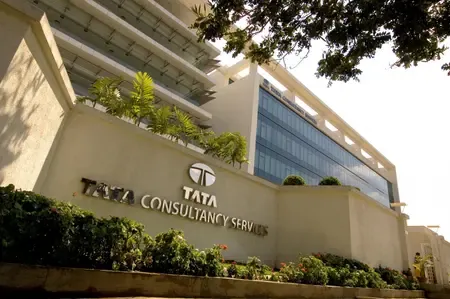
New Delhi, April 16 (NationPress) The threat of radicalisation has escalated to become one of India's most pressing issues. Authorities have issued warnings that radicalisation camps may emerge in unsuspecting areas, largely escaping scrutiny. The case involving TCS exemplifies this concern, revealing that professional seniority may have been exploited to allegedly radicalise and convert vulnerable junior employees between 2021 and 2026.
As the investigation continues, agencies are broadening their focus to identify a more extensive pattern. There may be other similar modules operating in different locations and companies, which the authorities intend to investigate in connection with the Nashik case, according to an official.
Another official noted that evidence increasingly suggests a larger scheme aimed at establishing additional radicalisation centres. This initiative prioritises changing societal mindsets over traditional terrorist attacks.
Organizations like the Popular Front of India (PFI), along with the Islamic State and Al-Qaeda, have historically concentrated on radicalisation. Before its prohibition, the PFI had established numerous camps and centres to shift public perceptions.
The Nashik case's methods mirror the PFI’s Vision 2047 document, titled “India 2047: Towards Rule of Islam in India,” which advocates for heightened radicalisation efforts. The emphasis is predominantly on radicalisation rather than direct attacks.
The PFI envisioned a radicalised Islamic state by 2047. Although it was banned by the Narendra Modi administration in 2022, the radicalisation case linked to TCS is now under investigation by central agencies, including the National Investigation Agency (NIA), which will assess the broader implications of this situation.
Officials indicate that the agencies will investigate whether this instance is isolated or if there are numerous similar white-collar modules scattered across the nation. The potential involvement of the PFI will also be scrutinized thoroughly.
The NIA has accused the PFI of promoting radicalisation by preying on Hindu women. In the Nashik case, police allege that IT engineers and an HR manager attempted to radicalise and forcibly convert Hindu women employees, seeking ideological dominion over them. The accused include team leaders Tausif Attar, Danish Sheikh, Asif Ansari, Shafi Sheikh, and HR’s Nida Khan, who is currently evading capture.
Investigators believe that Nida Khan could provide additional information, potentially leading to the discovery of other similar networks. Another official mentioned that the agencies would analyze the similarities between the Nashik case's methods and the PFI’s vision document.
The document outlines a goal to establish Islamic rule in India by 2047, coinciding with the 100th anniversary of India’s independence. It details a four-stage program focused on recruitment, martial arts training, and inciting communal tensions across the nation.
Moreover, the PFI has discussed creating specialized radicalisation cells within the IT industry. Officials assert that the aim was to engage all segments of society, particularly the educated class, to disseminate their ideology more broadly. The less educated would be incited to carry out violent acts.
Initially operating in Kerala, the PFI expanded its reach across various parts of India, including the northeastern states. Despite its ban, agencies claim that many continue to promote its so-called vision.
Following the ban, intelligence agencies cautioned that individuals associated with the PFI, who have evaded scrutiny, might continue to pursue the organization’s agenda covertly.
Point of View
It is crucial to highlight the national implications of the rising radicalisation trend, particularly illustrated by the Nashik case. This situation demands rigorous scrutiny and a proactive approach to safeguard societal integrity and prevent extremist ideologies from taking root.
NationPress
19 Sept 2026
Frequently Asked Questions
What is the Nashik case about?
The Nashik case involves allegations of radicalisation and forced conversion of Hindu women employees by IT professionals, using seniority as leverage.
What is the Popular Front of India’s Vision 2047?
The Vision 2047 document outlines the PFI's goal of establishing Islamic rule in India by its 100th independence anniversary, focusing on radicalisation rather than direct attacks.
What role do authorities play in investigating radicalisation?
Authorities, including the National Investigation Agency, are investigating potential networks and methods used for radicalisation to identify broader patterns across the country.
Why is radicalisation considered a threat?
Radicalisation poses a severe threat as it can lead to ideological manipulation, community discord, and potential violence against targeted groups.
How does the PFI aim to spread its ideology?
The PFI seeks to infiltrate various societal segments, particularly targeting educated individuals while utilizing less educated individuals for inciting violence.