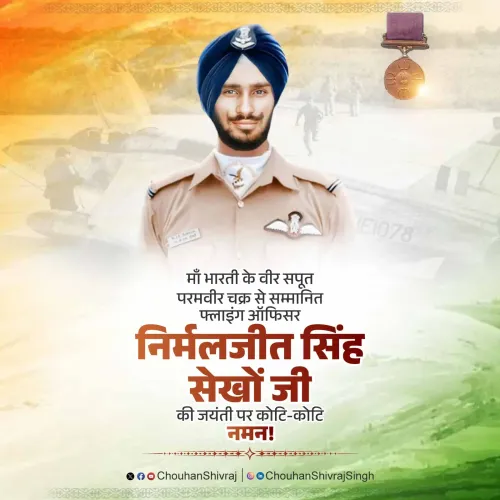
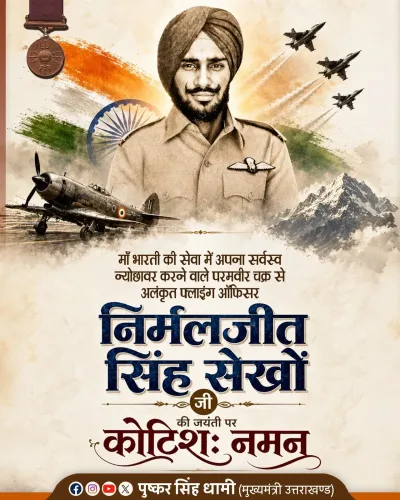
Sekhon IAF Marathon 2026: Nation honours 1971 PVC hero Nirmaljit Singh Sekhon
Synopsis
Thousands ran across India on 4 October to honour Flight Lieutenant Nirmaljit Singh Sekhon — the only IAF officer ever awarded the Param Vir Chakra — in the second edition of the Sekhon IAF Marathon. Air Force Chief A.P. Singh ran at the New Delhi start, underscoring the IAF's push to transform wartime memory into mass public tribute.
Key Takeaways
The second edition of the Sekhon Indian Air Force Marathon was held on 4 October 2026 across multiple Indian cities.
Air Force Chief A.P.
Singh inaugurated and participated in the flagship run at Jawaharlal Nehru Stadium, New Delhi .
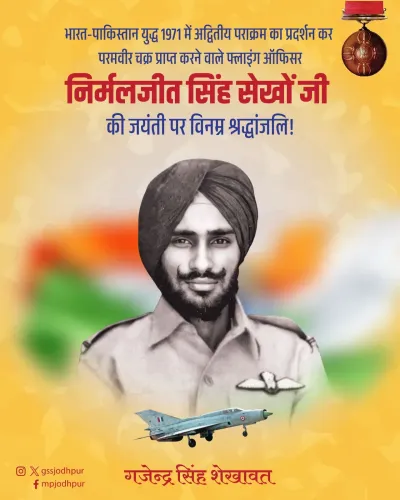
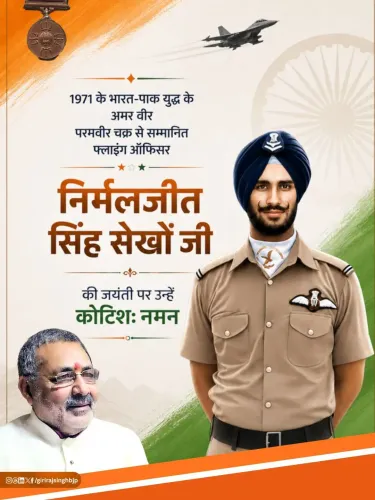
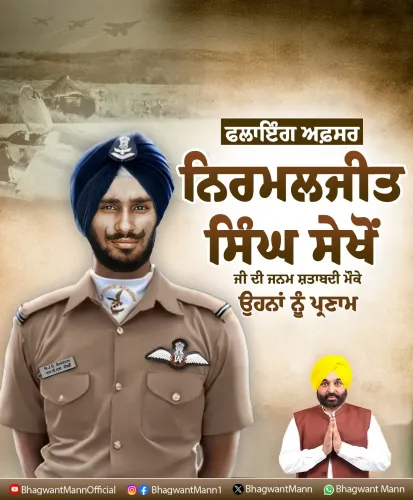
Flight Lieutenant Nirmaljit Singh Sekhon is the only IAF officer ever to receive the Param Vir Chakra , India's highest wartime gallantry award.
On 14 December 1971 , Sekhon single-handedly engaged six Pakistani fighter jets over Srinagar, shot down one Sabre jet and damaged another before making the supreme sacrifice.
Marathon categories of 21 km , 10 km , and 5 km were held simultaneously in New Delhi , Chandigarh , Guwahati , and Jodhpur .
Flight Lieutenant Nirmaljit Singh Sekhon, India's only Indian Air Force officer to be awarded the Param Vir Chakra, was honoured on 4 October 2026 as thousands ran the second edition of the 'Sekhon Indian Air Force Marathon' across multiple cities, with Air Force Chief Air Chief Marshal A.P. Singh personally participating at the flagship event in New Delhi. The marathon, held simultaneously in cities including Chandigarh, Jodhpur, and Guwahati, commemorates Sekhon's supreme sacrifice during the 1971 war — a battle in which he single-handedly took on six Pakistani fighter jets over Srinagar.
The Courage Behind the Marathon
On 14 December 1971, six Pakistani fighter jets launched a surprise assault on India's Srinagar airfield. Flight Lieutenant Sekhon, deployed as a Gnat pilot, scrambled into the skies alone to intercept the attacking aircraft. In the ensuing aerial engagement, he shot down a Pakistani Sabre jet and inflicted heavy damage on a second enemy aircraft, single-handedly neutralising a multi-aircraft attack.
Sekhon defended the Srinagar base until his last breath, making the supreme sacrifice in combat. For this extraordinary act of valour, he was posthumously awarded the Param Vir Chakra — India's highest wartime gallantry decoration. He remains the only IAF officer ever to have received the honour.
The Second Edition: Nationwide Tribute
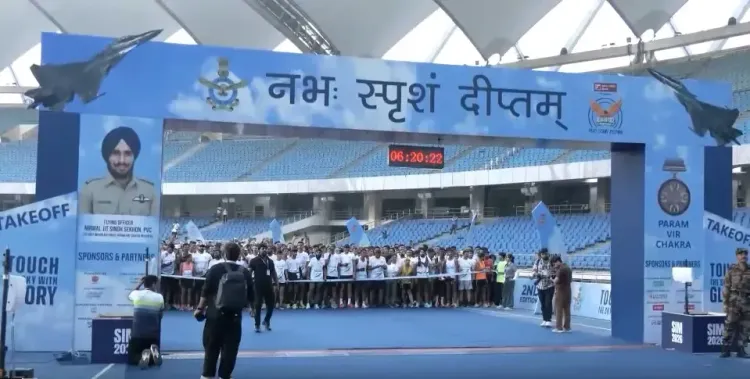
The second edition of the Sekhon Indian Air Force Marathon was flagged off at the Jawaharlal Nehru Stadium in New Delhi as the first rays of the sun broke on Sunday morning. Air Force Chief A.P. Singh inaugurated the event and ran alongside participants, signalling the IAF's institutional commitment to keeping Sekhon's legacy alive.
Marathon categories were organised across three distances — 21 km, 10 km, and 5 km — drawing participants spanning diverse ages, languages, and backgrounds. Concurrently, IAF stations in Chandigarh, Guwahati (Assam), and Jodhpur (Rajasthan) hosted their own editions of the run, with senior Air Force officers and civilians running shoulder to shoulder.
This comes amid growing institutional efforts to restore the profiles of India's lesser-known war heroes beyond annual ceremonial observances. The Sekhon Marathon, now in its second consecutive year, is part of that broader push.
What the Indian Air Force Said
The Indian Air Force hailed Nirmaljit Singh Sekhon as an enduring inspiration for the nation. At the New Delhi event, the service described the marathon as more than a competitive race — calling it a living tribute to Sekhon's patriotism, combat discipline, and selfless bravery. Officers emphasised that his story, from the plains of the Northeast to the deserts of the West, belongs to every Indian.
Legacy and Significance
Sekhon's story holds particular resonance because he acted alone — without air cover or reinforcement — against overwhelming odds. Military historians have noted that his decision to engage six adversarial aircraft in a single-engine Gnat, a lightweight fighter, represented not just courage but tactical audacity. His action is credited with preventing significant damage to the strategically vital Srinagar airfield during a critical phase of the war.
With the nation observing the second consecutive year of the marathon, the IAF's effort to institutionalise his memory through a mass public event signals a shift toward experiential remembrance — bringing war history off the memorial plaques and into the running shoes of ordinary citizens. As the marathon grows in scale and geography, it could become one of India's most visible tributes to a soldier who gave everything for the country.
Point of View
And doing so with the Air Force Chief on the starting line. Sekhon's story — one pilot, one Gnat, six Pakistani jets, and a strategic airfield saved — is precisely the kind of narrative that translates into national identity. The challenge now is whether the event grows beyond IAF stations and into civilian running culture, where it could genuinely compete with commercial marathons for reach and storytelling impact. Institutionalising memory requires more than annual repetition; it requires the story itself to travel.
NationPress
4 Oct 2026
Frequently Asked Questions
Who was Flight Lieutenant Nirmaljit Singh Sekhon?
Flight Lieutenant Nirmaljit Singh Sekhon was an Indian Air Force pilot who made the supreme sacrifice during the 1971 Indo-Pakistani war and was posthumously awarded the Param Vir Chakra, India's highest wartime gallantry decoration. He is the only IAF officer ever to have received the honour. On 14 December 1971, he single-handedly engaged six Pakistani fighter jets over the Srinagar airfield, shooting down one Sabre jet and damaging another before laying down his life.
What is the Sekhon Indian Air Force Marathon?
The Sekhon Indian Air Force Marathon is an annual run organised by the Indian Air Force to commemorate the valour and sacrifice of Flight Lieutenant Nirmaljit Singh Sekhon. The second edition was held on 4 October 2026, simultaneously across New Delhi, Chandigarh, Guwahati, and Jodhpur, with race distances of 21 km, 10 km, and 5 km.
Why is Nirmaljit Singh Sekhon historically significant?
Sekhon is the only Indian Air Force officer to have been awarded the Param Vir Chakra, India's highest military honour for battlefield gallantry. His single-aircraft interception of six Pakistani fighter jets on 14 December 1971 is credited with preventing serious damage to the strategically vital Srinagar airfield during a decisive phase of the 1971 war.
Who participated in the 2026 Sekhon IAF Marathon in New Delhi?
Air Force Chief Air Chief Marshal A.P. Singh inaugurated and personally participated in the New Delhi edition of the marathon at Jawaharlal Nehru Stadium on 4 October 2026. Thousands of participants from diverse ages, languages, and backgrounds took part, alongside IAF personnel.
In which cities was the 2026 Sekhon Marathon held?
The second edition of the Sekhon Indian Air Force Marathon was held simultaneously in New Delhi, Chandigarh, Guwahati (Assam), and Jodhpur (Rajasthan) on 4 October 2026, with senior IAF officers and civilians participating at each location.