NCP rules out merger with NCP(SP), reaffirms Mahayuti alliance
Synopsis
The NCP's core committee has slammed the door on any merger with Sharad Pawar's NCP(SP), rejecting terms that would have handed organisational control back to the Pawar patriarch and his daughter Supriya Sule. The decision makes the Pawar family's political split permanent for now and reshapes coalition calculations on both sides of Maharashtra's political divide.
Key Takeaways
The ruling NCP core committee on Sunday, 26 October 2026 categorically rejected any merger or power-sharing with the NCP (SP) faction.
NCP(SP) MP Supriya Sule had reportedly proposed reunification, seeking organisational control for Sharad Pawar and herself, plus three Cabinet berths.
Minister Chhagan Bhujbal stated the merger 'was not on the cards and it won't be in future too.' The ruling NCP reaffirmed its commitment to the Mahayuti alliance with the BJP and Shiv Sena .
The NCP(SP) remains within the Opposition Maha Vikas Aghadi (MVA) , now free to build a distinct anti-incumbency platform.
Internal challenges — including youth wing–veteran tensions and unclear leadership structures — remain unresolved within the ruling NCP.
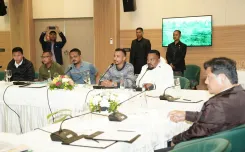
The Nationalist Congress Party (NCP), led by Deputy Chief Minister Ajit Pawar and NCP President Sunetra Pawar, has categorically ruled out any merger or sharing of organisational control with the rival NCP (Sharadchandra Pawar) faction, marking a decisive turning point in Maharashtra's fractured political landscape. The decision, taken at a core committee meeting on Sunday, 26 October 2026, effectively closes the door on reunification and cements the permanent structural divide within the Pawar family.
What the Core Committee Decided
The ruling NCP's core committee met on Sunday and decisively rejected a merger proposal that had reportedly been floated by NCP(SP) MP Supriya Sule, following her discussions with late Deputy Chief Minister Ajit Pawar's sons, Parth Pawar and Jay Pawar. Sule had reportedly advocated for an early decision on reunification, with conditions centred on leadership positions and Cabinet berths.
The proposal reportedly sought top-level organisational control for Sharad Pawar and Supriya Sule, along with three ministerial berths for Jayant Patil, Rohit Pawar, and Jitendra Awhad. The core committee found the terms unacceptable, particularly given the lack of clarity on NCP President Sunetra Pawar's standing and the question of equal partnership.
Veteran NCP leader and Minister Chhagan Bhujbal stated plainly: 'The merger was not on the cards and it won't be in future too.'
Why the NCP Is Holding Its Ground
Having secured official recognition and symbol rights from the Election Commission of India (ECI), the ruling NCP faction is positioning itself not as a breakaway group but as the sole legitimate successor to the party's administrative legacy. Retaining full structural autonomy allows it to maintain bargaining power over Cabinet portfolios and regional seat-sharing within the Mahayuti alliance — alongside the Bharatiya Janata Party (BJP) and Shiv Sena — without the risk of ideological dilution.
Notably, surrendering organisational control to Sharad Pawar's faction would effectively reverse the legal and political gains the NCP consolidated after the split. The core committee's rejection signals that those gains are non-negotiable.
Impact on the NCP(SP) and MVA
For Sharad Pawar and the NCP(SP), the definitive rejection consolidates their position within the Opposition Maha Vikas Aghadi (MVA) coalition. Operating as a distinct entity, the NCP(SP) can now draw a sharper contrast with the ruling dispensation, focusing on grassroots cadre-building and anti-incumbency campaigns without the distraction of merger negotiations. Political observers note that a clean break, however painful, eliminates narrative confusion for voters choosing between the two factions.
Internal Challenges the Ruling NCP Still Faces
Despite the firm stance, the Sunetra Pawar-led NCP faces unresolved internal tensions. A conflict between the party's youth wing and seasoned veterans remains unaddressed, and the disconnect between NCP office-bearers and government representatives has left the cadre without clear directional guidance. Political observers point out that with leadership structures still fluid in the post-Ajit Pawar phase, rivals could exploit any delay in internal restructuring.
Unless a comprehensive, mutually beneficial formula emerges — one that resolves both Cabinet quotas and internal hierarchy — the NCP is set to continue charting its independent course within the Mahayuti, and the two NCP factions will compete as distinct political forces for the foreseeable future.
Point of View
While the NCP(SP) must convert opposition credibility into actual grassroots infrastructure before the next electoral cycle. The Pawar family rift is no longer a negotiating tactic; it is now the settled architecture of Maharashtra politics.
NationPress
26 Oct 2026
Frequently Asked Questions
Has the NCP ruled out a merger with NCP(SP)?
Yes. The ruling NCP's core committee on 26 October 2026 categorically rejected any merger or sharing of organisational control with the NCP (Sharadchandra Pawar) faction. Minister Chhagan Bhujbal confirmed the merger 'was not on the cards and it won't be in future too.'
What did Supriya Sule propose that the NCP rejected?
Supriya Sule reportedly proposed reunification on conditions that included top-level organisational control for Sharad Pawar and herself, along with three Cabinet berths for Jayant Patil, Rohit Pawar, and Jitendra Awhad. The core committee found the terms unacceptable, particularly the absence of clarity on Sunetra Pawar's standing.
What is the Mahayuti alliance and why does this decision matter for it?
The Mahayuti is the ruling coalition in Maharashtra comprising the NCP, the BJP, and Shiv Sena. By ruling out a merger, the NCP has reaffirmed its commitment to this alliance, preserving its Cabinet and seat-sharing leverage within the coalition.
What does this mean for the NCP(SP) and the MVA opposition?
With reunification off the table, the NCP(SP) remains a distinct entity within the Opposition Maha Vikas Aghadi (MVA). This allows it to focus on grassroots building and anti-incumbency campaigns without the distraction of merger talks, and to draw a clearer ideological contrast with the ruling dispensation.
What internal challenges does the ruling NCP still face?
Political observers note that the ruling NCP faces unresolved tensions between its youth wing and veteran leaders, and a disconnect between party office-bearers and government representatives. Leadership structures are also described as fluid in the post-Ajit Pawar phase, which rivals could exploit if restructuring is delayed.