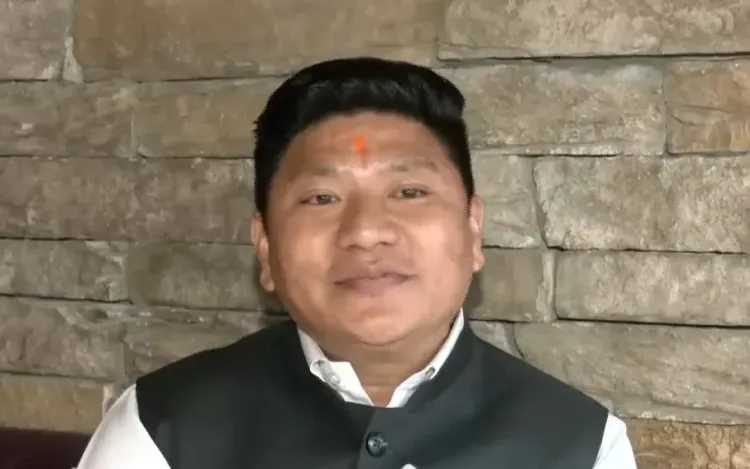
Nepali Congress MP Sandeep Rana: Corruption unacceptable across all generations
Synopsis
Nepali Congress MP Sandeep Rana, speaking in Mumbai, delivered a multi-front message: corruption is a cross-generational crime, exam paper leaks betray hardworking students, and India-Nepal trade — despite a 1.4-billion-strong market next door — remains far below its potential. The open border, he argued, is an underused economic asset.
Key Takeaways
Nepali Congress MP Sandeep Rana stated on 27 July that corruption is unacceptable across all generations, including Generation Z , Generation Alpha , and Generation Beta .
Rana called for tamper-proof examination systems, describing paper leaks as a universal concern affecting students in both Nepal and India .
He cited Chhatrapati Shivaji Maharaj and Prithvi Narayan Shah as historical examples of effective youth leadership.
India is one of Nepal's largest trading partners; Nepal's exports — including tea , steel products , and edible oils — remain comparatively small but hold significant growth potential.
The open border between India and Nepal, allowing free movement of citizens, was highlighted as a major enabler of future economic cooperation.
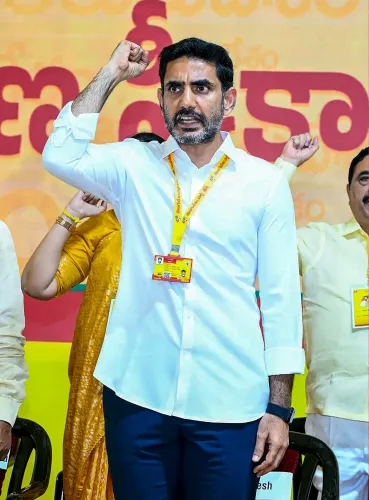
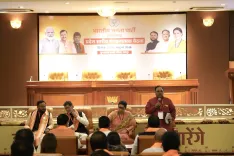
Nepali Congress Member of Parliament Sandeep Rana on Monday, 27 July said that corruption must never be tolerated, regardless of generation — whether Generation Z, Generation Alpha, Generation Beta, or those yet to come. Speaking on the sidelines of a visit to Mumbai, Rana underlined that rejecting corruption is a value rooted in ancestral wisdom and remains as relevant today as ever.
On Corruption and Civic Values
'We have a saying that both giving and accepting bribes are crimes. That has always been our guiding principle. Therefore, corruption can never be considered acceptable,' Rana said. He emphasised that this principle was not a modern construct but a value passed down through generations and one that should guide public life in both Nepal and India.
Paper Leaks and Examination Integrity
Turning to the issue of examination paper leaks, Rana described it as a universal concern that extends beyond any single country. He argued that students who prepare diligently deserve a system that guarantees fairness and security. Establishing a tamper-proof examination process, he said, is not merely a policy goal but a moral obligation toward hardworking students.
Youth in Leadership and the Role of Heritage
Rana cited historical figures to make the case for youth in leadership — notably Chhatrapati Shivaji Maharaj, who reportedly captured his first fort at the age of 19, and Prithvi Narayan Shah, who began Nepal's unification at a young age. He pointed to the growing number of young parliamentarians active in both India and Nepal, including what he described as a relatively young Prime Minister currently leading Nepal.
At the same time, Rana stressed that youthful energy must be paired with respect for heritage. 'We must carry forward the values, traditions and cultural principles that define us, along with our glorious history,' he remarked. India and Nepal, he noted, are ancient civilisations with histories stretching back thousands of years.
India-Nepal Bilateral Trade: Scope for Expansion
On bilateral relations, Rana said ties between India and Nepal continue to develop positively. India remains one of Nepal's largest trading partners, with Nepal importing a wide range of goods. Nepal's exports to India — including tea, certain steel products, and edible oils — are comparatively modest, but Rana saw considerable room for growth.
He highlighted that shared food habits and lifestyles make Nepali products naturally suited to Indian consumers. With India's population at 1.4 billion against Nepal's roughly 30 million, the market opportunity is asymmetric and largely untapped. Himalayan products, often organic and sourced from high-altitude natural environments, carry a premium appeal that could be leveraged more effectively, he added.
The open border between the two countries — which permits citizens to travel freely — further amplifies the potential for expanded trade and deeper economic cooperation, Rana concluded. As both nations look to deepen engagement, the emphasis on shared values and complementary economies offers a constructive framework for the road ahead.
Point of View
Not a partisan talking point. Yet the more substantive signal in his comments is on trade: Nepal sits next to a 1.4-billion-person market, shares an open border and cultural overlap, and still exports comparatively little. That gap is a policy failure on both sides, not merely a market inefficiency. The youth-leadership framing, while rhetorically appealing, sidesteps the structural question of whether either country's institutions are equipped to absorb and empower young leaders once they arrive.
NationPress
26 Oct 2026
Frequently Asked Questions
What did Nepali Congress MP Sandeep Rana say about corruption?
Rana said corruption must never be tolerated across any generation — whether Generation Z, Generation Alpha, Generation Beta, or those yet to come. He cited an ancestral principle that both giving and accepting bribes are crimes, calling it a permanent guiding value.
What is Sandeep Rana's position on examination paper leaks?
Rana described paper leaks as a universal concern, not limited to Nepal or India. He argued that students who work hard deserve a fair and secure examination process, and that establishing such a system is a moral obligation.
What did Rana say about India-Nepal trade relations?
Rana said India-Nepal relations are progressing positively and that India remains one of Nepal's largest trading partners. He noted that Nepal's exports — tea, steel products, and edible oils — are modest but hold significant expansion potential given shared food habits and the open border.
Why did Rana reference Chhatrapati Shivaji Maharaj and Prithvi Narayan Shah?
Rana cited both historical figures to illustrate that youth have always played decisive roles in leadership. Shivaji reportedly captured his first fort at 19, while Prithvi Narayan Shah began Nepal's unification at a young age — examples Rana used to validate the growing presence of young parliamentarians in both India and Nepal.
What is the significance of the open border between India and Nepal?
The open border allows citizens of both countries to travel freely, which Rana said creates enormous potential for expanding trade and deepening economic cooperation. He viewed it as an underutilised asset given the scale of India's consumer market relative to Nepal's.