What Does the New Indian Standard for Bomb Disposal Systems Entail?

Synopsis
Discover how the newly released IS 19445:2025 standard aims to enhance safety in bomb disposal operations across India. This comprehensive framework addresses the growing operational risks faced by various agencies, promoting uniformity and quality in evaluation practices.
Key Takeaways
IS 19445:2025 enhances the safety of bomb disposal operations.
It standardizes performance evaluation for bomb disposal systems.
The standard reflects operational realities faced by personnel.
Voluntary adoption by agencies and manufacturers promotes uniformity.
It addresses growing risks from unexploded ordnance and IEDs.
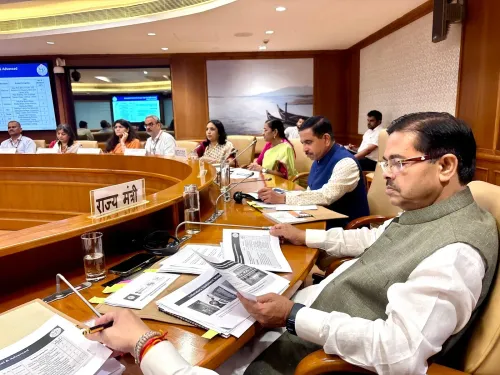
New Delhi, Dec 28 (NationPress) Union Consumer Affairs Minister Pralhad Joshi has unveiled IS 19445:2025 – Bomb Disposal Systems — Performance Evaluation and Requirements, an Indian standard designed to enhance safety and uniformity in bomb disposal operations, as detailed in an official statement released on Sunday.
The creation of IS 19445:2025 was prompted by a request from the Ministry of Home Affairs and the DRDO's Terminal Ballistic Research Laboratory (TBRL), in response to the growing use of bomb disposal systems across both security and civilian sectors and the lack of a dedicated Indian standard for evaluating the performance of such systems.
Bomb disposal systems—including bomb blankets, bomb baskets, and bomb inhibitors—are frequently employed to mitigate explosive threats. Despite the presence of several manufacturers in India, the safe and efficient deployment of these systems in the field necessitates a thorough and standardized performance evaluation.
IS 19445:2025 offers a detailed framework for assessing bomb disposal systems, specifically regarding blast loads and splinter effects. It outlines requirements for testing equipment, test range conditions, and evaluation procedures to objectively gauge system performance. Furthermore, it specifies test methodologies, apparatus, test specimens, and acceptance criteria.
This standard acts as a reference point for test sponsors, manufacturers, and accredited testing agencies, fostering consistency in testing, certification, and procurement practices.
IS 19445:2025 was developed through a consensus-driven process under the Arms and Ammunition for Civilian Use Sectional Committee (PGD 28). To this end, the Bomb Disposal Systems Panel (PGD 28/P1) was formed under the chairmanship of the TBRL, involving extensive participation from stakeholders, including defense and internal security agencies such as the DRDO, NSG, MES, DGQA, Central Armed Police Forces (CAPFs), state police authorities, and R&D institutions.
The proactive engagement of government user agencies has ensured that the standard is aligned with operational realities, safety considerations, and the field requirements of personnel involved in bomb detection and disposal.
In crafting IS 19445:2025, significant attention was given to international best practices and globally recognized performance concepts, appropriately tailored to Indian threat scenarios and operational environments. This strategy facilitates global alignment while preserving national relevance and assists Indian manufacturers in boosting their competitiveness on the international stage.
The newly published standard responds to the escalating operational risks encountered by the Indian armed forces, CAPFs, state police, and civilian agencies due to unexploded ordnance, improvised explosive devices (IEDs), and hand grenades found in conflict areas, military installations, and public venues.
According to Nidhi Khare, Secretary of the Department of Consumer Affairs, IS 19445:2025 is meant for voluntary adoption by procurement agencies, manufacturers, and testing entities. It is anticipated to standardize evaluation practices, encourage quality-driven manufacturing, and enhance confidence in the bomb disposal systems utilized in critical security operations.
The introduction of IS 19445:2025 underscores the commitment of the Bureau of Indian Standards (BIS) to advancing national priorities through timely and pertinent standardization, thereby contributing to public safety, national security, and technological self-sufficiency.
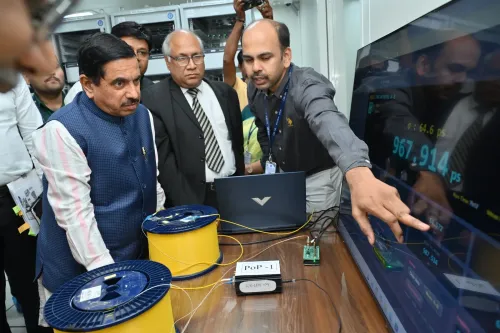
In a related development, the National Test House (NTH), an organization under the Central Government’s Department of Consumer Affairs, has signed a Memorandum of Understanding with the Defence Materials and Stores Research & Development Establishment (DMSRDE), a laboratory of the DRDO, to enhance cooperation in research, testing, and training.
Under this agreement, both institutions will provide mutual support in testing and evaluation services, especially in scenarios where specialized facilities are unavailable in-house, subject to mutually agreed terms. This collaboration is also expected to foster knowledge sharing and skill development among scientific and technical personnel.
The NTH, established in 1912, offers testing, inspection, and quality assurance services for a diverse array of industrial and consumer products in compliance with national and international standards. An NABL-accredited and BIS-recognized laboratory, the NTH operates through a network of regional laboratories nationwide.
The DMSRDE, located in Kanpur and established in 1929, focuses on the research and development of non-metallic materials, including polymers, composites, elastomers, ceramics, technical textiles, fuels, lubricants, and other specialized materials critical for defense applications.
Point of View
The introduction of IS 19445:2025 signifies a crucial step towards ensuring the safety and effectiveness of bomb disposal operations in India. It underscores the government's commitment to standardization and safety, reflecting the needs and realities faced by personnel in the field.
NationPress
19 Sept 2026
Frequently Asked Questions
What is IS 19445:2025?
IS 19445:2025 is a newly released Indian standard that outlines the performance evaluation and requirements for bomb disposal systems, aimed at enhancing safety and uniformity in operations.
Who developed IS 19445:2025?
The standard was developed by the Union Consumer Affairs Ministry in collaboration with the Ministry of Home Affairs and the DRDO's TBRL, involving various stakeholders from defense and internal security agencies.
How does IS 19445:2025 impact bomb disposal operations?
The standard provides a comprehensive framework for evaluating bomb disposal systems, promoting consistency in testing and enhancing confidence in their performance and safety.
Is IS 19445:2025 mandatory?
IS 19445:2025 is intended for voluntary adoption by procurement agencies, manufacturers, and testing bodies.
What areas does the standard cover?
The standard covers performance evaluation related to blast loads and splinter effects, as well as requirements for testing equipment and evaluation procedures.