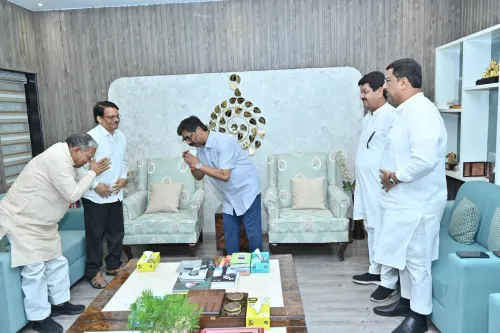
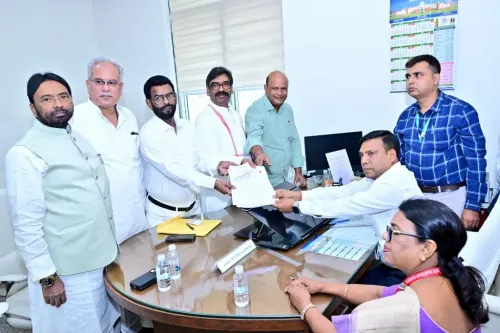
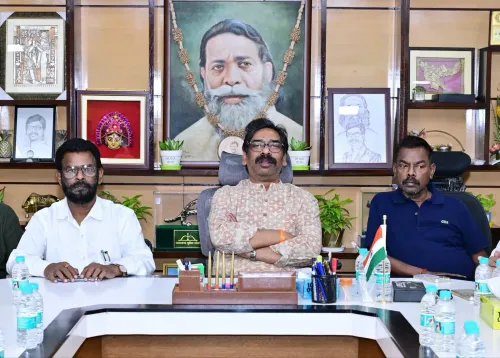
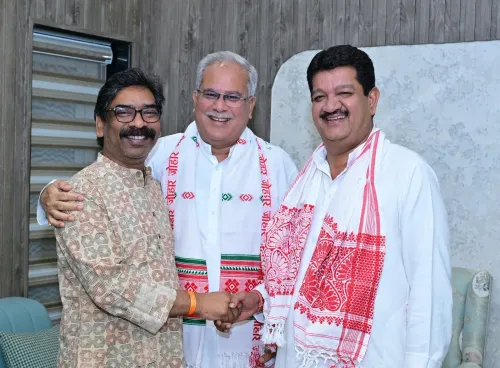
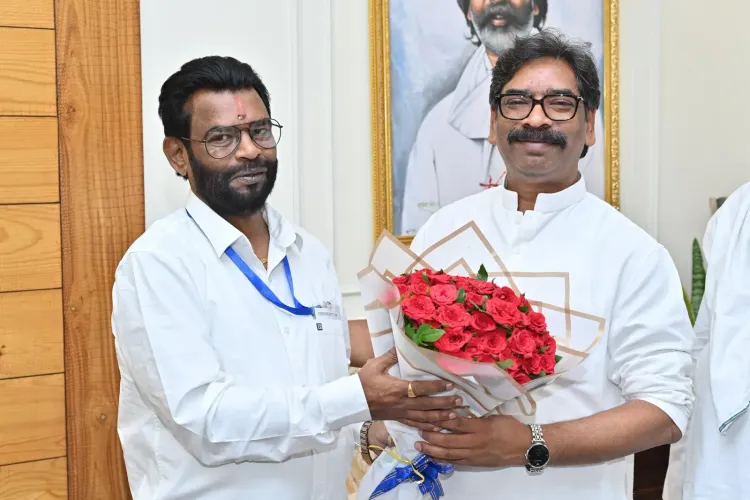
Newly elected RS MP Baidyanath Ram calls on CM Hemant Soren
Synopsis
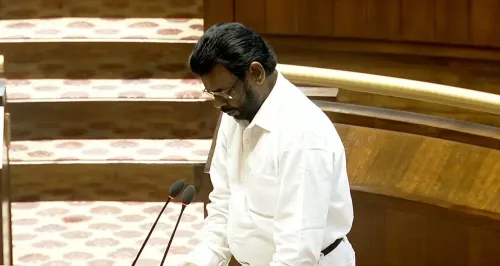
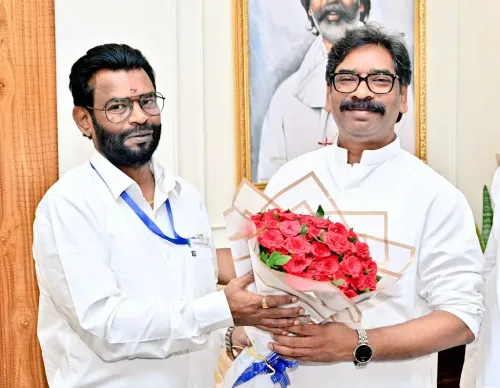
Newly elected Rajya Sabha MP Baidyanath Ram called on Jharkhand Chief Minister Hemant Soren on June 18, 2026, in a formal courtesy visit. The meeting follows standard Indian parliamentary protocol and signals early coordination between the new parliamentarian and the JMM-led state government.
Key Takeaways
Newly elected Rajya Sabha member Baidyanath Ram paid a formal courtesy call on Jharkhand CM Hemant Soren on June 18, 2026 .
The visit was announced by the Chief Minister's Office of Jharkhand via an official post on X.
Such courtesy visits are a standard protocol in Indian parliamentary tradition for newly elected MPs.
Hemant Soren leads the JMM -led ruling alliance that has governed Jharkhand since the 2019 assembly elections.
The meeting is expected to open channels for coordination between the new Rajya Sabha member and the state government on central-state legislative matters.
The Chief Minister's Office of Jharkhand announced on Thursday, June 18, 2026, that newly elected Rajya Sabha member Baidyanath Ram paid a courtesy call on Chief Minister Hemant Soren at the state capital Ranchi. The meeting was a formal protocol visit by the newly elected parliamentarian to the head of the Jharkhand government.
Context
The official post from the Chief Minister's Office stated: 'मुख्यमंत्री श्री @HemantSorenJMM से नवनिर्वाचित राज्यसभा सांसद श्री बैद्यनाथ राम ने शिष्टाचार भेंट की' — meaning 'Newly elected Rajya Sabha MP Shri Baidyanath Ram paid a courtesy call on Chief Minister Shri Hemant Soren.' Such shishṭāchār bheṇṭ (courtesy visits) are a standard feature of Indian parliamentary protocol, undertaken by newly elected legislators to acknowledge the state's chief executive.
In Indian federal practice, newly elected members of Parliament routinely call on the Chief Minister of their home state as a matter of convention. These meetings serve as a formal introduction and open channels for coordination on state-specific concerns that may arise in Parliament.
Policy Backdrop
Hemant Soren leads the Jharkhand Mukti Morcha (JMM)-led ruling alliance, which has governed Jharkhand since its victory in the 2019 assembly elections. Soren, who also serves as the national president of JMM, has been a central figure in shaping the state's legislative agenda and its engagement with the central government.
Jharkhand sends representatives to the Rajya Sabha — the upper house of India's Parliament — who play a critical role in advancing state interests on the national stage. Coordination between Rajya Sabha members and the state government is particularly significant on issues such as tribal rights, mineral revenue sharing, and central scheme implementation, all of which are central to Jharkhand's governance priorities.
Stakeholders and Impact
The meeting is significant for Jharkhand's legislative ecosystem. A newly elected Rajya Sabha member who maintains a working relationship with the Chief Minister is better positioned to raise state-specific issues effectively during parliamentary sessions. For the JMM-led government, such coordination with parliamentarians strengthens its ability to pursue its policy agenda at the national level.
For constituents across Jharkhand, effective communication between state leadership and Rajya Sabha representatives can influence outcomes on pending central-state matters, including resource allocation, tribal welfare legislation, and infrastructure funding.
What's Next
Observers will watch whether Baidyanath Ram's entry into the Rajya Sabha translates into active advocacy for Jharkhand's priorities in the upcoming parliamentary session. The Jharkhand government is expected to continue coordinating with its Rajya Sabha representatives on pending central-state issues, including tribal rights frameworks and state resource demands. Any formal statements from either office following this courtesy call will be closely tracked.
Point of View
On the surface, routine protocol — but it also reflects the JMM-led government's interest in maintaining cohesive representation at the national level. With Jharkhand's tribal rights, mineral revenue, and welfare schemes perpetually on the central agenda, having an aligned Rajya Sabha voice matters to the Soren administration. The meeting signals that the state government intends to actively coordinate with its upper-house representatives rather than treat parliamentary presence as ceremonial. How Ram performs in the Rajya Sabha on Jharkhand-specific issues will be the real measure of this early alignment.
NationPress
19 Sept 2026
Frequently Asked Questions
Who is Baidyanath Ram and why did he meet CM Hemant Soren?
Baidyanath Ram is a newly elected Rajya Sabha member from Jharkhand who paid a formal courtesy call on Chief Minister Hemant Soren on June 18, 2026. Such meetings are standard protocol in India for newly elected parliamentarians to formally introduce themselves to the state's chief executive.
What is a courtesy call or shishṭāchār bheṇṭ in Indian politics?
A courtesy call, known in Hindi as 'shishṭāchār bheṇṭ', is a formal protocol visit paid by a newly elected legislator or official to a senior political figure. It serves as a formal introduction and helps establish lines of communication between the parliamentarian and state leadership.
Who is Hemant Soren?
Hemant Soren is the Chief Minister of Jharkhand and the national president of the Jharkhand Mukti Morcha (JMM). He has led the JMM-headed ruling alliance in Jharkhand since the party's assembly election victory in 2019.
What is the Jharkhand Mukti Morcha (JMM)?
The Jharkhand Mukti Morcha is a regional political party founded in 1972 that heads the ruling coalition in Jharkhand. It has historically championed the rights of tribal communities and the state's distinct cultural and resource interests.
Why does coordination between Rajya Sabha MPs and Jharkhand's CM matter?
Rajya Sabha members from Jharkhand can raise state-specific issues — including tribal rights, mineral revenue sharing, and central scheme implementation — in Parliament. Close coordination with the Chief Minister ensures the state's priorities are represented effectively at the national legislative level.