CM Hemant Soren Congratulates Baidyanath Ram on Rajya Sabha Election
Synopsis
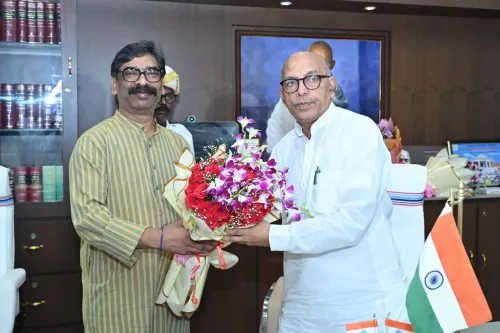
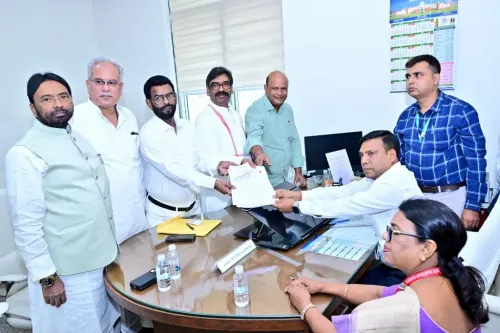
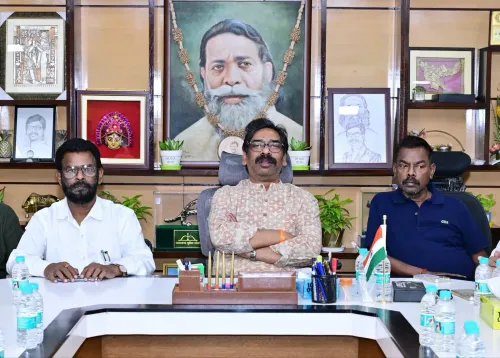
Jharkhand Chief Minister Hemant Soren on 18 June 2026 congratulated senior JMM leader Baidyanath Ram on his Rajya Sabha election, expressing confidence he will forcefully represent Jharkhand's rights and the aspirations of marginalised communities in the upper house.
Key Takeaways
Hemant Soren , Chief Minister of Jharkhand and JMM executive president, publicly congratulated Baidyanath Ram on his election to the Rajya Sabha on 18 June 2026 .
Baidyanath Ram is a senior leader of the Jharkhand Mukti Morcha , a regional party founded in 1972 to advocate tribal rights.
Soren expressed confidence that Ram would raise issues of Jharkhand's rights, self-respect, and the hopes of deprived communities in the upper house.
The JMM has used Rajya Sabha representation since Jharkhand's formation in 2000 to press for mining royalties, tribal land rights, and equitable central fund transfers.
Ram's election adds a JMM voice to Parliament at a time when the party controls the Jharkhand state government .
Key legislative issues to watch include mining royalty revision, land acquisition safeguards , and central welfare allocations for Jharkhand's tribal population.
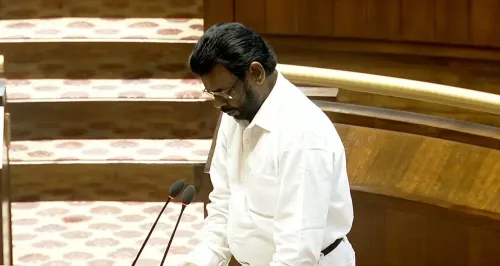
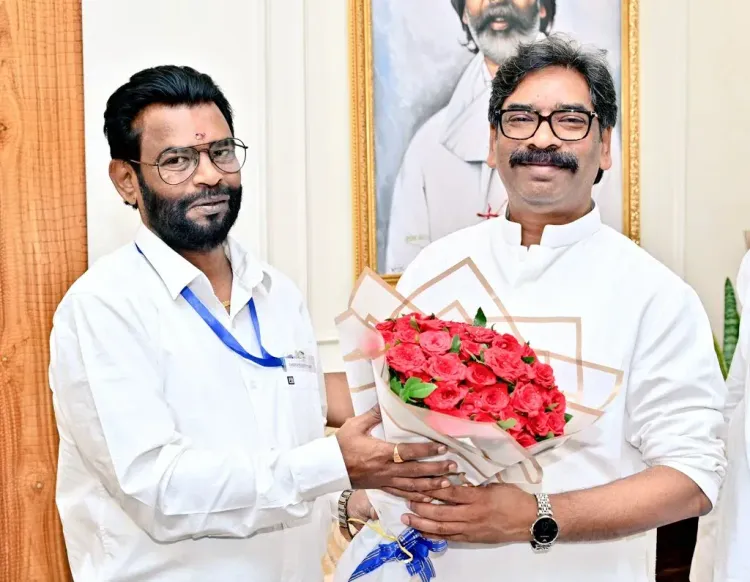
Jharkhand Chief Minister Hemant Soren on Thursday, 18 June 2026 congratulated senior Jharkhand Mukti Morcha (JMM) leader Baidyanath Ram on his election to the Rajya Sabha, expressing confidence that the newly elected member would forcefully raise the rights and aspirations of Jharkhand and its marginalised communities in the upper house of Parliament.
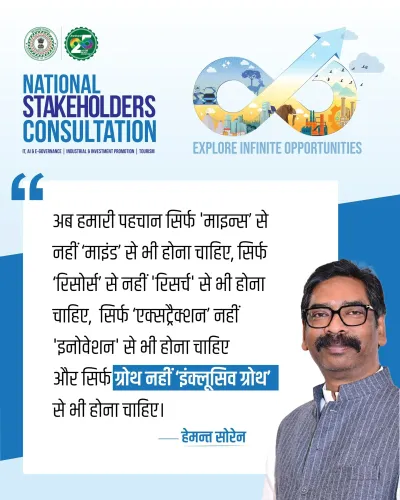
Posting on X, Soren opened with the salutations 'Jai Bhim! Jai Jharkhand!' — a dual invocation of B.R. Ambedkar's legacy and Jharkhand's regional pride — before extending what he called 'hardik badhai, shubhkamnayein evam johar' (heartfelt congratulations, good wishes, and the traditional Adivasi greeting 'johar') to Baidyanath Ram.
Soren wrote that he had 'full confidence' that Baidyanath Ram would raise the issues of 'Jharkhand ke haq, adhikar, swabhiman tatha vanchit-shoshit samaj ki aashaon' — the rights, entitlements, self-respect of Jharkhand, and the hopes of the deprived and exploited sections of society — with full strength in the upper house.
Context
Baidyanath Ram is a senior figure within the JMM, the regional party founded in 1972 to advocate for tribal rights and the creation of a separate Jharkhand state. His election to the Rajya Sabha — India's upper house, whose members are chosen by state legislative assemblies — adds a JMM voice to the national legislative chamber at a time when the party simultaneously holds power in Ranchi.
Members of the Rajya Sabha are elected by elected legislators of the respective state assemblies rather than directly by voters. The JMM-led alliance controls the Jharkhand Legislative Assembly, making it well-placed to secure the seat.
Policy Backdrop
Since Jharkhand's creation in November 2000, the JMM has consistently used its Rajya Sabha presence to press state-specific demands before the central government. Key issues have included mining royalties, tribal land rights, and the equitable transfer of central funds to one of India's most mineral-rich yet economically challenged states.
Chief Minister Soren's public emphasis on 'vanchit-shoshit samaj' — the deprived and exploited communities — signals that Baidyanath Ram's legislative agenda is expected to centre on Scheduled Tribe and Other Backward Class concerns, continuing a long-standing JMM pattern of combining state executive power with national legislative advocacy.
Stakeholders and Impact
For Jharkhand's substantial tribal population, representation in the Rajya Sabha carries symbolic and practical weight. The upper house has the power to scrutinise central legislation affecting forest rights, mineral concessions, and welfare schemes that directly bear on Adivasi communities across the state.
The JMM's broader constituency — including agricultural labourers, forest-dwelling communities, and workers in the mining belt — looks to Rajya Sabha members to challenge what the party frames as an inequitable share of revenues generated from Jharkhand's rich mineral endowment.
What's Next
Baidyanath Ram's interventions in the Rajya Sabha on issues such as mining royalty revision, land acquisition safeguards, and central allocations for Jharkhand will be closely watched by both party supporters and opposition benches. His performance in the upper house will also be seen as a gauge of the JMM's ability to translate state-level dominance into national legislative influence ahead of future electoral cycles.
With the JMM now holding both the Chief Minister's office and a fresh Rajya Sabha seat, the party is positioned to mount a more coordinated push on federal resource-sharing debates that have long defined Jharkhand's political identity.
Point of View
He ties the Rajya Sabha victory to the dual pillars of Ambedkarite social justice and Jharkhand's sub-nationalist identity, both central to JMM's electoral brand. Securing a Rajya Sabha seat while holding the state government allows JMM to operate on two legislative fronts simultaneously, a strategic advantage the party has historically used to amplify demands on mineral royalties and tribal autonomy. Baidyanath Ram's profile as a 'senior leader' rather than a technocrat suggests the party is prioritising grassroots credibility in the upper house. How effectively Ram translates that credibility into legislative outcomes on resource-sharing will determine whether this seat becomes a genuine policy asset or a symbolic gain.
NationPress
19 Sept 2026
Frequently Asked Questions
Who is Baidyanath Ram and why was he elected to the Rajya Sabha?
Baidyanath Ram is a senior leader of the Jharkhand Mukti Morcha (JMM) . He was elected to the Rajya Sabha — India's upper house of Parliament — by the members of the Jharkhand Legislative Assembly , which is controlled by the JMM-led alliance. Chief Minister Hemant Soren congratulated him on 18 June 2026 .
What is the Rajya Sabha and how are its members elected in Jharkhand?
The Rajya Sabha is the upper house of the Indian Parliament . Unlike the Lok Sabha, its members are not directly elected by voters; instead, they are elected by the elected members of each state's legislative assembly. Since the JMM leads the government in Jharkhand , it holds significant sway over which candidates secure the state's Rajya Sabha seats.
What issues is Baidyanath Ram expected to raise in the Rajya Sabha?
Chief Minister Hemant Soren has expressed confidence that Baidyanath Ram will raise issues of Jharkhand's rights, self-respect, and the aspirations of deprived and exploited communities . Analysts expect his focus to include mining royalties, tribal land rights , and equitable central fund allocations for Jharkhand.
What does 'Johar' mean and why did Hemant Soren use it?
'Johar' is a traditional greeting used by Adivasi (tribal) communities in Jharkhand and neighbouring regions as a mark of respect and solidarity. Chief Minister Hemant Soren and the JMM routinely use the salutation to affirm their connection to the state's tribal identity and cultural roots.
What is the Jharkhand Mukti Morcha (JMM)?
The Jharkhand Mukti Morcha (JMM) is a regional political party founded in 1972 to champion the rights of tribal communities and advocate for a separate Jharkhand state, which was eventually created in November 2000 . The party is currently led by Hemant Soren , who serves as both its executive president and Chief Minister of Jharkhand.