NIA attaches Amritsar property in LeT narco-terror case, 26 charge-sheeted
Synopsis
The NIA has attached an Amritsar house linked to LeT operative Ankush Kapoor — a key node in a narco-terror network spanning six-plus countries — classifying it as 'proceeds of terrorism' under UAPA. With 26 accused already charge-sheeted and investigations continuing, the Salaya drug seizure case is emerging as one of India's most complex transnational terror-financing probes.
Key Takeaways
The NIA attached House No.
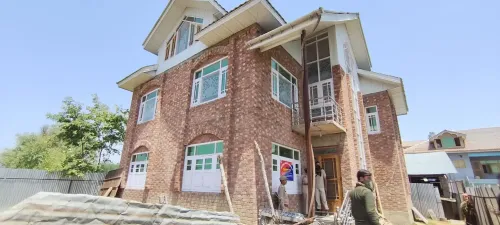
33, Holy City, Holy Enclave Phase-I, Amritsar on 16 June under Section 25(1) of UAPA .
The property is linked to Ankush Kapoor , a key Lashkar-e-Taiba -connected operative in India's narco-terror network.
The network has confirmed presence in Italy, Australia, Iran, Thailand, UAE, and Pakistan .
Drug trafficking proceeds were allegedly used to finance terrorist activities inside India via a complex financial network.
A total of 26 accused have been charge-sheeted in case RC-26/2020/NIA/DLI ; investigation is ongoing.
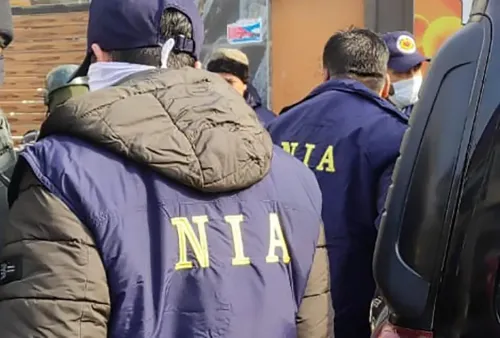
The National Investigation Agency (NIA) on Tuesday, 16 June attached a residential property in Amritsar, Punjab, linked to a Lashkar-e-Taiba (LeT) operative at the centre of a transnational narco-terror network with confirmed footprints across multiple countries. The action marks a significant escalation in the agency's drive to sever financial pipelines sustaining terrorist activity on Indian soil.
The Attached Property
The property — House No. 33, Holy City, Holy Enclave Phase-I, Amritsar — has been attached under Section 25(1) of the Unlawful Activities (Prevention) Act (UAPA) in case RC-26/2020/NIA/DLI, commonly referred to as the Salaya drug seizure case. The NIA classified it as 'proceeds of terrorism'. The attachment was carried out following due process, in the presence of independent witnesses and with assistance from local authorities, according to an official statement.
Who Is Ankush Kapoor
The property was registered in the name of the father of accused Ankush Kapoor, described by the NIA as a key operative in India of a narco-terror network spanning Italy, Australia, Iran, Thailand, the UAE, and Pakistan, among other nations. Kapoor, who was arrested last year, was allegedly involved in the smuggling, transportation, storage, and distribution of narcotic substances, as well as laundering terror proceeds to co-accused in various countries. Investigators found his links to a Dubai-based accused connected with the proscribed terrorist organisation Lashkar-e-Taiba.
How the Network Operated
According to the NIA, proceeds from narcotics trafficking were being channelled through a 'complex and elaborate financial network' to finance and support terrorist activities inside India. Kapoor has been charged for his role in terror-funding, criminal conspiracy, and providing support to unlawful and terrorist networks, in addition to offences under the Narcotic Drugs and Psychotropic Substances (NDPS) Act and the Indian Penal Code (IPC). This case illustrates the increasingly blurred line between organised drug crime and structured terror financing — a pattern investigators say is deliberate.
Scale of the Investigation
A total of 26 accused have been charge-sheeted in the case so far, and investigation is ongoing. Tuesday's attachment is part of a broader NIA strategy to dismantle all financial and logistical infrastructure supporting terrorism in India. Notably, this is not the first asset seizure in this case — the agency has pursued a systematic approach of tracing and freezing proceeds linked to the network.
What Comes Next
With investigations still active, further attachments and charge-sheets remain possible. The NIA's focus on cross-border financial trails — particularly through the UAE and Pakistan nexus — signals that the agency views this network as an ongoing threat rather than a contained operation. Legal proceedings against the 26 charge-sheeted accused are expected to continue in designated NIA courts.
Point of View
Australia, Iran, Thailand, the UAE, and Pakistan in a single network points to a level of operational sophistication that goes well beyond a domestic drug ring. The NIA's asset-attachment strategy under UAPA is sound in principle, but the real test is prosecution — of the 26 charge-sheeted accused, conviction rates in terror-financing cases remain low. Attaching property is visible; securing convictions is harder and matters more.
NationPress
19 Sept 2026
Frequently Asked Questions
What property did the NIA attach in Amritsar?
The NIA attached House No. 33, Holy City, Holy Enclave Phase-I, Amritsar — registered in the name of the father of accused Ankush Kapoor. It was classified as 'proceeds of terrorism' under Section 25(1) of the Unlawful Activities (Prevention) Act in the Salaya drug seizure case (RC-26/2020/NIA/DLI).
Who is Ankush Kapoor and what is his alleged role?
Ankush Kapoor is described by the NIA as a key operative in India of a transnational narco-terror network. He was arrested last year and is accused of smuggling, transporting, storing, and distributing narcotic substances, as well as laundering terror proceeds to co-accused across multiple countries. He also allegedly had links to a Dubai-based Lashkar-e-Taiba-connected individual.
Which countries does the narco-terror network span?
According to the NIA, the network has footprints across Italy, Australia, Iran, Thailand, the UAE, and Pakistan, among other nations, making it one of the more geographically expansive narco-terror cases currently under investigation in India.
How many people have been charge-sheeted in this case?
A total of 26 accused have been charge-sheeted in the Salaya drug seizure case so far. The NIA says investigation is still continuing, meaning further charge-sheets or asset attachments remain possible.
What is the legal basis for the NIA's property attachment?
The attachment was carried out under Section 25(1) of the Unlawful Activities (Prevention) Act (UAPA), which empowers the NIA to seize assets identified as proceeds of terrorism. The action followed due process, including independent witnesses and assistance from local authorities.