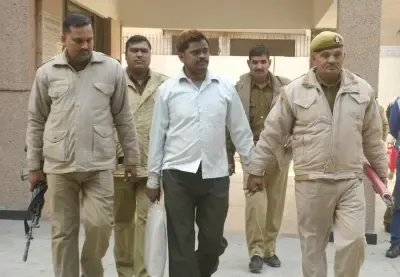
Surendra Koli, Nithari killings accused, found dead in Haridwar tea stall
Synopsis
Surendra Koli, the man acquitted in the Nithari killings case after the Supreme Court allowed his curative petition in November 2025, was found dead by suicide at a Haridwar tea stall on 18 September. The local who arranged his job there says he had no idea who Koli was — underlining how the man had slipped into anonymity after one of India's most sensational criminal sagas.
Key Takeaways
Surendra Koli , accused in the Nithari killings case , was found dead by suicide at a tea stall in Haridwar on 18 September 2026 .
Local resident Dharmender had arranged the job for Koli roughly 15 days earlier, saying he was unaware of Koli's identity or criminal past.
Koli had reportedly been suffering from depression and low blood sugar prior to his death.
Circle Officer Shishupal Singh Negi confirmed the family had been informed and an investigation is underway.
The Supreme Court had freed Koli in November 2025 after allowing his curative petition , closing a case criticised for a botched probe and media trial.
The 2006 Nithari killings were linked to human remains found near Moninder Singh Pandher's home in Noida's Sector-31 , dubbed the 'House of Horrors'.
Surendra Koli, the accused in the infamous Nithari killings case, was found dead at a tea stall in Haridwar, Uttarakhand, on 18 September 2026, after he apparently died by suicide by hanging. The discovery came as a shock to his employer and colleagues, who had no knowledge of his past connection to one of India's most sensational criminal cases.
How Koli Ended Up at the Tea Stall
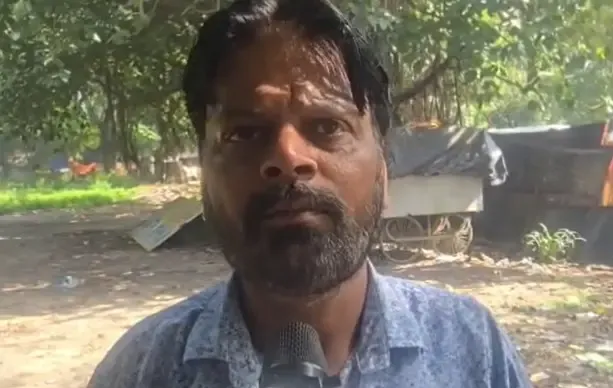
A local resident named Dharmender said he had met Koli roughly 15 days before the incident when the latter approached him seeking employment. 'I met him 15 days back when he begged me for a job. He had told me that he knows cooking, so I arranged for him to work at the tea stall at my guarantee,' Dharmender said. He added that he had no idea of Koli's identity or background at the time.
Dharmender said he had only asked Koli for his Aadhaar card the previous day for verification purposes. Koli reportedly told him the document was not with him but he would arrange it. In the interim, Dharmender had provided his own Aadhaar card to the tea stall owner as a personal guarantee for Koli's employment.
How the Body Was Discovered
Dharmender recounted that on the morning of 18 September, he noticed customers waiting outside the tea stall while the shutter remained closed. 'As soon as I attempted to knock, I realised that the shutter was already open. Upon opening it, I saw that he had hanged himself,' he said. He also noted that Koli had reportedly been suffering from depression as well as low blood sugar.
Police Response and Investigation
Shishupal Singh Negi, Circle Officer (Haridwar City), confirmed that Koli's family had been notified and that an investigation was underway. 'Surendra Koli has been frequently in the news as he was an accused in the Nithari case, which is why people recognised him. His family members have been informed and should be arriving soon. An investigation is underway, and any further updates will be shared as facts emerge,' Negi said. He added that whether Koli had been facing difficulties at home would be established only after his family arrived.
Background: The Nithari Killings Case
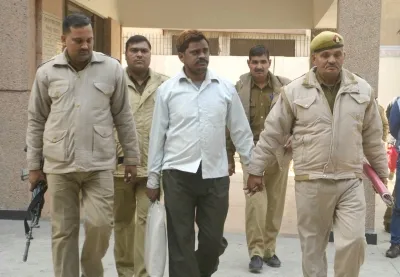
The 2006 Nithari killings gripped the nation after the disappearance of several minors from the village was linked to the discovery of human remains in a drain outside the home of Moninder Singh Pandher in Noida's Sector-31, a property that came to be known as the 'House of Horrors'. Koli, who worked as a domestic help in the household, was dubbed the 'Butcher of Nithari' by the media amid widely circulated theories of cannibalism.
Notably, in November 2025, the Supreme Court allowed Koli's curative petition and set him free, formally closing a case long criticised for a botched investigation and what critics described as a media trial. His death in Haridwar marks a sombre final chapter to a case that had polarised public opinion for nearly two decades.
Point of View
He was reportedly jobless, depressed, and living under a false identity within months — a stark indicator that release without rehabilitation is a hollow victory. The Nithari case was itself a study in systemic failure: a botched investigation, sensationalised media coverage, and a legal process that took nearly two decades to reach a corrected conclusion. That the man at its centre died in such circumstances is a reminder that the damage done by miscarried justice does not end with a court order.
NationPress
18 Sept 2026
Frequently Asked Questions
Who was Surendra Koli and what was the Nithari killings case?
Surendra Koli was a domestic worker employed at the residence of Moninder Singh Pandher in Noida's Sector-31, where human remains — linked to the disappearance of several minors — were discovered in 2006. He was the primary accused in the Nithari killings case, widely known as one of India's most sensational criminal investigations. The Supreme Court allowed his curative petition and freed him in November 2025.
How did Surendra Koli end up at a tea stall in Haridwar?
According to Dharmender, a local resident, Koli approached him about 15 days before his death seeking employment. Dharmender arranged for Koli to work at a tea stall on his personal guarantee, without knowing Koli's true identity or background. Koli had presented himself as someone with cooking skills.
When and how was Surendra Koli's body found?
Koli's body was discovered on the morning of 18 September 2026 at the tea stall in Haridwar. Dharmender noticed the shutter appeared shut despite customers waiting outside, and upon opening it, found Koli had died by suicide by hanging.
What has the police said about Surendra Koli's death?
Circle Officer Shishupal Singh Negi confirmed that Koli's family had been informed and that an investigation is underway. He said further details, including whether Koli had been facing personal difficulties, would emerge once the family arrived.
Why did the Supreme Court free Surendra Koli in 2025?
The Supreme Court allowed Koli's curative petition in November 2025, formally acquitting him and closing a case that had been widely criticised for a flawed investigation and what observers described as a media-driven trial built on theories of cannibalism. The ruling was seen as a formal correction of a prolonged judicial process.