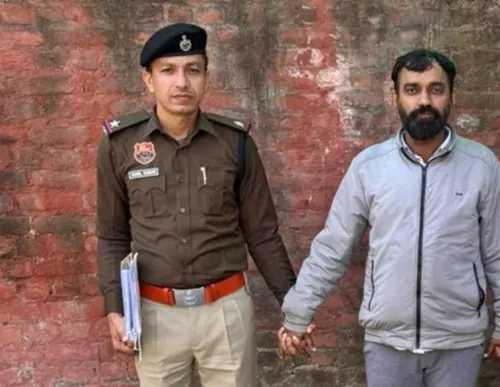
Nithari case convict Surendra Koli found dead in Haridwar, suicide suspected
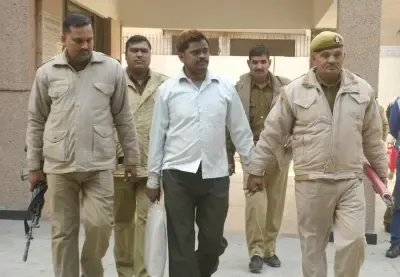
Synopsis
Surendra Koli — the man once sentenced to death in several Nithari killings cases and later freed by the Supreme Court via a curative petition — has been found dead in Haridwar, in an apparent suicide. His death at a tea stall he had been quietly running closes one of the most disturbing and legally tortured chapters in modern Indian criminal history.
Key Takeaways
Surendra Koli , convicted in the Nithari killings cases, was found dead in Haridwar, Uttarakhand on 18 September 2026 , in a suspected suicide by hanging.
His body was recovered from inside a tea stall opposite the Lalmata Temple on Sapt Sarovar Road in the Bhupatwala area.
Koli had reportedly been running the tea stall for a few days after being freed by the Supreme Court , which had allowed his curative petition in November last year .
A total of 19 cases were registered against Koli and his employer Mohinder Singh Pandher in the 2006 Nithari killings — the CBI filed closure reports in 3 cases due to insufficient evidence.
The Saptarishi police outpost team is investigating; Koli's family has been notified.
Surendra Koli, the man convicted in several of the Nithari killings cases and later freed by the Supreme Court, was found dead in Haridwar, Uttarakhand, on Friday, 18 September 2026, in what police described as a suspected suicide by hanging. His body was discovered inside a tea stall he had reportedly been operating for the past few days.
How the Body Was Found
According to police, Koli's body was found hanging from a rope inside a small tea stall situated opposite the Lalmata Temple on Sapt Sarovar Road in the Bhupatwala area of north Haridwar. A team from the Saptarishi police outpost arrived at the scene after receiving information, took possession of the body, and launched a formal investigation.
Police confirmed that the deceased has been identified as a resident of Mangrukhal village in the Bhikiasain area of Almora district, Uttarakhand. His family members have been informed, and all aspects of the incident are under investigation, according to police.
Background: The Nithari Killings Case
The 2006 Nithari killings became one of India's most disturbing criminal cases, drawing national outrage after the disappearance of children and young women from a village in Noida was linked to the discovery of human remains in a drain outside the residence of businessman Mohinder Singh Pandher in Noida Sector-31. The address, infamously referred to as the ‘House of Horrors’, became a focal point of a sprawling investigation that raised allegations of abduction, rape, cannibalism, and organ theft.
A total of 19 cases were registered against Koli and Pandher in 2007. The Central Bureau of Investigation (CBI) filed closure reports in three cases due to insufficient evidence. Koli was acquitted in three of the remaining 16 cases, while his death sentence in one case was commuted to life imprisonment. He had also received the death penalty in other matters, making his legal journey one of the longest and most contested in recent Indian criminal history.
Supreme Court Relief and Life After Acquittal
In November last year, the Supreme Court allowed Koli's curative petition, effectively setting him free and providing a formal legal closure to a saga marked by what critics described as a botched investigation and a media trial built on unverified theories of cannibalism. Koli, who had worked as a domestic worker in Pandher's home, had spent years on death row before the apex court's intervention.
Notably, following his release, Koli had reportedly moved to Haridwar and had been running the tea stall — a sharp and poignant contrast to the years of legal battles and public infamy that had defined his adult life.
Investigation Underway
Police have not yet ruled out any angle, and a thorough investigation into the circumstances of Koli's death is ongoing. The case, given its extraordinary public history, is expected to attract close scrutiny from both legal observers and the public.
The death of Surendra Koli draws a final, grim chapter on one of independent India's most polarising criminal cases — a case that exposed deep failures in the criminal justice system, the role of media in shaping perceptions of guilt, and the vulnerability of those at the margins of society.
Point of View
Coming less than a year after the Supreme Court set him free via curative petition, raises uncomfortable questions about the State's responsibility toward individuals released after prolonged incarceration and public stigmatisation. He spent years on death row in connection with a case that critics argue was partly built on media-amplified theories never fully proven in court. The justice system gave him his life back legally; society, it seems, never did. That a man once at the centre of a national moral panic died quietly in a roadside tea stall is itself a verdict — on the limits of legal exoneration and the cost of trial by media in India.
NationPress
18 Sept 2026
Frequently Asked Questions
Who was Surendra Koli?
Surendra Koli was a domestic worker convicted in several of the Nithari killings cases, one of India's most high-profile criminal cases originating in 2006. He worked for businessman Mohinder Singh Pandher at a Noida residence where human remains were discovered, and was sentenced to death in multiple cases before the Supreme Court allowed his curative petition and set him free.
How did Surendra Koli die?
Koli was found dead by hanging inside a tea stall on Sapt Sarovar Road in the Bhupatwala area of Haridwar on 18 September 2026. Police have described it as a suspected suicide and have initiated a formal investigation.
What was the Nithari killings case?
The Nithari killings case refers to the 2006 discovery of human remains in a drain outside a house in Noida Sector-31, linked to the disappearance of children and young women from the area. The investigation involved allegations of abduction, rape, cannibalism, and organ theft, resulting in 19 cases against Koli and his employer Pandher.
Why was Surendra Koli freed by the Supreme Court?
The Supreme Court allowed Koli's curative petition in November last year, providing formal legal closure to the case. The court's intervention followed years of criticism that the investigation was flawed and that the media trial had amplified unverified theories, particularly around cannibalism.
What is the current status of the Nithari case investigations?
Of the 19 cases registered in 2007, the CBI had filed closure reports in 3 due to insufficient evidence. Koli was acquitted in 3 of the remaining 16 cases, and his death sentence in one case had been commuted to life imprisonment. His Supreme Court curative petition last year effectively ended his legal exposure in the remaining matters.