How Does No Appeal Against Bihar SIR Establish Its Sanctity?
Click to start listening
Synopsis
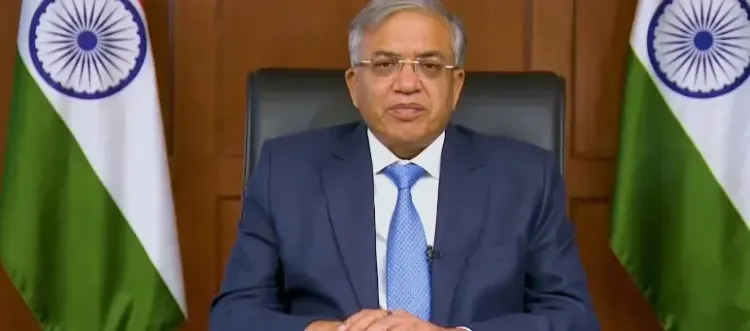
On January 24, Chief Election Commissioner Gyanesh Kumar praised the flawless implementation of the Special Intensive Revision (SIR) of the electoral roll in Bihar. With no appeals lodged against the final voters' list, the integrity of the process is undeniable. This historic achievement also marks a record voter turnout, particularly among women. Dive into the details of this significant electoral milestone.
Key Takeaways
- No appeals against the final voters' list confirm the integrity of the electoral process.
- Historic voter turnout at 67.13%, with women at 71.78%.
- SIR aims to maintain a clean voters' list.
- The ECINet App streamlines electoral services for citizens.
- January 25 is National Voters' Day, highlighting voter importance.
New Delhi, Jan 24 (NationPress) Chief Election Commissioner (CEC) Gyanesh Kumar stated on Saturday that the absence of any appeals against the final voters' list is a strong indication of the success achieved through the Special Intensive Revision (SIR) of the electoral roll in Bihar, further affirming its integrity and reliability.
In a statement released ahead of the 16th National Voters' Day, the CEC remarked, "The elections held on this solid foundation have been historic, achieving the highest voter turnout since 1951 at 67.13 percent, with a remarkable participation rate of women electors at 71.78 percent."
CEC Kumar emphasized that the SIR was initiated to ensure the integrity of the voters' list, which is essential for a flourishing democracy.
The primary goal of the SIR is to guarantee that every eligible voter is included in the electoral roll while removing ineligible names, he noted.
"This initiative has been successfully completed in Bihar and is currently being implemented smoothly in 12 states and Union Territories across the nation, with plans for expansion into the remaining states soon," CEC Kumar highlighted, showcasing the numerous achievements of the Election Commission of India in the past year.
He urged young voters to combat misinformation, encouraging them to vote consistently and to act as ambassadors of democracy, inspiring others to engage in the electoral process.
"I call upon our young electors to take the lead against misinformation and false narratives. It's crucial that they stay informed about electoral processes and the various initiatives of the ECI, sharing accurate information within their communities," he stated.
Looking ahead to the ECI's plans for 2025, the CEC mentioned that the Commission has implemented around 30 significant initiatives, including intensive training for election officials at the India International Institute of Democracy and Election Management (IIIDEM) in New Delhi, where over 5,000 Booth Level Officers (BLOs) and their Supervisors received training.
He also highlighted the launch of the ECINet App, the introduction of mobile deposit facilities at polling stations, and the decision to limit the number of electors per polling station to a maximum of 1,200 for voter convenience.
"In 2025, the ECI also successfully conducted the Vice-Presidential election along with several by-elections," CEC Kumar added.
"Acknowledging the needs of the digital era, the ECI has made all elector services accessible to citizens through the ECINet App, showcasing the Commission's dedication to technological innovation and administrative excellence," he continued.
The CEC also mentioned the organization of the world's largest international conference on election management and electoral processes by the ECI from January 21 to 23.
The Election Commission of India was established on January 35, 1950, the day before Republic Day.
Every year, January 25 is observed as National Voters' Day, honoring the electors of our democracy.
Point of View
It's vital to recognize the significance of the electoral process in shaping democracy. The absence of appeals in Bihar's electoral roll revision showcases the effectiveness of the Election Commission's initiatives. This achievement is not just a statistic; it reflects the growing engagement of voters, particularly women. It's a call to action for all citizens to participate actively in democracy and uphold its values.
NationPress
24/01/2026
Frequently Asked Questions
What is the Special Intensive Revision (SIR)?
The Special Intensive Revision (SIR) is an initiative aimed at ensuring the accuracy and integrity of the electoral roll by including every eligible voter's name and removing ineligible ones.
What was the voter turnout in Bihar's recent elections?
The voter turnout in Bihar's recent elections reached a historic high of 67.13 percent, with women electors participating at an unprecedented rate of 71.78 percent.
How does the ECINet App benefit voters?
The ECINet App consolidates all electoral services on a single platform, making it easier for citizens to access information and services related to voting.
Why is National Voters' Day celebrated?
National Voters' Day is celebrated annually on January 25 to honor the electorate and promote the importance of voting in a democratic society.
How does the Election Commission ensure voter participation?
The Election Commission employs various initiatives, including training programs for election officials and campaigns to encourage young voters to engage actively in the electoral process.