Odisha Assembly Special Session April 30: Women's Role in Democracy on Agenda
Synopsis
Odisha's Legislative Assembly convenes a rare special session on April 30 to debate women's participation in Indian democracy — a politically loaded move after the Women's Reservation Bill collapsed in the Lok Sabha. With 50,000 women rallying in Bhubaneswar and CM Majhi calling the bill's defeat 'the killing of mothers' dreams,' the session tests whether legislatures can rise above optics.
Key Takeaways
The Odisha Legislative Assembly will hold a special session on April 30, 2025 to discuss women's participation in Indian democracy.
The session will include the ruling BJP , the Biju Janata Dal (BJD) , and the Indian National Congress in cross-party deliberations.
The Women's Reservation Bill and the Delimitation Bill failed to advance in the Lok Sabha after the Centre could not secure the required legislative majority.
Over 50,000 women participated in the BJP's Jan Aakrosh Mahila Pad Yatra in Bhubaneswar on April 23, 2025.
Odisha CM Mohan Charan Majhi called the bill's defeat "the killing of mothers' dreams" and attacked opposition parties for treating women as a vote bank.
India ranks 143rd globally in women's parliamentary representation, with women holding only about 15% of Lok Sabha seats .
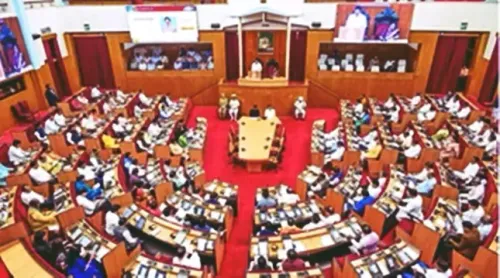
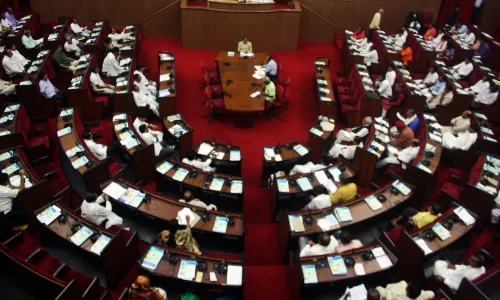
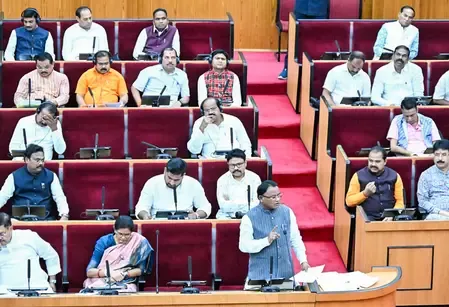
Bhubaneswar, April 25: The Odisha Legislative Assembly has been summoned for a special one-day session on April 30 to deliberate on 'Participation of Women in Indian Democracy' — a politically charged move coming days after the Women's Reservation Bill failed to pass in the Lok Sabha. The session will bring together the ruling Bharatiya Janata Party (BJP), the Biju Janata Dal (BJD), and the Indian National Congress under one roof to debate one of India's most contested political issues.
Special Session Summoned Amid National Political Storm
A formal notification issued on Friday, April 25, confirmed that the 17th Odisha Legislative Assembly will convene in an extraordinary session to specifically address women's representation in the country's democratic framework. This is a rare instance of a state legislature dedicating an entire session exclusively to the subject of women's political empowerment.
The timing is significant. The Centre's proposed Constitution Amendment Bill on Women's Reservation, which sought to reserve one-third of seats in Parliament and state assemblies for women, failed to advance in the Lok Sabha after the government could not secure the required legislative support. The bill's collapse has triggered a nationwide political confrontation between the BJP-led NDA and the INDIA bloc opposition.
BJP's Street Mobilisation and Political Messaging
In the days preceding the special session, the BJP in Odisha mounted a massive public mobilisation campaign. On Wednesday, April 23, the party organised a large-scale "Jan Aakrosh Mahila Pad Yatra" in Bhubaneswar, drawing participation from over 50,000 women across different sections of society. Participants held roadside meetings and burned effigies of opposition leaders, signalling the party's intent to frame the bill's defeat as an attack on women's rights.
The BJP also announced that Mahila Aakrosh Sammelans would be held across all organisational districts in Odisha on April 24 and 25, extending the campaign beyond the capital. The party stated it would continue taking the issue to the streets nationally to "expose the anti-woman mindset" of opposition parties.
Chief Minister Majhi's Sharp Political Attack
Odisha Chief Minister Mohan Charan Majhi delivered a pointed statement on Wednesday, framing the bill's failure as a national tragedy rather than a mere legislative setback. "This is not merely the defeat of a Bill, but the killing of mothers' dreams. This is not a defeat for Narendra Modi, but a major setback for women across the country," said CM Majhi.
He further accused the Indian National Congress and other opposition parties of treating women as a "vote bank" rather than genuine stakeholders in governance, contrasting that with what he described as the Modi government's commitment to authentic women's empowerment. These remarks are expected to set the political tone heading into the April 30 assembly session.
Deeper Context: Why This Bill Failed and What It Means
The Women's Reservation Bill has had a turbulent legislative history in India. A version of the bill was first introduced in 1996 and lapsed multiple times over nearly three decades due to lack of political consensus. While a landmark version was passed in September 2023 as the Nari Shakti Vandan Adhiniyam, its implementation was linked to the completion of a delimitation exercise — effectively deferring its practical effect by several years.
The latest attempt to advance the bill alongside a Delimitation Bill hit a wall in the Lok Sabha, with the government failing to muster the two-thirds majority required for a constitutional amendment. Critics argue that the BJP's decision to link women's reservation to delimitation — a process that could take years — was itself a structural delay mechanism, a contradiction that opposition parties have repeatedly highlighted.
This irony is not lost on political analysts: the party most vocally championing the bill is also the one that controls the legislative agenda and, by extension, the timeline of its implementation. The Odisha special session can be seen as a strategic exercise in political optics — keeping the issue alive and the BJP's pro-women narrative dominant ahead of future electoral cycles.
Impact on Women's Political Representation in India
India currently ranks 143rd globally in women's parliamentary representation, according to the Inter-Parliamentary Union — a figure that underscores the urgency of legislative reform. Women constitute only about 15% of Lok Sabha members and fare marginally better in some state assemblies. In Odisha, women's representation in the state assembly has historically hovered below 12%.
The special session, while symbolic in nature, could serve as a pressure point for both state and central governments to accelerate action. However, without the passage of the constitutional amendment, any discussion remains advisory at best. What the session will produce — a resolution, a formal demand to the Centre, or a political statement — will be closely watched by women's rights groups and civil society organisations across the state.
As the April 30 session approaches, all eyes will be on whether the cross-party deliberations in the Odisha Assembly yield a unified demand for women's reservation or devolve into further political point-scoring — a test of whether India's legislatures can rise above partisanship on one of the country's most consequential democratic reforms.
Point of View
And the linkage of reservation to delimitation — a process the Centre itself controls — has effectively deferred real change by years. Calling a state session to debate a central legislative failure is symbolic governance at its finest, and while symbolism has electoral value, India's women — ranked 143rd globally in parliamentary representation — deserve more than another round of performative politics.
NationPress
19 Sept 2026
Frequently Asked Questions
Why is Odisha holding a special assembly session on April 30?
The Odisha Legislative Assembly has convened a special one-day session on April 30 to discuss 'Participation of Women in Indian Democracy.' The session follows the collapse of the Women's Reservation Bill in the Lok Sabha and is seen as a political response to the national controversy surrounding women's representation.
What happened to the Women's Reservation Bill in the Lok Sabha?
The Constitution Amendment Bill on Women's Reservation, along with the Delimitation Bill, failed to pass in the Lok Sabha after the Centre could not secure the required two-thirds majority. This failure triggered nationwide protests and political debates across party lines.
What did Odisha CM Mohan Charan Majhi say about the Women's Reservation Bill?
Chief Minister Mohan Charan Majhi called the bill's defeat 'the killing of mothers' dreams' and a 'major setback for women across the country.' He accused the Congress and opposition parties of treating women merely as a vote bank rather than genuine stakeholders.
What is the Jan Aakrosh Mahila Pad Yatra in Bhubaneswar?
The Jan Aakrosh Mahila Pad Yatra was a massive BJP-organised rally in Bhubaneswar on April 23, attended by over 50,000 women. Participants held roadside meetings and burned effigies of opposition leaders to protest the Women's Reservation Bill's failure in Parliament.
How does India rank globally in women's parliamentary representation?
India ranks 143rd globally in women's parliamentary representation, according to the Inter-Parliamentary Union. Women currently make up approximately 15% of Lok Sabha members, highlighting the urgency of legislative reforms like the Women's Reservation Bill.