What Did the Odisha Cabinet Approve in Its Latest Meeting?
Synopsis
In a significant move, the Odisha Cabinet has approved 11 crucial proposals, including a revamped tourism policy aimed at revitalizing the state's tourism sector and a major solar project by Tata Power. Discover how these initiatives aim to boost investment and create jobs in Odisha.
Key Takeaways
Odisha Cabinet has approved 11 significant proposals.
New tourism policy aims to boost investment.
Investment threshold for hotels reduced to 10 keys .
Enhanced Capital Investment Subsidy for projects.
New Special Zones introduced for tourism development.
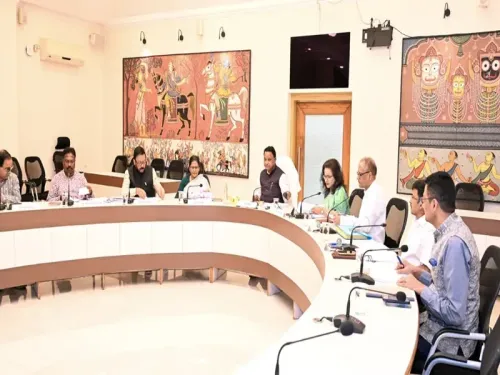
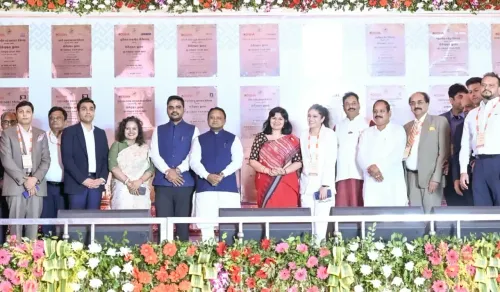
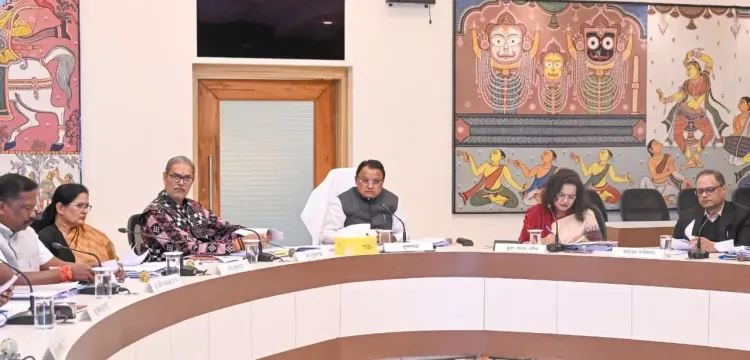
Bhubaneswar, Jan 9 (NationPress) The Odisha Cabinet has given its approval to a number of significant proposals from various departments during a meeting led by Chief Minister Mohan Charan Majhi at the Lok Seva Bhawan in Bhubaneswar on Friday.
The cabinet's clearance of 11 key proposals includes the endorsement of the Odisha Tourism (Amendment) Policy-2026, marking a pivotal reform aimed at enhancing the tourism landscape of Odisha.
Several notable changes have been introduced to the previous Odisha Tourism Policy-2022, with the goal of further invigorating the state's tourism industry.
The Cabinet has agreed to lower the minimum investment requirement for 3-Star and higher hotels and resorts from 50 keys to 10 keys, aligning with the directives of the Ministry of Tourism, Government of India. Furthermore, the eligibility threshold for expanding existing tourism units has been adjusted from 50 percent to 25 percent of the current capacity, facilitating quicker and more efficient expansion of operational facilities,” stated the government in an official release.
The state government has also optimized the Capital Investment Subsidy (CIS) structure within the Odisha Tourism (Amendment) Policy-2026. Under the new guidelines, tourism projects can qualify for CIS at 30 percent, with a cap of Rs 50 crore for investments up to Rs 200 crore and Rs 100 crore for investments exceeding Rs 200 crore.
Additionally, the Cabinet has sanctioned the expansion of Special Zones to encompass promising tourist hotspots like Hirakud, Satkosia, Similipal, Ratnagiri–Udayagiri–Lalitgiri, and Bhitarkanika, alongside the pre-existing special zones of Chilika, KBK, Kandhamal, and Gajapati.
Tourism ventures situated in these Special Zones, as well as initiatives led by women, Scheduled Castes, Scheduled Tribes, and differently-abled entrepreneurs, will qualify for an enhanced Capital Investment Subsidy of 40 percent, capped at Rs 60 crore for projects with investments up to Rs 200 crore and Rs 120 crore for projects with investments over Rs 200 crore.
The government has also opted to introduce targeted subsidies for a variety of emerging tourism sectors, with museums and heritage sites eligible for capital assistance of up to 40 percent and electric boats, electric caravans, and art and craft theme complexes qualifying for capital support of up to 50 percent.
The revised policy presents specific incentives for sectors including MICE, destination weddings, luxury camping, and electric mobility-focused tourism offerings.
Moreover, a dedicated Capex and Opex support framework has been created to promote authentic Odia cuisine by supporting Odia restaurants at Department of Tourism-recognized tourist sites within Odisha and in five metropolitan areas—Mumbai, Delhi, Bengaluru, Chennai, and Kolkata—as well as five major tourist locations—Agra, Varanasi, Goa, Kochi, and Jaipur.
The Cabinet has sanctioned the formation of a State Tourism Advisory Council under the leadership of the state’s Tourism Minister to ensure effective execution of various initiatives under the new policy.
In another substantial decision, the state Cabinet approved an integrated ingot-wafer and solar cell manufacturing project by Tata Power Renewable Energy Limited (TPREL) at the Tata Special Economic Zone (SEZ) in Gopalpur, Ganjam district.
This project will unfold in two phases, achieving a total capacity of 10 GW for ingot-wafer and 5 GW for solar cell manufacturing. With an investment nearing Rs 10,000 crore, it is predicted to create over 5,000 direct and indirect jobs.
Point of View
It's crucial to recognize that the Odisha Cabinet's decisions reflect a strategic approach to bolstering the state's economy through tourism and renewable energy. The initiatives not only aim to enhance investment opportunities but also promote inclusivity by empowering various community segments. This balanced approach could serve as a model for other states in India.
NationPress
4 Oct 2026
Frequently Asked Questions
What is the Odisha Tourism (Amendment) Policy-2026?
The Odisha Tourism (Amendment) Policy-2026 aims to enhance the tourism sector in Odisha through various reforms, including lower investment thresholds for hotels and expanded eligibility for subsidies.
How does the Capital Investment Subsidy work?
Under the amended policy, tourism projects can receive a Capital Investment Subsidy of 30%, with a cap based on the amount invested, facilitating easier financial support for new ventures.
What are the new Special Zones in Odisha?
The Cabinet expanded Special Zones to include high-potential tourist destinations like Hirakud and Similipal, aimed at driving tourism and investment in these areas.
What initiatives support women and marginalized communities in tourism?
The policy includes enhanced subsidies for tourism projects led by women and those from Scheduled Castes, Scheduled Tribes, and differently-abled entrepreneurs.
How will the new policies affect job creation?
The approval of the solar cell manufacturing project and tourism initiatives is expected to generate over 5,000 job opportunities in Odisha.